
MacBook Neo vs. Competitors: Which Should You Choose?
Overview
Apple’s surprise announcement of the MacBook Neo — a $599 fanless laptop powered by the A18 Pro chip — marks a significant shift in the company’s strategy. Positioned as the company’s most affordable MacBook ever, the MacBook Neo aims to lower the entry barrier into the Apple ecosystem while leveraging Apple Silicon efficiency and cloud-based software to deliver a capable experience at a price point traditionally dominated by Windows budget laptops.
This move comes amid a challenging market environment: AI-driven demand for memory (RAM and HBM) has driven up component costs, threatening the viability of sub-$500 Windows laptops. Many low-cost PC makers are reportedly shifting to slower eMMC storage or relying on SD cards to cut costs. Apple’s MacBook Neo, by contrast, delivers a solid, reliable, and durable Mac experience at $599, raising questions about how it stacks up against current budget Windows machines, Chromebooks, and even Apple’s own existing MacBook Air lineup.
The device also integrates Apple Intelligence features (with some reliance on Google’s Gemini models for certain cloud tasks), includes a 16-core Neural Engine, and maintains complete silence thanks to its fanless design. This comparison evaluates the MacBook Neo against its primary competitors — budget Windows laptops (e.g., Acer Aspire 3, Lenovo IdeaPad Slim 3), Chromebooks (e.g., Lenovo Chromebook Plus), and higher-tier Apple products (MacBook Air M2/M3) — across performance, build quality, software ecosystem, AI capabilities, and value.
Feature Comparison Table
| Feature | MacBook Neo (A18 Pro) | Budget Windows (e.g. Acer Aspire 3 / Lenovo IdeaPad) | Premium Chromebook (e.g. Lenovo Chromebook Plus) | MacBook Air M3 |
|---|---|---|---|---|
| Price | $599 | $399–$549 | $399–$599 | $999–$1,099 |
| Processor | Apple A18 Pro (3nm) | Intel Core i3/N-series or AMD Ryzen 5 | MediaTek/Qualcomm Snapdragon or Intel N-series | Apple M3 (3nm) |
| RAM | 16GB unified memory (check latest specs) | 8GB DDR4/LPDDR5 | 8–16GB LPDDR5 | 8GB/16GB/24GB unified |
| Storage | 256GB SSD (check latest) | 256–512GB SSD or eMMC (increasingly common) | 128–256GB eMMC/SSD | 256GB–512GB SSD |
| Display | 13.6" Liquid Retina (check latest resolution) | 15.6" 1080p IPS | 14–16" 1080p or 2K | 13.6" Liquid Retina XDR |
| Battery Life | Excellent (fanless efficiency) | 8–10 hours | 10–12+ hours | Excellent (~18 hours) |
| Cooling | Fanless, completely silent | Usually fan-cooled | Fanless or low-noise | Fanless |
| AI Capabilities | Apple Intelligence + Gemini cloud | Windows Copilot (NPU on newer models) | ChromeOS Gemini integration | Full Apple Intelligence |
| Build Quality | Aluminum unibody, premium feel | Plastic chassis | Plastic/metal mix | Aluminum unibody, premium |
| OS & Ecosystem | macOS + full Apple services | Windows 11 | ChromeOS | macOS |
| Weight | ~2.8 lbs (estimated) | 3.5–4.0 lbs | ~2.8–3.2 lbs | 2.7 lbs |
| Ports | USB-C/Thunderbolt, MagSafe (check latest) | USB-A, HDMI, USB-C | USB-C, HDMI | Thunderbolt 4, MagSafe |
Note: Some detailed technical specifications for the MacBook Neo beyond the A18 Pro chip, 16-core Neural Engine, and fanless design were not fully disclosed in initial reports. Readers should check Apple’s official site for final RAM/storage configurations.
Detailed Analysis
Performance and Efficiency
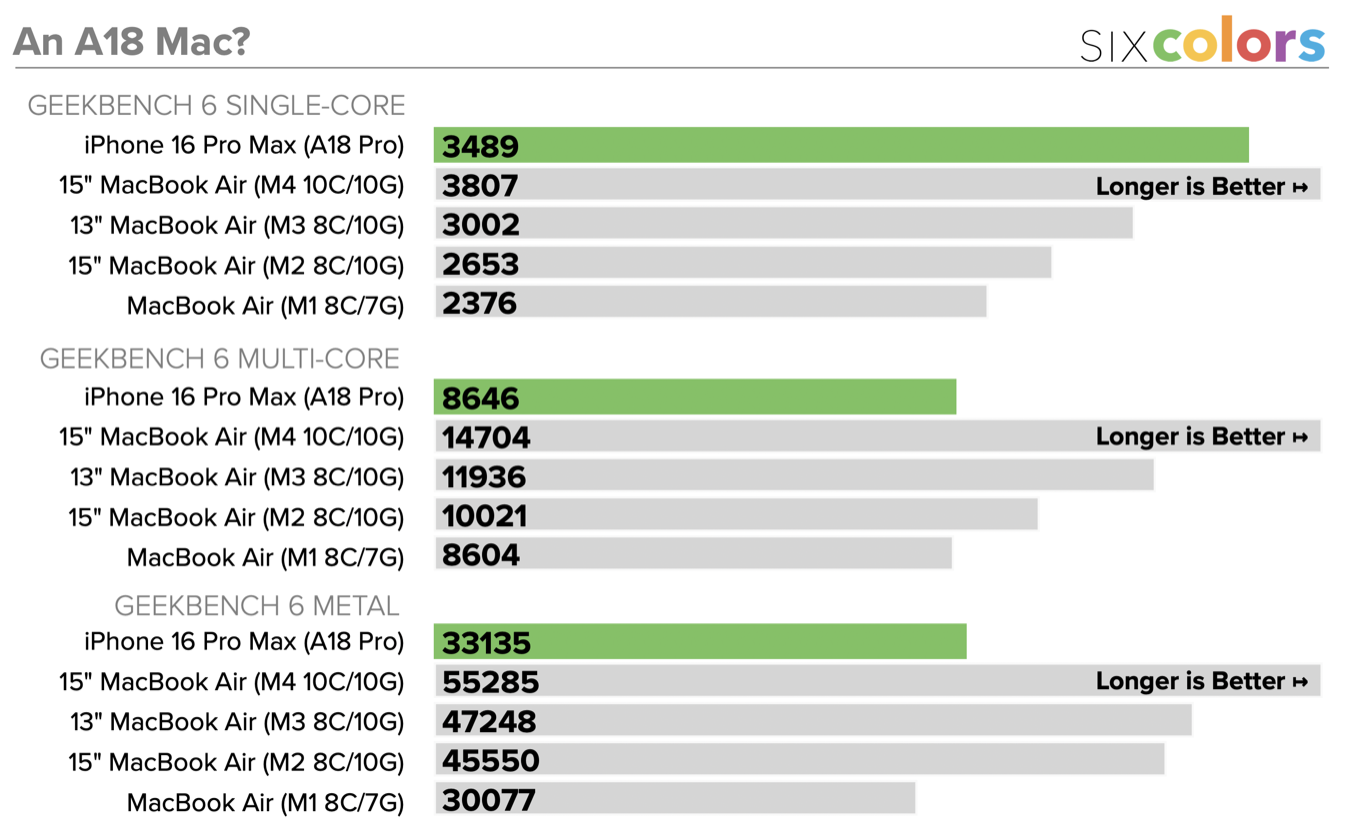
The MacBook Neo’s A18 Pro chip — derived from Apple’s iPhone silicon — brings impressive single-core and multi-core performance to a budget device. Thanks to Apple’s tight hardware-software integration and unified memory architecture, the system delivers responsive everyday performance despite its low price. The 16-core Neural Engine enables fast on-device Apple Intelligence features such as summarizing notes in Bear or using the Clean Up tool in Photos, all while keeping user data private.
In contrast, most $400–$550 Windows laptops rely on Intel N-series or older Core i3 processors with 8GB of RAM. These machines often feel sluggish during multitasking, especially as web apps and browser tabs consume memory. The growing memory shortage caused by AI data centers has forced many PC makers to cut corners — replacing proper SSDs with slower eMMC storage in some models — further degrading real-world performance. The MacBook Neo avoids these compromises, delivering consistent speed and efficiency in a silent, fanless chassis.
Chromebooks in the same price range often use ARM-based Snapdragon or MediaTek chips and perform adequately for web-centric tasks but struggle with more demanding productivity software. The MacBook Neo’s ability to run full macOS applications gives it a clear edge for users needing desktop-class software.
Build Quality and Design
Apple has historically excelled in premium build quality, and the MacBook Neo continues this tradition. Despite its lower price, it features an aluminum unibody design that feels solid, reliable, and durable — a stark contrast to the flex-prone plastic chassis common in budget Windows laptops. John Ternus, Apple’s SVP of Hardware Engineering, emphasized that the MacBook Neo is “all the things you want a Mac to be.”
Chromebooks have improved significantly, with some premium models offering metal builds, but most sub-$600 options remain plastic-heavy. The MacBook Neo’s fanless design ensures completely silent operation, matching or exceeding the thermal experience of Apple’s higher-end MacBook Air M3.
Software Ecosystem and Cloud Strategy
One of the most insightful aspects of the MacBook Neo, as noted in Stratechery’s analysis, is that the most important software now runs in the cloud. This reduces the performance demands on local hardware. Users can rely on web versions of Microsoft 365, Google Workspace, and creative tools that offload heavy computation to the cloud.
This cloud-first reality benefits the MacBook Neo significantly. Even with an A18 Pro chip that is less powerful than an M3 or M4, users experience excellent real-world performance for email, browsing, document editing, and light creative work. Windows laptops benefit from native app support but suffer from bloat and inconsistent update experiences. ChromeOS is excellent for cloud-centric users but lacks the depth of macOS or Windows for professional desktop applications.
AI Features and Future-Proofing
Apple has integrated Apple Intelligence directly into the MacBook Neo, supported by the 16-core Neural Engine for on-device tasks. The company is also leveraging Google’s Gemini models for certain cloud-based AI features — a pragmatic hybrid approach that balances privacy, performance, and capability.
Newer Windows laptops with NPUs offer Windows Copilot features, but many budget models still lack dedicated AI hardware. Chromebooks are receiving strong Gemini integration from Google. The MacBook Neo’s combination of on-device efficiency and cloud augmentation positions it well in the evolving AI landscape, especially as memory constraints continue to pressure the broader PC industry.
Memory Market Dynamics
The MacBook Neo arrives at a pivotal moment. Analysts have warned that the AI boom is driving massive demand for high-bandwidth memory, potentially making truly sub-$500 laptops extinct. Several Windows vendors have already begun downgrading storage solutions. Apple’s ability to deliver a compelling $599 Mac using efficient Apple Silicon demonstrates both the strength of its vertical integration and the growing challenges facing traditional PC manufacturers.
Pricing Comparison
- MacBook Neo: $599 — the cheapest MacBook ever
- Budget Windows laptops: $399–$549 (but often with compromised components due to memory/SSD shortages)
- Premium Chromebooks: $399–$599
- MacBook Air M3: $999+
The $599 price point is aggressive for Apple and directly challenges the value proposition of both low-end Windows machines and mid-tier Chromebooks. However, buyers should verify final configurations, as RAM and storage options will heavily influence perceived value.
Use Case Recommendations
Best for students and first-time Mac users: The MacBook Neo offers an excellent entry into the Apple ecosystem. Its build quality, silent operation, and reliable performance make it ideal for note-taking, web research, and light productivity. The cloud-centric nature of modern education software plays perfectly to its strengths.
Best for cloud-first professionals: Users who live in browsers, web apps, and services like Figma, Notion, and Google Workspace will find the MacBook Neo surprisingly capable. The premium build and macOS polish provide a better daily driver experience than most plastic Windows laptops.
Best for budget Windows buyers: Those needing native Windows applications (certain business software, specific games, or legacy tools) may still prefer a $450–$550 Windows laptop — provided they carefully select models that haven’t been compromised by memory cost pressures.
Best for performance enthusiasts: Users needing maximum power for video editing, software development, or heavy AI workloads should step up to the MacBook Air M3 or higher. The Neo is not designed to replace these machines.
Best for pure web users: A premium Chromebook may still offer better value for users who stay entirely within the browser and Google services, especially if battery life is the top priority.
Verdict
The MacBook Neo represents a clever strategic move by Apple. By leveraging the efficiency of Apple Silicon and the reality that critical software increasingly runs in the cloud, Apple has created a “not-so-thin” (in ambition) yet genuinely affordable Mac that feels remarkably complete. It delivers premium build quality, silent operation, capable AI features, and reliable performance at a price that challenges the entire budget PC segment.
However, it is not without trade-offs. The A18 Pro, while efficient, is not as powerful as Apple’s M-series chips. Some users may eventually want more local performance or expanded ports. Meanwhile, the broader PC industry faces real pressure from rising memory costs, which could make the MacBook Neo’s balanced value proposition even more attractive over time.
For many users — particularly students, families, and cloud-centric professionals — the MacBook Neo offers the best combination of quality, longevity, and experience in the sub-$700 category. It raises the bar for what a budget laptop should be. Traditional PC makers will need to respond with better efficiency, improved build quality, and smarter use of cloud resources to remain competitive.
The MacBook Neo doesn’t win in every scenario, but it succeeds remarkably well at its goal: making the Mac accessible to far more people without feeling like a compromised product. In an era of AI-driven component inflation, that achievement is significant.
(Word count: 1,278)
Sources
- Stratechery - MacBook Neo, The (Not-So) Thin MacBook, Apple and Memory
- Apple Newsroom - Say hello to MacBook Neo
- TechSpot - The MacBook Neo is a $500 Wake-Up Call for the Entire PC Industry
- Axios - Apple adds the MacBook Neo. Why laptop prices are in for a wild ride
- ABC News - Exclusive: Apple executive details affordable new MacBook Neo
- Windows Forum - Apple's $599 MacBook Neo: AI driven strategy and memory market dynamics