
AI Datacenters May Gulp a New York City's Worth of Water on Hot Days
Key Facts
- What: A University of California, Riverside study warns that US datacenters could require 697 million to 1.45 billion gallons of additional peak daily water capacity by 2030 to meet cooling demands during the hottest periods.
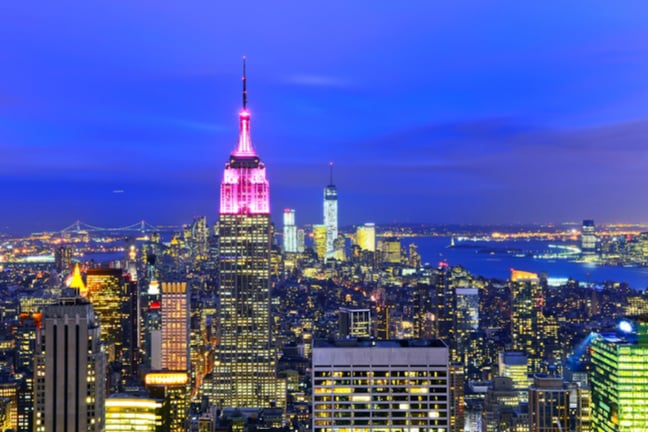
- Impact: This peak demand is comparable to New York City's average daily water supply of about one billion gallons.
- Cost: Meeting the increased peak capacity could require up to $58 billion in investments for public water systems.
- Why: Evaporative cooling systems, used to reduce power consumption in AI and hyperscale facilities, drive sharp spikes in water use on hot days even if annual consumption appears modest.
- Recommendation: Datacenters should report peak water usage rather than just yearly averages and collaborate with communities on infrastructure upgrades and flexible cooling strategies.
US public water systems face the prospect of needing billions of dollars in upgrades to accommodate surging peak water demand from AI-driven datacenters, according to a new study from the University of California, Riverside. Researchers estimate that without efficiency improvements, datacenters across the country could require between 697 million and 1.45 billion gallons of extra peak water capacity per day by 2030 — roughly equivalent to New York City's entire daily water supply. The findings highlight a growing tension between the rapid expansion of power-hungry AI infrastructure and local water resources, particularly during heatwaves when both electricity and water systems are under maximum stress.
The study, published this week, acknowledges that water-based cooling remains one of the most efficient ways for server farms to manage heat while minimizing electricity use. However, it warns that the peak withdrawals — not the average annual consumption — could overwhelm many of the nation's 50,000 community water systems, most of which are small or medium-sized and lack capacity for sudden, large-scale demand spikes.
Datacenter cooling typically involves two stages. Server-level cooling transfers heat from IT equipment to an intermediate heat exchanger, usually without direct water consumption. The second stage — facility-level cooling — often relies on evaporative cooling towers or adiabatic systems that consume water through evaporation, especially on the hottest days when air cooling alone is insufficient. According to the UC Riverside researchers, a single large modern datacenter using evaporative cooling can require more than one million gallons of water per day during peak heat, with some planned gigawatt-scale AI facilities potentially needing far more.
The report estimates that a 100 MW IT load could demand between 0.5 and 2.5 million gallons per day (MGD) depending on climate and cooling design. This figure becomes significant when scaled across the hyperscale and colocation facilities being built to support AI training and inference workloads. Many of these facilities connect to public community water systems, with only a few drawing from private groundwater. The researchers note that nearly all such systems are designed with safety margins for extreme conditions, yet many existing datacenter projects have already triggered substantial local water infrastructure upgrades even at peak demands as low as 0.1 MGD.
Peak Demand vs. Annual Averages
Water consumption by datacenters has been a contentious issue, with some operators arguing that their overall yearly usage is relatively modest and that not all withdrawn water is permanently "consumed" — some is returned to the system. However, the UC Riverside study emphasizes that any water withdrawn is temporarily unavailable for other users, creating competition during periods of high demand such as prolonged heatwaves and droughts.
The analysis projects that without new water efficiencies, the additional peak capacity needed by 2030 could range from 697 to 1,451 MGD. Even under optimistic scenarios with significant water-use reductions, the requirement could still equal about half of New York City's daily supply during much of the year. Meeting this demand could cost up to $58 billion in infrastructure investments, the researchers warn.
The study points out that approximately 40,000 of the nation's community water systems are small, serving no more than 3,300 people each, while only 708 are large systems serving more than 100,000 residents. This distribution suggests that many communities hosting new AI datacenters may lack the scale to easily absorb the peak loads.
Calls for Better Reporting and Collaboration
The UC Riverside team recommends several practical steps. First, datacenter operators should be required to report peak water use in addition to annual averages to help utilities and communities plan more effectively. Second, operators could partner with local governments to help fund necessary water infrastructure upgrades. Third, closer coordination with electric utilities could enable "smart" cooling strategies — using water-based cooling during periods of grid stress and switching to dry cooling when water systems are strained. The report acknowledges the challenge of days when both power and water systems face simultaneous peak demand.
The findings arrive as the AI boom drives explosive growth in datacenter construction across the United States. Major technology companies are racing to build facilities capable of training and running increasingly large AI models, many of which are expected to reach gigawatt-scale power demands. Water has emerged as a critical resource constraint alongside electricity and land availability.
Broader Context and Industry Response
Water usage by datacenters has drawn increasing scrutiny in recent years. Similar concerns have been reported in other regions, including the United Kingdom, where data center concentration in the London area has raised questions about peak demand on the Thames Water system during dry periods. In the US, local disputes have arisen in communities where new facilities have been proposed or built near residential areas, sometimes leading to complaints about impacts on household water supplies.
Some operators have disputed characterizations of their water usage as problematic, emphasizing efficiency improvements and the use of non-potable water sources where possible. However, the UC Riverside study focuses specifically on the strain on public potable water systems that supply most hyperscale facilities.
Impact on Developers, Communities, and the Industry
For datacenter developers and the hyperscalers driving AI growth, the study underscores that water infrastructure could become as significant a bottleneck as power availability. Projects may face longer permitting timelines, higher costs for supporting infrastructure, or requirements to adopt more advanced cooling technologies such as closed-loop systems or greater use of air cooling.
Local communities and water utilities could see both economic benefits from hosting facilities and new pressures on aging infrastructure. The projected $58 billion cost for water system upgrades represents a substantial public investment that may require creative funding partnerships with the technology industry.
For the broader AI industry, the report highlights the physical resource constraints underlying the seemingly abstract world of large language models and generative AI. As model sizes and training runs continue to grow, the infrastructure supporting them must contend with real-world limits on energy and water.
What's Next
The study authors call for more detailed reporting of peak water usage to improve planning accuracy. They also suggest that flexible cooling approaches — switching between water and air cooling based on real-time grid and water system conditions — could help mitigate strain, though they note the difficulty of managing days when both resources are simultaneously stressed.
With AI datacenter construction accelerating, the gap between projected demand and existing water system capacity is likely to widen without coordinated action. Whether operators, utilities, and regulators can implement the recommended efficiencies and partnerships before 2030 will determine if the AI boom exacerbates water scarcity in parts of the United States or becomes an opportunity for joint infrastructure investment.
The full study provides detailed modeling based on current cooling technologies and projected datacenter growth. Its conclusions are grounded in analysis of existing community water systems and the specific water demands of modern evaporative cooling methods.