
The short version
Vnet Group, one of China's biggest operators of data centers—the massive warehouses that power AI and cloud services—is considering selling about $400 million in dollar bonds to build more of them. This move comes as China's AI race heats up, with companies scrambling for the computing power needed to train smarter AI tools. For everyday people, it signals faster AI growth in China that could lead to cheaper, more advanced tech tools reaching your phone or apps sooner.
What happened
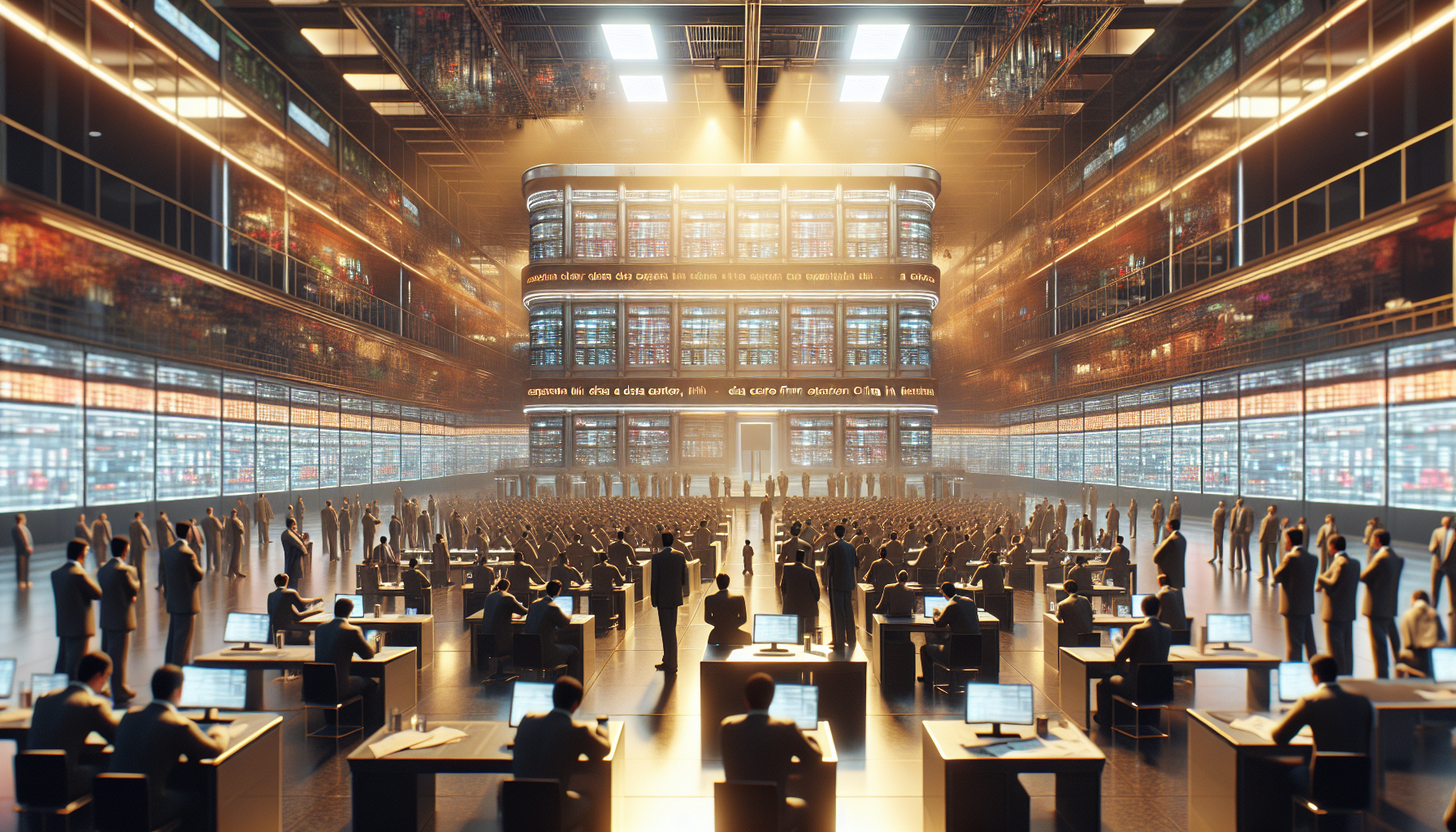
Imagine data centers as giant libraries full of supercomputers instead of books. These "libraries" store and process all the data that makes AI chatbots, image generators, and recommendation systems work—like the brains behind apps you use daily. Vnet Group runs some of the largest ones in China, spread across multiple regions.
Right now, China's AI companies (think local versions of Google or OpenAI) are in a fierce competition to build the best AI. They need huge data centers to handle the massive computing power required—it's like needing a stadium-sized kitchen to bake enough bread for a whole city. To keep up, Vnet is looking at borrowing money through "dollar bonds," which are basically IOUs sold to investors worldwide in U.S. dollars. Reports suggest they're aiming for around $400 million, though some sources say they already raised a similar amount ($430 million) in convertible bonds (a type of bond that can turn into company stock). This cash would fund new data centers to meet the booming demand.
It's not just Vnet—global tech giants are doing the same, raising nearly $100 billion in bonds lately to beef up AI infrastructure. But the Bloomberg report on Vnet specifically notes it's still "mulling" options, meaning it's under consideration but not fully confirmed yet.
Why should you care?
Data centers are the unsung heroes (or power hogs) of the AI boom. Without more of them, AI development slows down—like trying to stream movies on a dial-up internet connection from the 90s. Vnet's expansion means China could crank out AI innovations faster, from smarter translation apps to better photo editors.
For you personally, this matters because AI is sneaking into everything: your phone's voice assistant gets wittier, shopping apps suggest perfect gifts, and even doctors use AI for quicker diagnoses. If China builds more capacity, we might see AI tools become cheaper and more widespread globally. On the flip side, it ramps up energy use—data centers guzzle electricity like a small city—which could nudge up your power bills indirectly if grids strain. Plus, in a world where U.S. and Chinese tech compete, this keeps the pressure on for better AI everywhere, not just one side.
What changes for you
Practically speaking, nothing flips overnight, but here's the ripple effect:
- Smarter apps sooner: More data centers = faster training for AI models. Expect Chinese apps like those from Baidu to improve, and global ones (via competition) to follow suit. Your WeChat or TikTok might get eerily better at understanding you.
- Possible cost savings: Expanded capacity could lower the price of cloud services, making AI features in free apps more powerful without companies passing on huge costs to users.
- Job and investment vibes: This boosts tech jobs in China, and Vnet's NASDAQ-listed stock might appeal to investors, but for regular folks, it means more AI startups popping up with consumer tools.
- Energy and environment watch: These centers need lots of power, so keep an eye on news about sustainable energy—your electric bill or local grid reliability could feel a tiny pinch if demand spikes worldwide.
- Geopolitics lite: U.S.-China AI rivalry means innovations might flow faster to you, but with occasional hiccups like app restrictions or trade tensions affecting device prices.
No need to buy bonds or change habits yet—this is behind-the-scenes fuel for the AI engine powering your daily digital life.
Frequently Asked Questions
### What exactly is a data center, and why do AI companies need more?
A data center is like a huge warehouse packed with computers that store data and do heavy calculations, powering everything from Netflix streaming to AI chatbots. AI needs them because training a single smart model requires crunching trillions of data points—think solving a million math puzzles at once. Vnet's expansion means more room for this, speeding up AI progress for tools you use.
### Is Vnet's bond raise confirmed, and how much money are we talking?
Bloomberg reports Vnet is considering a dollar bond sale for expansion, with estimates around $400 million, but it's not officially confirmed by the company yet—status: unverifiable. Other sources note they raised $430 million in convertible bonds recently for similar data center projects. This funding directly ties to China's AI boom.
### How does this affect AI outside China, like on my iPhone or Google apps?
China's faster AI growth pushes global competition, so companies like Apple or Google invest more to keep up, leading to better features in your apps—like more accurate Siri or smarter Google Search. It won't change your phone tomorrow, but over months, expect AI to feel more helpful and integrated into daily tasks.
### Will this make my internet or power bill go up?
Data centers use massive electricity (equivalent to thousands of homes), so a big expansion could strain power grids and raise costs indirectly worldwide. However, if it leads to efficient AI that optimizes energy use (like smart home thermostats), it might save you money long-term. No immediate hike expected for individuals.
### Is Vnet a big player, and what's driving this AI race in China?
Yes, Vnet is one of China's largest data center operators, listed on NASDAQ with facilities across provinces. The race is fueled by homegrown AI giants like Baidu needing huge computing power to rival global leaders, creating a "gold rush" for data center space amid exploding demand.
The bottom line
Vnet's potential $400 million bond raise is a sign China's AI infrastructure is supercharging ahead, building the digital backbone for tomorrow's tech. For you, it means a good chance of quicker, cheaper AI perks in apps and services—think sharper recommendations and helpers—while the world races to balance growth with energy realities. Keep an eye on this; it's how the AI you love gets even better, straight from the power plants behind the curtain. Stay tuned for updates, as details could evolve.
(Word count: 842)