
Headline
Iran War Raises Questions Over Hyperscalers’ Massive AI Buildout in Middle East
Key Facts
- Tech companies have invested billions of dollars in Middle East AI data center projects.
- A prolonged Iran war could slow future hyperscaler investments in the region, though existing builds are expected to continue.
- Conflict risks disrupting supplies of critical chipmaking materials such as helium and bromine.
- Higher energy costs from the conflict could reduce demand for AI data centers and pressure memory chipmakers.
- Analysts say the situation is prompting fresh scrutiny of geopolitical risk in AI infrastructure planning.
Lead paragraph
The escalating conflict involving Iran is prompting hyperscalers and technology companies to reassess their ambitious AI data center expansion plans across the Middle East, according to analysts who spoke with CNBC. While existing projects are likely to proceed, a drawn-out war could deter new multibillion-dollar commitments that have fueled the region’s emergence as a major hub for artificial intelligence infrastructure. The potential disruption of key semiconductor materials and rising energy prices further threaten the economics of large-scale AI buildouts.
Body
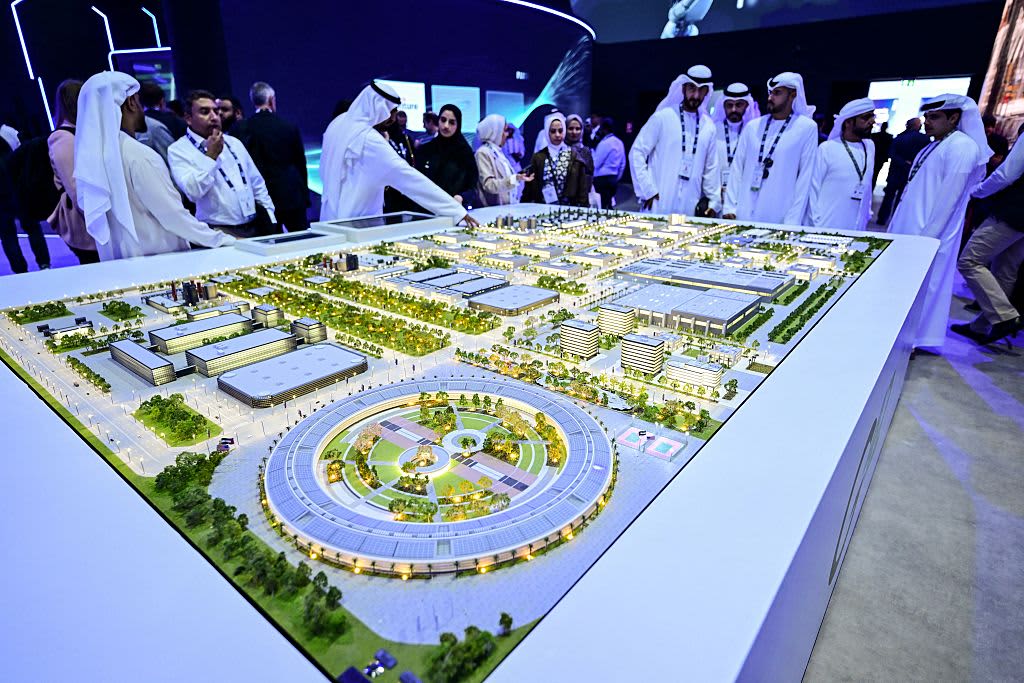
Tech giants have poured billions into AI-related projects in countries such as Saudi Arabia, the United Arab Emirates and other Gulf states in recent years, drawn by abundant energy resources, favorable government policies and strategic geographic positioning between Europe, Asia and Africa. These investments form a critical part of the global race to construct the massive data centers required to train and run next-generation AI models.
However, the Iran war has introduced significant new risks. According to CNBC reporting, while hyperscalers are not expected to abandon infrastructure already under construction, prolonged hostilities could lead to a reassessment of future capital allocation in the region. Analysts cited by the outlet highlighted that geopolitical instability often forces companies to apply stricter risk filters when evaluating multi-year, high-value commitments.
One immediate concern involves the global semiconductor supply chain. A prolonged conflict in the Middle East could disrupt supplies of key chipmaking elements such as helium and bromine, analysts told CNBC. Helium is vital for cooling systems in semiconductor manufacturing, while bromine compounds are used in certain etching and purification processes. Any sustained interruption in these materials could increase costs and delay production timelines for the advanced chips that power AI data centers.
Higher energy costs represent another threat. Regional instability has already contributed to volatility in oil and gas markets. Because AI data centers are extremely power-intensive, sustained increases in electricity or cooling costs could make some planned facilities economically unviable. This reduced demand for new data center capacity would, in turn, hurt memory chipmakers and other suppliers further up the AI hardware value chain, according to the CNBC analysis.
The Middle East’s growing role in the global AI ecosystem makes these risks particularly significant. Saudi Arabia’s Vision 2030 and the UAE’s ambitious AI strategies have attracted commitments from major cloud providers and hyperscalers seeking to diversify away from traditional data center hubs in the United States and Europe. Billions have been committed to projects that include not only physical data centers but also local AI talent development, high-speed connectivity infrastructure and partnerships with sovereign wealth funds.
Impact
For developers and AI companies, any slowdown in Middle East data center expansion could constrain available capacity at a time when global demand for GPU clusters and specialized AI training infrastructure continues to surge. Organizations planning large-scale model training or inference workloads may face tighter supply and potentially higher costs if alternative regions cannot absorb displaced demand quickly.
The semiconductor industry could also feel the effects. Memory chipmakers, already navigating cyclical markets, may see softer demand if fewer AI data centers are built. Equipment suppliers and rare material processors would similarly face headwinds from any disruption to helium and bromine flows.
From a broader industry perspective, the situation underscores the growing intersection of geopolitics and technology infrastructure. Hyperscalers have spent years trying to build resilient, geographically distributed networks, yet concentrated investment in any single region — even one previously viewed as stable — carries risks when conflicts emerge. The Iran war serves as a reminder that energy security, material supply chains and political stability are now core considerations in AI infrastructure strategy.
What's next
Analysts expect hyperscalers to maintain existing construction timelines in the near term while conducting more detailed risk assessments for future phases. Companies may accelerate diversification efforts, placing greater emphasis on locations in Southeast Asia, Latin America or additional European sites to mitigate concentration risk.
The duration of the conflict will likely prove decisive. A short-term resolution could see investment momentum return relatively quickly, while a protracted war would almost certainly lead to meaningful delays or cancellations of planned projects. Supply chain experts will be closely monitoring helium and bromine markets for signs of sustained disruption.
Longer term, the episode may accelerate discussions around developing more robust domestic or allied supply chains for critical AI materials and components. Governments and industry groups could increase efforts to secure alternative sources of helium and other specialized inputs currently vulnerable to Middle East instability.
The conflict also highlights how AI itself is becoming intertwined with military and intelligence operations. Separate reporting from Nature and MIT Technology Review notes the growing use of AI tools in the current Iran conflict, including U.S. military adoption of systems like Anthropic’s Claude, further illustrating the strategic importance of AI infrastructure resilience.
Sources