
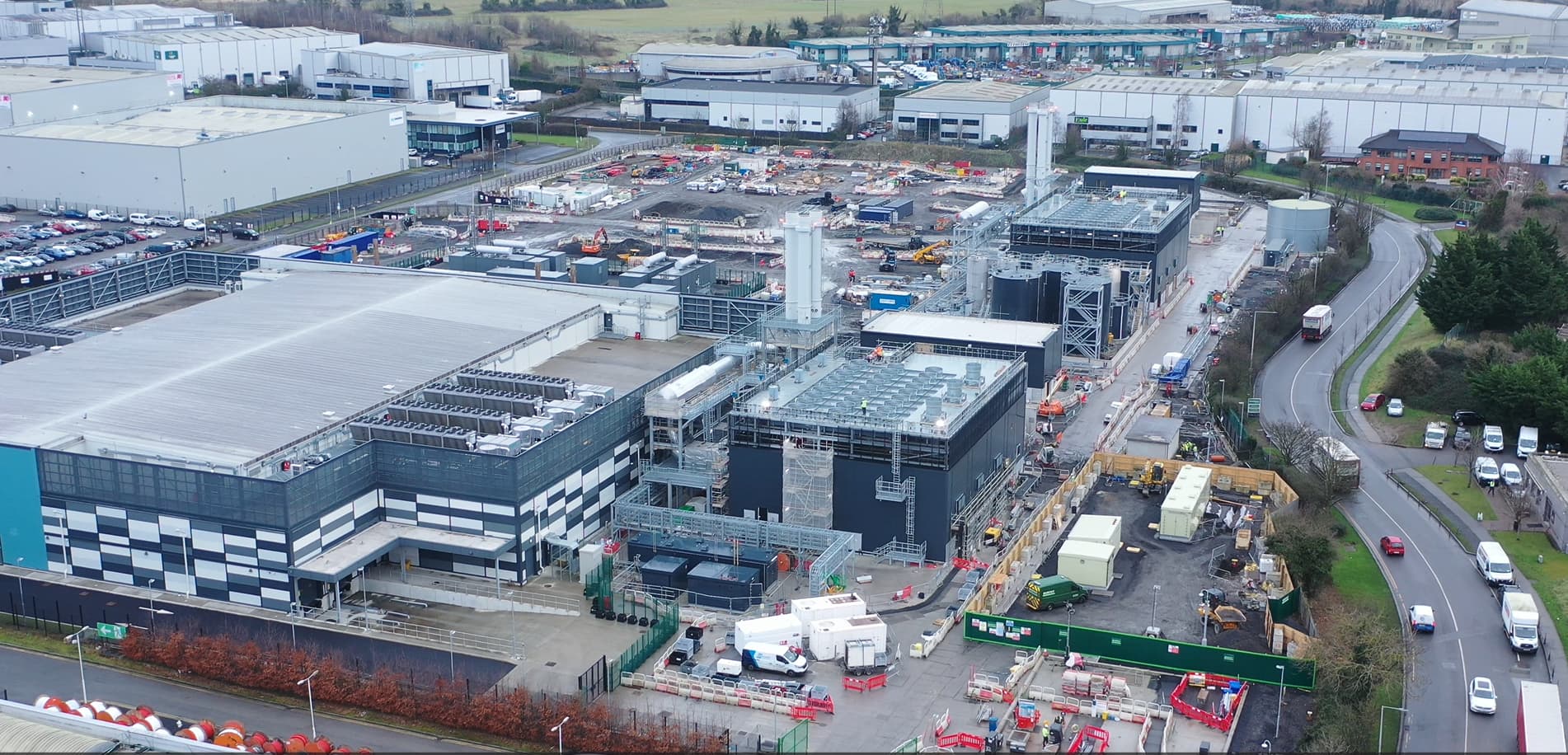
Headline:
Europe Activates First Microgrid-Connected Data Center in Ireland
Key Facts
- What: AVK and Pure Data Centers have commissioned Europe’s first microgrid-connected data center facility in Ireland.
- Where: Ireland, a key European hub for data center development amid surging AI demand.
- Significance: The project represents an early step toward privately powered data center ecosystems in Europe.
- Context: Part of a global trend of data center operators exploring off-grid and microgrid solutions to bypass strained public power infrastructure.
- Implications: Could help address power constraints driven by artificial intelligence workloads while raising questions about carbon emissions and grid independence.
Lead paragraph
AVK and Pure Data Centers have switched on Europe’s first microgrid-connected data center in Ireland, marking a potential milestone in the continent’s efforts to support the explosive growth of artificial intelligence infrastructure. The facility aims to operate with greater independence from the traditional power grid by integrating a dedicated microgrid, according to a CNBC report. As data center demand surges due to AI training and inference needs, the project highlights a broader industry shift toward privately managed energy systems in regions facing electricity shortages.
Project Details and Technical Approach
The collaboration between AVK, a specialist in critical power infrastructure, and Pure Data Centers focuses on creating a more resilient and flexible power solution tailored for high-density computing environments. While specific technical specifications such as exact capacity, generation mix, or storage size were not disclosed in initial reporting, the facility is described as a microgrid-connected site that can function with reduced reliance on the main grid.
Microgrids typically combine on-site generation — often natural gas, diesel, or increasingly renewables paired with battery storage — with intelligent controls that allow seamless islanding from the utility network. This setup provides both backup power during outages and the potential for optimized energy costs and availability. The Irish project is positioned as an early European example of what has become more common in the United States, where major technology companies have begun developing shadow power grids to meet AI-driven electricity demand.
Industry observers note that traditional grid connections in many European countries, including Ireland, are facing significant delays and capacity constraints. Connection queues for new data centers can stretch for years, prompting operators to explore alternative energy architectures. The AVK-Pure Data Centers initiative could serve as a proof-of-concept for future deployments across the region.
Broader Industry Context
The activation of this microgrid-connected data center arrives as the AI boom places unprecedented pressure on power infrastructure worldwide. According to various industry analyses, data centers supporting large language models and other AI workloads can consume tens of megawatts per facility, with hyperscale campuses requiring hundreds of megawatts. This rapid growth has strained aging transmission and distribution systems, leading developers to consider on-site generation and microgrid solutions.
In the United States, several technology companies are reportedly building private power plants alongside data centers, a trend that has drawn scrutiny for its potential environmental impact. A Washington Post report highlighted concerns that such shadow grids could increase carbon emissions and other pollution if they rely heavily on fossil fuels rather than low-carbon alternatives.
Meanwhile, investment is flowing into diverse energy solutions for AI infrastructure. Morgan Stanley has outlined how markets are racing to invest in natural gas, battery storage, nuclear power, and off-grid options as data center operators seek reliable electricity at scale. BloombergNEF has similarly documented how AI is reshaping electricity demand patterns, with new data center projects accelerating changes in power markets.
In Europe, regulatory and environmental considerations add complexity. The European Union maintains ambitious climate targets, which could influence the design of future microgrid projects. While the AVK and Pure Data Centers facility represents progress toward solving power availability challenges, questions remain about its long-term sustainability profile and integration with broader renewable energy goals.
Competitive Landscape and Related Developments
The Irish project fits into a growing ecosystem of microgrid innovation targeting data centers. Companies like Eaton are advancing AI-powered microgrid strategies that combine hardware expertise with specialized software to improve performance and return on investment. Xendee Corporation, which secured Series B financing in 2025, has demonstrated projects integrating solar generation, energy storage, and intelligent controls. The company has also collaborated with Siemens Energy on standardized modular systems designed to shorten data center construction timelines.
These parallel efforts suggest the data center industry is moving toward more sophisticated distributed energy resource management. Microgrids offer potential benefits including improved resilience against grid instability, better operational performance, and financial advantages through energy cost optimization and reduced reliance on volatile utility rates.
For Pure Data Centers and AVK, the Ireland facility could serve as a flagship project to demonstrate technical feasibility and attract further investment or partnerships. The companies appear to be positioning themselves at the intersection of critical infrastructure and energy innovation, an increasingly strategic area as AI adoption accelerates across industries.
Impact on Developers, Operators, and the Industry
For data center developers and hyperscalers, microgrid solutions could reduce project risk by shortening or eliminating dependence on lengthy grid connection queues. This is particularly valuable in Ireland and other European markets where data center expansion has become a significant policy issue due to electricity and land constraints.
The approach may also enable more predictable power pricing and availability, critical factors for AI workloads that require consistent, high-quality electricity. However, the capital investment required for on-site generation and storage systems can be substantial, potentially affecting overall project economics.
From an environmental perspective, the impact will depend heavily on the energy sources integrated into the microgrid. Natural gas or diesel-based systems may provide short-term reliability but conflict with decarbonization objectives. Conversely, designs incorporating significant renewable generation paired with storage could align better with European climate policy while still offering grid independence benefits.
For the wider technology sector, successful deployment of microgrid-connected data centers could accelerate adoption of similar models elsewhere in Europe and beyond. It may also encourage utilities to develop more flexible grid modernization strategies to retain data center customers within the traditional network.
What's Next
The AVK and Pure Data Centers project is likely to be closely monitored by industry stakeholders for performance data, reliability metrics, and environmental outcomes. Future phases could include scaling the microgrid capacity, incorporating additional renewable resources, or expanding the model to additional sites.
As AI infrastructure demand continues its rapid growth trajectory, more operators are expected to evaluate hybrid grid-plus-microgrid architectures. Regulatory developments in Ireland and at the EU level will play a crucial role in determining how quickly and widely such privately powered systems can proliferate.
Innovation in microgrid controls, energy storage economics, and integration with advanced AI-driven energy management software is likely to further improve the viability of these solutions. Partnerships between data center specialists, power infrastructure providers, and technology companies are expected to intensify in the coming years.
The Ireland facility may represent just the first step in Europe’s transition toward a more diverse and resilient data center power ecosystem capable of supporting the continent’s AI ambitions.
Sources
- CNBC: Powering AI: Europe switches on its first microgrid-connected data center
- Washington Post: Silicon Valley is building a shadow power grid for data centers across the U.S.
- Morgan Stanley: Powering AI: Markets Race to Invest in AI Energy Solutions
- BloombergNEF: AI and the Power Grid: Where the Rubber Meets the Road
- Data Centre Magazine: Driving Microgrid Implementation Across Global Data Centres
- EnkiAI: Eaton Microgrid Strategy 2025: Winning with AI & Partners