
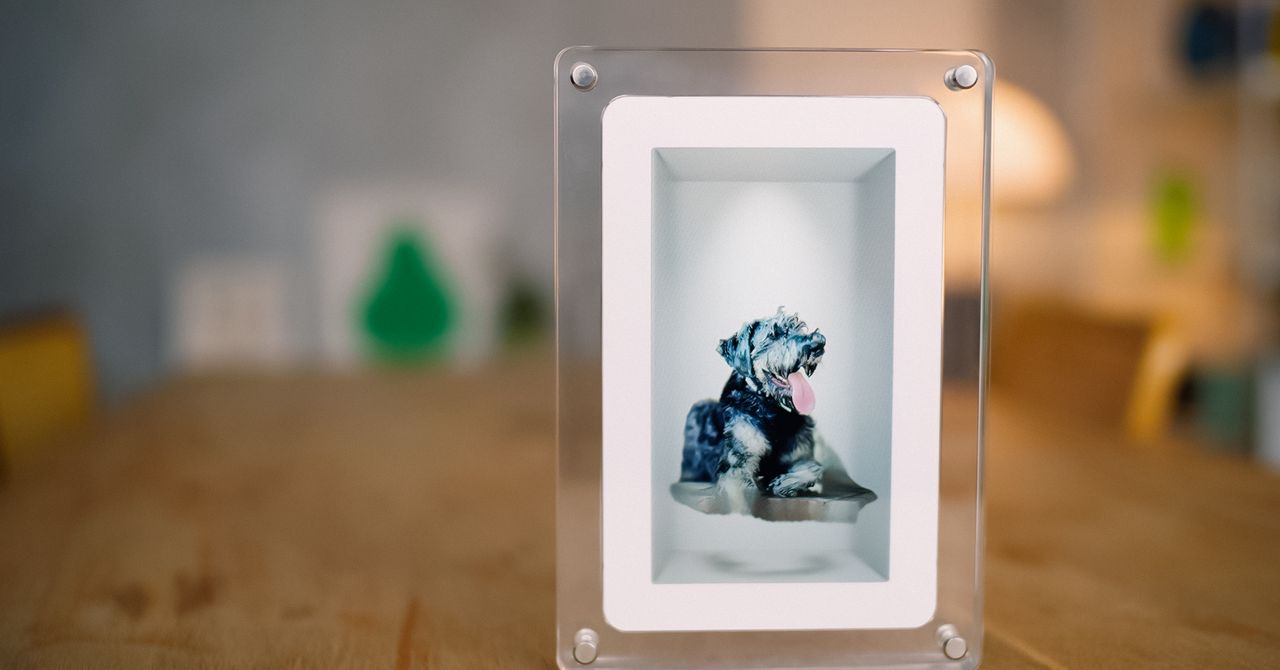
Headline: Looking Glass Launches Musubi, AI-Powered Holographic Digital Frame
Key Facts
- Brooklyn-based Looking Glass is launching Musubi, an AI-powered holographic picture frame designed to display photos and videos in 3D.
- The device builds on the company’s nearly decade-long development of 3D and holographic display technology.
- Musubi requires no headsets, glasses, or special eyewear and is viewable from multiple angles.
- It aims to bring a consumer-friendly holographic experience into homes as a step toward broader spatial computing adoption.
- The product is positioned as part of Looking Glass’s lineup that includes larger holographic displays for professional and immersive web experiences.
Lead paragraph
Brooklyn-based Looking Glass, a company that has specialized in 3D and holographic displays for nearly ten years, is launching Musubi, an AI-powered holographic digital picture frame. The device transforms ordinary photos and videos into dynamic three-dimensional visuals that can be viewed without glasses or headsets from a wide range of angles. According to a report in Wired, Musubi represents the company’s push to bring holographic technology into everyday consumer spaces and move closer to a future where holographic displays are commonplace in homes.
Company Background and Technology
Looking Glass has built its reputation on developing light-field and holographic display hardware. The company offers a range of professional-grade holographic screens, including Portrait, 16-inch, 32-inch, and 65-inch models, marketed for creating immersive 3D web experiences across various applications. Its technology allows multiple viewers to see the same 3D content simultaneously without requiring individual AR/VR headsets, a key differentiator in the spatial display market.
Musubi appears to be the consumer-facing evolution of this technology. Packaged as a digital picture frame, it uses artificial intelligence to enhance and animate users’ personal photos and videos, giving them depth and movement that traditional 2D frames cannot achieve. The integration of AI reportedly helps process and optimize 2D content for the holographic display, automatically generating the necessary depth information and light-field data required for convincing 3D reproduction.
How Musubi Works
The frame is designed for ease of use. Users can upload personal media through a companion app or service, after which the AI system converts the content into a format suitable for the holographic screen. Because the display relies on light-field technology rather than stereoscopic 3D or augmented reality overlays, the holographic images appear as if they exist within the physical frame and can be viewed clearly from different positions in a room.
This glasses-free, multi-viewer capability addresses one of the major barriers to mainstream holographic adoption. Traditional 3D displays often suffer from narrow viewing angles or require special eyewear, limiting their appeal for casual home use. Looking Glass’s approach aims to create a more natural experience, similar to viewing a physical object from different sides.
Competitive Landscape
The launch of Musubi places Looking Glass in a growing field of companies exploring holographic and spatial AI displays. Several competitors are targeting both consumer and enterprise markets with similar technology. For instance, Holoconnects offers the AI Holobox, which projects realistic human holograms for retail, healthcare, and event applications. Proto Hologram Inc. focuses on integrating hardware and software for spatial AI and real-time human interaction, including solutions that can convert existing displays into AI agents.
Other players are developing large-scale holographic walls and interactive 3D projection systems designed for public installations and immersive environments. While many of these solutions target commercial use cases such as retail displays, corporate presentations, or experiential marketing, Looking Glass appears to be carving out a niche with a more personal, home-oriented product. The Musubi frame could serve as an accessible entry point for consumers curious about holographic technology before larger, more expensive installations become practical for home use.
Technical Context and Challenges
Holographic displays like Musubi rely on advanced optics and computational rendering to recreate light fields that mimic how humans perceive depth. This requires significant processing power to generate multiple perspectives in real time, which explains the integration of AI to streamline content preparation. The company’s long development cycle — nearly a decade — suggests that achieving high-quality, consumer-ready holographic imagery at an affordable price point has been a substantial engineering challenge.
Current limitations in the broader holographic industry include resolution constraints, brightness levels, and the computational cost of rendering complex scenes. Looking Glass has focused on optimizing its displays for both visual quality and practicality, emphasizing that viewers need no additional hardware. The Musubi frame’s success will likely depend on how convincingly it can transform everyday family photos and videos into compelling 3D experiences that justify its cost.
Impact on Consumers and the Industry
For consumers, Musubi offers a novel way to display memories. Instead of static images on a screen or printed photo, families could see loved ones or special moments with depth and subtle motion, potentially creating stronger emotional connections. The device could appeal to early technology adopters, photography enthusiasts, and those interested in spatial computing.
From an industry perspective, the launch signals continued progress toward mainstream spatial displays. As companies like Looking Glass, Proto, and Holoconnects refine their technology, the barrier between 2D screens and true 3D holographic experiences continues to shrink. This could accelerate adoption in education, telepresence, digital art, and home entertainment. Success with a consumer product like Musubi may also help validate the market for larger holographic installations in homes and public spaces.
The broader AI industry is increasingly focused on multimodal experiences that combine visual, spatial, and interactive elements. By pairing AI with holographic hardware, Looking Glass is aligning its product with this trend, using artificial intelligence not just to generate content but to bridge the gap between traditional media and emerging display technologies.
What's Next
Looking Glass has not yet disclosed full pricing, exact availability dates, or complete technical specifications for Musubi beyond the initial announcement. The company is expected to provide more details through its website and future updates. Interested users can sign up for notifications about new product launches on the Looking Glass Factory website.
As the technology matures, future iterations of Musubi or related products may incorporate real-time AI animation, integration with smart home ecosystems, or enhanced interactivity. The company’s broader lineup of larger holographic displays suggests a long-term roadmap that could eventually bring more advanced spatial computing capabilities into consumer environments.
Industry observers will be watching whether Musubi can deliver on the promise of accessible, high-quality holographic imagery at a price point that appeals to a wide audience. If successful, it could help normalize holographic displays in the same way smart speakers and streaming devices brought advanced computing into living rooms.
The development also reflects growing interest in “holographic futures” where physical and digital content coexist more naturally. While full holographic telepresence and life-sized interactive figures remain further out, products like Musubi represent incremental but meaningful steps toward that vision.