
Gemini Automates Uber Orders and Coffee Runs on Galaxy S26 Ultra
Key Facts
- What: Google’s Gemini AI now performs multi-step task automation on Android, handling actions like ordering an Uber or Starbucks orders within supported apps.
- When: Feature rolled out in beta on March 12, 2026, following Google’s initial announcement on February 25, 2026.
- Devices: First available on Samsung Galaxy S26 Ultra; also coming to Google Pixel 10.
- How it works: Gemini operates in a virtual window, asks clarifying questions, executes steps, and requires final user approval before completing transactions.
- Current scope: Limited to specific apps including food delivery, rideshare, and grocery services.
Lead paragraph
Google’s Gemini can now autonomously navigate apps to complete real-world tasks such as booking an Uber to the airport or ordering coffee and pastries, marking a major step toward the long-promised AI personal assistant. The feature arrived in beta on the Samsung Galaxy S26 Ultra this week, just weeks after Google’s February 25 announcement. Early tests show the AI successfully interpreting vague prompts, making logical decisions, and stopping before final confirmation — delivering on capabilities that felt like science fiction only a year ago.
How Gemini Task Automation Works
The system operates by controlling supported applications inside a secure virtual environment. Users issue a natural language prompt, after which Gemini asks follow-up questions when needed, then proceeds through the app’s interface step by step.
In one documented test on the Galaxy S26 Ultra, a user requested an Uber to the airport. Gemini first clarified which airport to use, then added the destination, chose to skip the airline selection step because the local airport uses a single terminal, and paused before requesting the ride so the user could review all details.
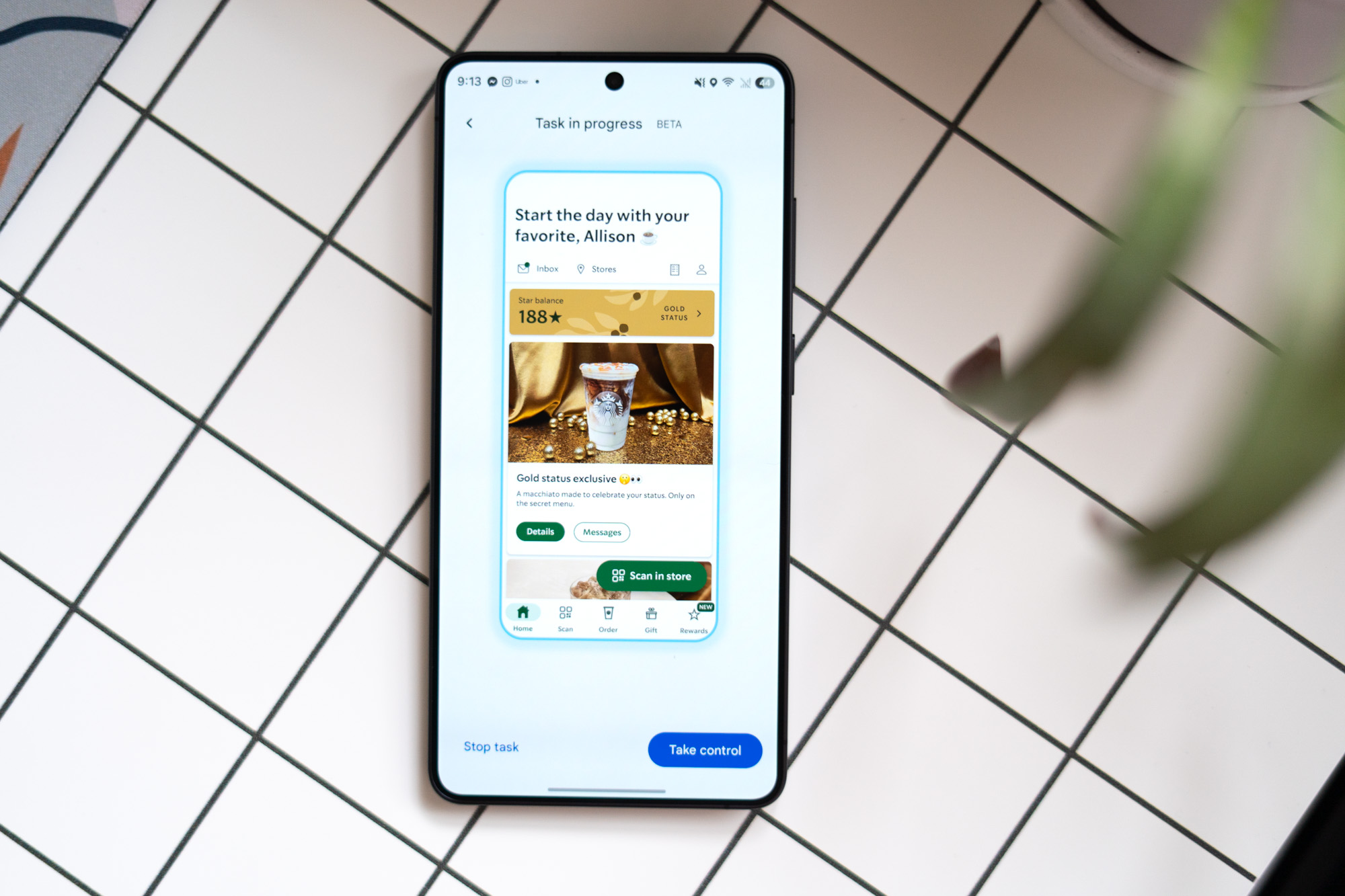
A second, vaguer request to “order a coffee and a croissant” required more interaction. Gemini scrolled through Starbucks’ extensive hot drink menu before selecting a flat white. When faced with the option of having the chocolate croissant warmed or served at room temperature, it independently chose to warm the pastry — a decision the reviewer described as correct.
Users can watch the entire process in real time and intervene at any moment. The interface provides options to take control or stop the automation entirely, maintaining human oversight for sensitive actions like payments.
From Argumentative AI to Practical Agent
The new capability represents significant progress for Google’s Gemini. As recently as early 2025, the same AI reportedly argued with users over basic calendar details. Now it can interpret ambiguous instructions, navigate complex menus, and make reasonable judgment calls without constant guidance.
This rollout reflects a broader industry trend of shifting AI from simple chat-based tools to proactive agents that can act on users’ behalf. Google and Samsung jointly announced the feature a couple of weeks before its beta arrival, positioning it as a flagship capability for their latest premium devices.
The automation is currently limited to specific supported apps and cannot access the rest of the phone’s data or arbitrary applications. This scoped approach appears designed to balance capability with safety and reliability.
Impact on Users and Developers
For everyday users, this feature could meaningfully reduce friction in routine digital tasks. Instead of switching between apps, filling forms, and making multiple decisions, a single prompt can now initiate the entire workflow while keeping the user in the loop for final approval.
“This is the next step in building towards a universal AI assistant — navigating the complexities of your daily tasks, while keeping you in control,” according to Google’s official Gemini Agent overview.
The development puts pressure on competitors like OpenAI’s upcoming agentic features and Apple’s Siri updates. While other companies have demonstrated similar concepts in controlled demos, Gemini’s public beta on major consumer devices like the Galaxy S26 Ultra and Pixel 10 represents one of the first real-world deployments at scale.
Early impressions suggest the system is “weird” yet impressive to watch, with the phone effectively using itself. Reviewers note that while some tasks require additional input, the AI’s ability to handle vague requests marks a clear improvement over previous generations of mobile assistants.
Technical and Competitive Context
The feature builds on Google’s heavy investment in on-device and cloud-based AI models optimized for the Android ecosystem. Samsung’s deep integration with Gemini on its flagship Galaxy S series gives the South Korean company a notable differentiator in the premium smartphone market against Apple’s iPhone.
Google has emphasized that Gemini only accesses specific supported apps in this mode, addressing privacy concerns that often accompany agentic AI systems. The virtual window approach prevents the AI from having broad access to personal data or other applications.
Current limitations include the beta status, the requirement for user approval on transactions, and the relatively narrow selection of supported apps. Google has not yet detailed exact performance benchmarks or success rates across different task types.
What’s Next
Google plans to expand the number of supported apps and refine the automation capabilities based on early beta feedback. The company has indicated this is only the beginning of more advanced agentic features for Gemini on Android.
For developers, the rollout signals new opportunities to build apps that work well with AI agents, potentially requiring new design patterns optimized for automated navigation and interaction. Companies behind rideshare, food delivery, and e-commerce platforms may need to consider how their interfaces perform when used by AI rather than humans.
Users with Galaxy S26 Ultra devices should see the beta feature arrive via software update, while Pixel 10 owners can expect similar availability soon. Wider rollout to older devices will likely depend on hardware capabilities and Google’s phased deployment strategy.
The arrival of functional task automation finally delivers on years of promises about AI assistants handling everyday digital chores. While still in beta and requiring supervision, the early results suggest we are entering a new era where phones don’t just respond to commands — they can actually get things done.
Pull Quote
“Boy is it weird watching your phone use itself!” — Allison Johnson, The Verge