
The short version
Groundsource is a new AI tool from Google and DeepMind that digs through over 5 million old news reports worldwide to create a massive dataset of 2.6 million past flash floods, helping predict future ones. Using Google's Gemini AI, it turns messy news stories into organized location and time data, then trains weather models to spot risks in areas lacking fancy sensors. Now live on Google's Flood Hub for urban spots in 150 countries, it could save lives by giving earlier warnings where traditional forecasts fall short.
What happened
Imagine flash floods as sneaky attackers—they hit fast, especially in cities, and they're tough to predict because many places lack the detailed weather data needed for good forecasts. Traditional systems rely on radars and sensors tracking rain in real-time, but those aren't everywhere, leaving huge blind spots.
Google's team at DeepMind had a clever fix: Why not use AI to learn from history? They fed Google's smart AI, called Gemini (think of it like a super librarian who reads millions of books at once), over 5 million news articles from around the world mentioning floods. Gemini sifted through them like a detective, pulling out confirmed flood events—pinpointing exactly where and when they happened—and turned that chaos into a clean "dataset" of 2.6 million events, complete with map coordinates and timelines. They call this treasure trove Groundsource.
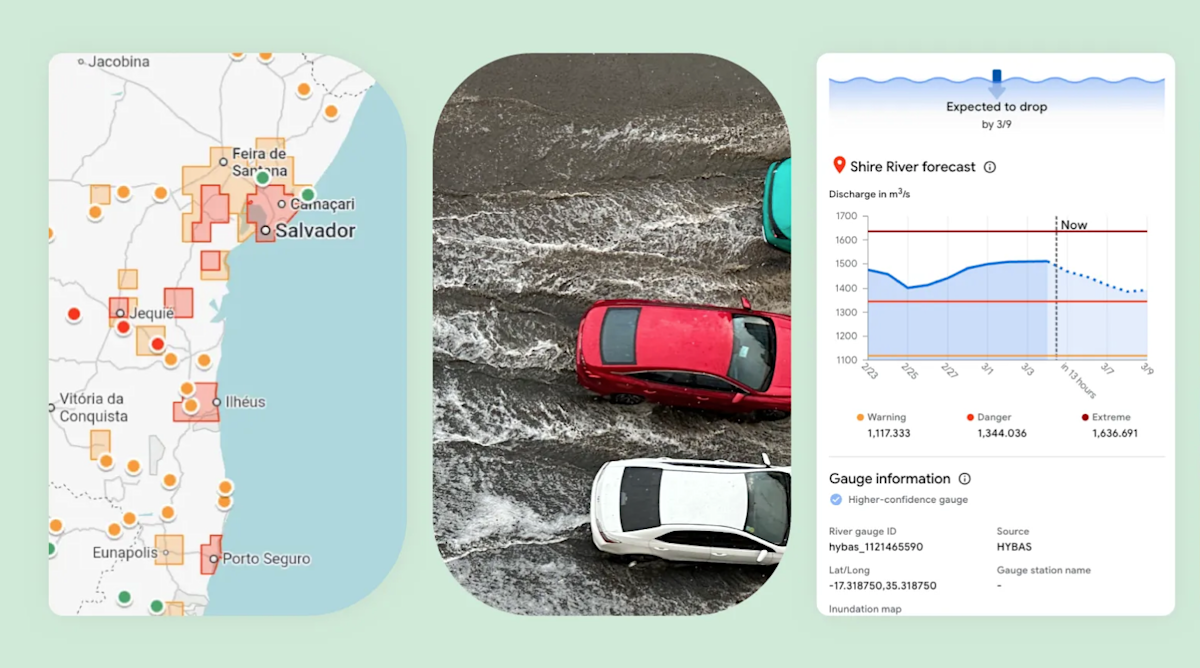
Next, they trained a weather prediction model with this historical goldmine plus today's weather forecasts. The result? A tool that flags flash flood risks in 20-square-kilometer chunks (about the size of a small neighborhood). It's now plugged into Google's free Flood Hub platform, alerting urban areas in 150 countries and sharing data with local emergency teams. One early user said it sped up their response to local storms, getting "boots on the ground" faster.
This is Google's first stab at using a language model like Gemini for weather prediction, building on their past AI wins like the super-accurate DeepMind WeatherNext 2. As Juliet Rothenberg, a program manager on Google's Resilience team, put it: “We’re aggregating millions of reports. It enables us to extrapolate to other regions where there isn’t as much information."
Why should you care?
Flash floods kill hundreds yearly and wreck homes, roads, and lives—especially in growing cities without top-tier weather tech. If you live in or visit one of 150 countries (think India, parts of Africa, Latin America, or even underserved U.S. spots), this means earlier heads-up on dangers that could flood your street in minutes. No more guessing; AI fills the data gap, making forecasts smarter where governments or apps couldn't before. It's not perfect yet—less precise than U.S. National Weather Service alerts without radar—but it's a game-changer for the 80% of the world without that luxury.
Personally, it matters if you're planning a trip, commuting through urban areas, or just want peace of mind during rainy seasons. Smarter warnings could mean detours that save your car, evacuations that protect your family, or quicker aid if disaster strikes. And it's free via Flood Hub, so everyday folks get pro-level info without paying extra.
What changes for you
- Check Flood Hub now: Head to Google's Flood Hub (already online) to see flash flood risks for cities in 150 countries. Enter your location for forecasts powered by Groundsource—great for travelers or city dwellers.
- Faster alerts: Emergency apps and local agencies using this data might ping your phone sooner, giving 30-60 minutes extra to move cars, grab pets, or head to higher ground.
- No special gear needed: Works in sensor-poor areas, so if you're in a developing city or rural-urban edge, your weather app could get a boost without new hardware.
- Coming soon? Google eyes expanding to heat waves and mudslides, so watch for broader warnings on your phone's weather feed.
- U.S. folks: Not as sharp as NOAA yet, but it complements them—try it for global travel or curiosity.
Early feedback? A trial user raved it shortened response times, turning predictions into action.
Frequently Asked Questions
### What is Groundsource and how does it work?
Groundsource is Google's new AI dataset of 2.6 million past flash floods, created by having Gemini AI scan 5 million global news reports for flood details like location and time. This "history book" trains weather models to predict future risks using current forecasts. It's like teaching a student with thousands of real-life examples instead of textbooks.
### Is Groundsource available to everyone, and is it free?
Yes, it's integrated into Google's free Flood Hub platform, covering urban areas in 150 countries. Just visit the site, search your location, and see flash flood risks—no app download or subscription needed. Emergency agencies get the raw data too, so local alerts might improve.
### How accurate is it compared to regular weather forecasts?
It's promising but has limits: It predicts over 20-square-km areas and lacks real-time radar, so it's not as pinpoint as the U.S. National Weather Service. Still, one user said it sped up responses, and accuracy details will emerge with more tests. Best for data-sparse regions.
### Does this only help with flash floods, or more disasters?
Right now, it's focused on urban flash floods, but Google plans to adapt it for heat waves and mudslides. By reusing the news-scanning trick, it could build datasets for other hard-to-predict events, helping more communities worldwide.
### When and where can I use Flood Hub with Groundsource?
It's live now on Flood Hub for 150 countries' urban zones. Check it via web browser anywhere with internet—perfect for planning trips or daily checks. More countries and features expected as it improves.
The bottom line
Google's Groundsource is a breakthrough that turns forgotten news stories into lifesaving flood predictions, finally tackling flash floods in overlooked places. For you, it means reliable, free warnings on Flood Hub that could prevent soggy disasters or worse—check it before your next rainy commute or trip. As climate weirdness ramps up, tools like this make the world a safer spot, one AI-scanned headline at a time. Your move: Bookmark Flood Hub today.
Sources
- Engadget: Google built a flash-flood prediction tool using Gemini and old news reports
- TechCrunch: Google is using old news reports and AI to predict flash floods
- Google Blog: Groundsource: using AI to help communities better predict natural disasters
- Google Research Blog: Protecting cities with AI-driven flash flood forecasting
- Heatmap News: Google Is Using AI to Fill a Flood Risk Data Gap
- Google Research Twitter