
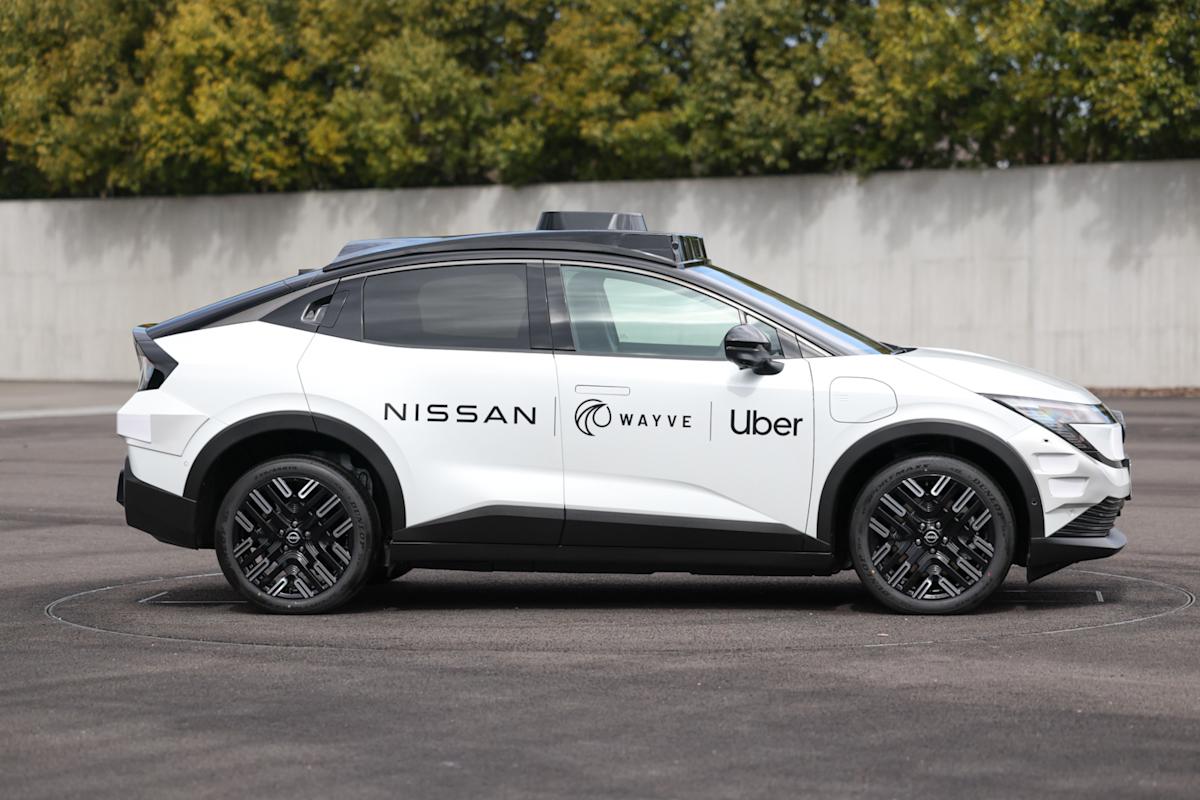
Uber to Pilot Robotaxi Service in Tokyo by Late 2026 with Wayve and Nissan
Key Facts
- What: Uber, Wayve, and Nissan signed a memorandum of understanding to launch a robotaxi pilot in Tokyo using Nissan Leaf EVs equipped with Wayve’s AI Driver technology, integrated with Uber’s platform.
- When: Preparations begin immediately with pilot deployment targeted for late 2026.
- Initial Operations: Trained safety drivers will be behind the wheel during early data-collection phase to navigate Tokyo’s narrow streets and complex driving conditions.
- Scope: Part of a broader plan by Uber and Wayve to deploy robotaxi services in more than 10 cities worldwide; future phase aims to offer self-driving vehicles through a licensed taxi partner in Japan.
- Related Activity: Uber-backed Nuro will also test vehicles on Tokyo streets; Waymo previously deployed Jaguar I-PACE vehicles in the city for data collection.
Lead
Uber is partnering with British autonomous vehicle startup Wayve and Japanese automaker Nissan to introduce a robotaxi pilot program in Tokyo by late 2026, marking the ride-hailing giant’s first such collaboration in Japan. The initiative will deploy Nissan Leaf electric vehicles powered by Wayve’s AI Driver technology and connected to Uber’s existing platform. Initial operations will include trained drivers to gather real-world data on Tokyo’s challenging road conditions before progressing toward unsupervised autonomous operation.
The announcement, detailed in a joint press release, underscores growing interest in bringing autonomous ride-hailing to one of the world’s most densely populated and complex urban environments. Tokyo’s narrow streets, unique traffic patterns, and strict regulatory landscape present distinct challenges compared to U.S. and European markets where many robotaxi programs have launched.
Body
According to the official announcement, the three companies have signed a memorandum of understanding to collaborate on robotaxi development and deployment. The pilot will begin with Nissan Leaf EVs integrated with Wayve’s AI Driver — an end-to-end machine learning system that learns driving behavior from data rather than relying solely on pre-programmed rules.
“ Our work with Wayve to integrate advanced AI technology across our consumer vehicle portfolio has laid strong foundations, and we are excited to take this partnership further with a pilot deployment of Robotaxi in Tokyo, bringing together Wayve’s AI technology, Uber’s network, and Nissan vehicles,” a Nissan executive stated in the joint release.
The program will start with safety drivers present to ensure compliance and collect critical training data. Tokyo’s roads are significantly narrower than typical U.S. streets, and local driving customs differ markedly from those in cities like San Francisco or Phoenix where competitors have operated. This data-collection phase is essential for refining the AI models to safely handle the metropolis’s intricate intersections, pedestrian behavior, and dense traffic.
Wayve, a UK-based company specializing in AI-first autonomous driving, has positioned its technology as particularly adaptable to new environments because it learns continuously from real-world driving rather than depending on high-definition maps. The startup has raised substantial funding and previously announced plans to expand beyond Europe.
This Tokyo pilot forms one piece of a larger global strategy. Uber and Wayve intend to roll out robotaxi services in more than 10 cities around the world. In Japan, the companies ultimately plan to offer self-driving vehicles as an option through a licensed taxi partner, respecting local regulations that currently require human oversight for commercial autonomous services.
The move is not occurring in isolation. Uber-backed autonomous delivery company Nuro will soon begin testing its vehicles on Tokyo’s streets. Nuro has accumulated years of experience operating self-driving vehicles in the United States and aims to eventually launch its own robotaxi service. Additionally, Alphabet’s Waymo deployed Jaguar I-PACE autonomous vehicles in Tokyo last year specifically to map roads and study local driving patterns, indicating intense interest in the Japanese market among global players.
Impact
For Uber, the Tokyo pilot represents an important step in international expansion of its autonomous ambitions. After selling its self-driving unit in 2020, the company has shifted to a platform model, partnering with multiple autonomous technology providers including Waymo, Motional, and now Wayve. This approach allows Uber to leverage its massive rider network and dispatch infrastructure while others handle vehicle operation.
The partnership also benefits Nissan, which has faced challenges in its electric vehicle strategy and autonomous development. Using the widely available Leaf platform for the pilot could accelerate Nissan’s learning in the robotaxi space without requiring entirely new vehicle development immediately.
For Wayve, operating in Tokyo offers a rigorous test of its AI Driver system in an environment dramatically different from its UK testing grounds. Success in Tokyo could validate the company’s data-driven approach for dense Asian megacities.
The broader industry continues to see cautious progress in robotaxi deployment. While companies like Waymo and Baidu have achieved limited commercial operations in select cities, scaling to highly complex markets like Tokyo remains a significant technical and regulatory hurdle. Tokyo’s inclusion signals growing confidence that AI systems can eventually adapt to challenging urban environments globally.
What's Next
Preparations for the pilot are set to begin immediately, with the target deployment in late 2026. The timeline allows time for vehicle integration, extensive testing, regulatory approvals, and data collection necessary to train the AI models on Tokyo-specific conditions.
Future phases could see the gradual removal of safety drivers as the system demonstrates reliability. The companies have indicated they plan to make self-driving vehicles available through a licensed taxi partner in Japan, suggesting a hybrid approach that complies with local laws requiring commercial passenger services to operate under established taxi frameworks.
The collaboration may also expand beyond Tokyo. As Uber and Wayve target more than 10 cities, additional Asian and European locations could be announced in coming years. Technical milestones, such as miles driven without intervention and performance in edge cases, will likely be closely watched by regulators and competitors.
Success in Tokyo could accelerate adoption of AI-first autonomous systems over traditional rule-based approaches, potentially reshaping the competitive landscape between established players and agile startups like Wayve.