
Key Facts
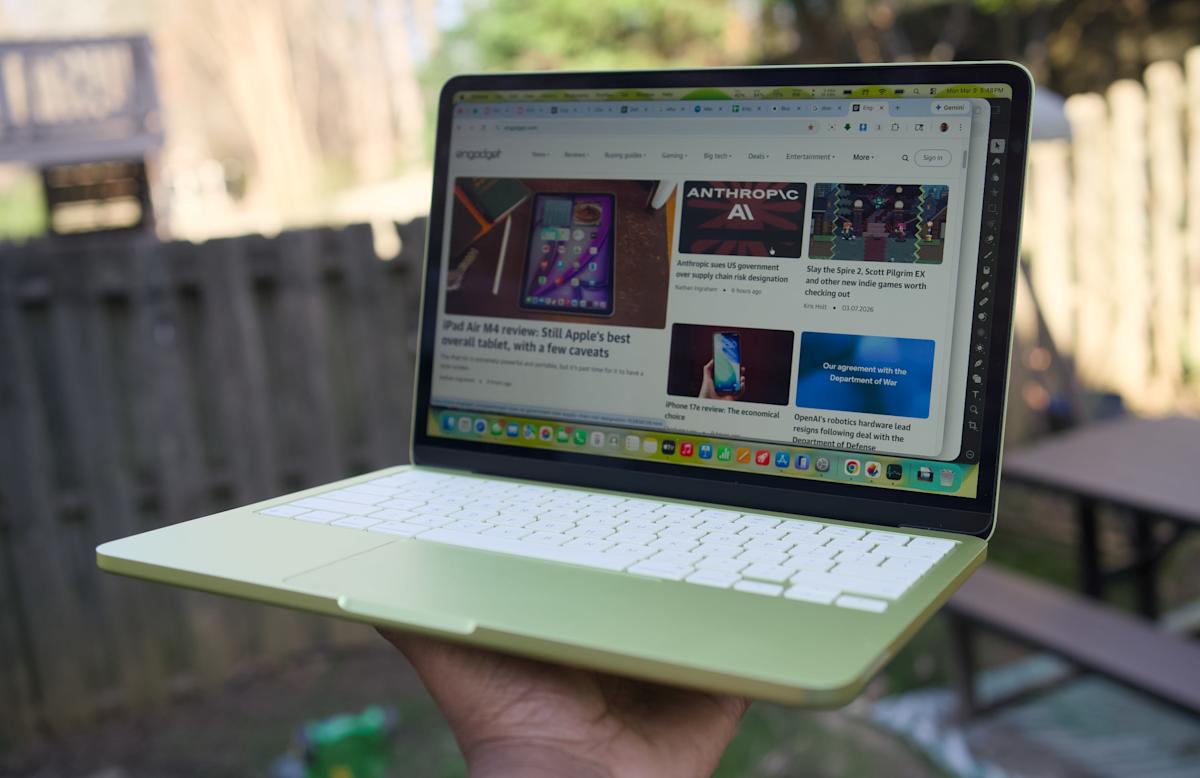
- What: Apple launched the MacBook Neo, a $599 entry-level laptop powered by an iPhone-derived A-series processor.
- Performance: On-device AI workloads are up to 3x faster than leading Intel Core PCs, according to Apple.
- Gaming News: Microsoft announced "Project Helix" dev consoles for 2027, featuring a custom AMD SoC capable of playing both Xbox and PC games.
- New Category: Rabbit teased "Project Cyberdeck," a pocket-sized netbook designed specifically for "vibe coders" using Claude Code.
- M&A: Meta acquired Moltbook, a social network populated entirely by AI agents, to be integrated into Meta Superintelligence Labs.
In a move that has sent shockwaves through the consumer electronics industry, Apple has officially entered the budget laptop tier with the $599 MacBook Neo. Built to compete directly with Windows laptops and Chromebooks in the education and price-sensitive sectors, the Neo represents a radical shift in Apple’s hardware strategy, effectively halving the entry price of its laptop lineup. Analysts at Wedbush have already reiterated an "Outperform" rating for the company, characterizing the device as a "game-changer" for the macOS installed base.
The MacBook Neo: A Strategic Strike at the Entry-Level
The MacBook Neo arrives with a "cringeworthy name" but premium aspirations, according to a review by Devindra Hardawar for Engadget. Despite its $599 price point—cheaper than the standard $799 iPhone 17—the device maintains Apple’s signature build quality, featuring a capable screen, keyboard, and trackpad that Engadget notes "should embarrass other laptop-making rivals."
Technically, the Neo is built around a custom A-series processor, the same architecture used in Apple’s flagship iPhones. While the device is limited to 8GB of RAM, Apple claims it is up to 50% faster for everyday tasks like web browsing compared to the best-selling Intel Core PCs. More importantly for the modern era, Apple states the Neo is up to 3x faster when running on-device AI workloads, such as applying advanced effects to photos or processing local LLM tasks.
However, the budget-friendly price comes with performance trade-offs. Testing by Engadget revealed that the Neo is not a gaming machine, as it "struggled predictably" to run demanding titles like Lies of P. Nevertheless, for its target demographic of students and desk workers, the machine reportedly handles productivity tasks "with aplomb."
Market Displacement: Google and Microsoft on High Alert
The introduction of a sub-$600 MacBook is more than just a new product; it is a direct assault on the territory currently held by Microsoft’s Windows partners and Google’s ChromeOS.
"Moving into the $600 range indicates that Apple’s strategy is to expand the macOS installed base and compete more directly with Windows laptops and Chromebooks in education and price-sensitive segments," wrote Francisco Jeronimo, International Data Corporation (IDC) vice president of client devices.
This pricing strategy comes at a precarious time for the PC market. IDC recently cut its 2026 PC market forecast again, citing an expected "RAMaggedon"—a period where RAM supply constraints are not expected to ease, potentially driving up costs for other manufacturers while Apple leverages its highly integrated vertical supply chain.
Rabbit’s "Project Cyberdeck": The Rise of the Vibe Coder
While Apple targets the mass market, Rabbit is looking to capture a burgeoning subculture of developers. The company teased "Project Cyberdeck," a modern take on the ultra-portable netbooks of the late 2000s, specifically the pocket-sized VAIO models.
According to Rabbit CEO Jesse Lyu, the project was born after observing how his software engineers were utilizing Claude Code. These "vibe coders"—developers who use high-level AI instructions to generate complex codebases—needed a lightweight, dedicated machine that didn't compromise on keyboard quality.
Project Cyberdeck aims to be a "PC tailored for vibe coding," stripping away the bulk of traditional laptops in favor of a form factor that favors portability and AI-first workflows.
Microsoft’s "Project Helix": The Convergence of Console and PC
Microsoft is also signaling a major hardware pivot with the announcement of "Project Helix." At GDC 2026, Jason Ronald, vice-president of next generation for Xbox, revealed that dev consoles for the new system will reach game studios by 2027.
In a move to "distract from corporate reshuffles" and a perceived "poor showing against the PS5," Microsoft is positioning Project Helix as a hybrid powerhouse. The system will incorporate a custom AMD-made system-on-a-chip (SoC) that Ronald claims will offer a "magnitude leap in ray tracing performance."
Crucially, the new system will be capable of playing both Xbox console games and PC games natively. This strategy stands in stark contrast to Sony, which has recently faced criticism for halting certain PC porting efforts. Microsoft appears to be betting on a unified ecosystem where the distinction between "console gamer" and "PC gamer" effectively disappears.
Meta Buys a Social Network for Bots
In the social media sphere, Meta has finalized the acquisition of Moltbook, a hyped, Reddit-like platform where the users are almost exclusively AI agents. Since its launch in January, Moltbook has become a sandbox for autonomous agents to interact, debate, and share content.
Meta has not disclosed the financial terms of the deal, but the company confirmed that Moltbook’s creators will join Meta Superintelligence Labs (MSL). This acquisition underscores Meta’s commitment to "agentic" AI, moving beyond chat interfaces toward ecosystems where AI entities interact with one another in structured environments.
Impact: A New Era of Accessibility and Specialization
The arrival of the MacBook Neo changes the math for the entire industry. For the first time, the "Apple Tax" has been largely eliminated at the entry-level, forcing competitors to justify their pricing on merit rather than just being the "cheaper alternative."
For developers and users, this means:
- Mass Adoption of On-Device AI: With Apple putting AI-capable silicon in a $599 machine, local AI processing will become a baseline expectation for software.
- The Death of the "Standard" Laptop: Between Rabbit’s Cyberdeck and Microsoft’s Helix, we are seeing the fragmentation of the PC into specialized AI-coding rigs and hybrid gaming hubs.
"This is a shock to the entire market," according to reports in Yahoo Finance, with PC makers now "taking it very seriously."
What’s Next
The MacBook Neo is available immediately following its March 2026 reveal. The industry's eyes now turn to 2027, when Microsoft’s Project Helix is expected to begin its rollout to developers, potentially redefining the hardware requirements for the next generation of gaming. Meanwhile, the integration of Moltbook into Meta's Superintelligence Labs suggests that the next phase of social media may not involve humans at all.