
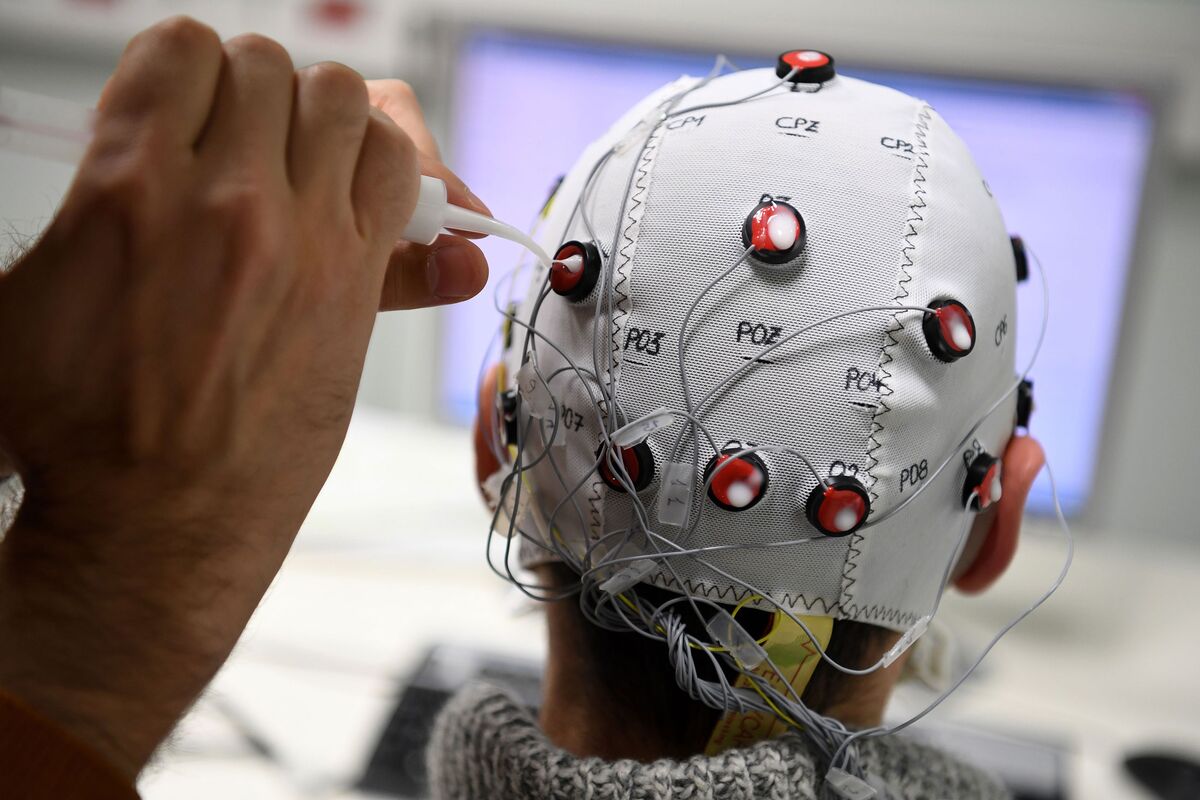
- What: China has granted the world’s first commercial approval for an invasive brain-computer interface (BCI) product.
- Significance: This regulatory milestone allows Chinese startups to leapfrog U.S. competitors like Neuralink by moving directly into the commercial market.
- Competitive Edge: Unlike the U.S. market, China has already integrated BCI procedures into its national health insurance framework as of March 2025.
- Funding: Early-stage startups like Gestala have secured up to $21 million in funding to scale R&D and manufacturing.
China has officially approved its first-ever invasive brain-computer interface (BCI) for commercial use, marking a historic shift in the global race to merge human consciousness with artificial intelligence. The approval, reported by Bloomberg on March 13, 2026, positions Chinese biotechnology firms as the primary challengers to Elon Musk’s Neuralink, transitioning the technology from experimental labs to the open market.
A Massive Regulatory Leap Over US Rivals
The approval by Chinese regulators represents more than just a technical achievement; it is a strategic maneuver in a burgeoning industry that the Chinese government has identified as a pillar of future economic growth. While U.S.-based Neuralink has captured global headlines with its clinical trials, China’s regulatory environment has moved at an unprecedented velocity to clear the path for commercialization.
According to a Bloomberg report, this first-ever approval of an invasive BCI—meaning a device that requires surgical implantation directly into brain tissue—marks a key milestone for domestic startups. This move is designed to challenge the dominance of U.S. rivals by establishing a commercial ecosystem before Western companies can navigate the complex FDA and private insurance landscape.
The distinction between "clinical" and "commercial" is vital. While clinical trials prove safety and efficacy, commercial approval allows companies to sell devices to hospitals and patients at scale. This transition is expected to trigger a wave of adoption across China’s medical infrastructure.
The Insurance Advantage: Why China is Moving Faster
One of the most significant barriers to BCI adoption in the United States is the fragmented nature of the healthcare system. Even after FDA approval, private insurers must individually decide whether to cover a procedure. China has systematically dismantled this barrier.
According to reports from HelloChinaTech and TechCrunch, China’s national health insurance began covering BCI procedures as early as March 2025—a full year before the first device received commercial approval. This "insurance-first" strategy ensures that as soon as a device is approved, the financial pathway for patient access is already paved.
"China’s national health insurance means quicker commercialization once the state approves a device," noted TechCrunch. In contrast, U.S. developers must negotiate with hundreds of private payers, a process that can delay widespread adoption by years even after regulatory clearance.
Technical Benchmarks and Clinical Success
The road to this commercial approval was built on a series of rapid clinical successes. In March 2025, China launched its first clinical trial of a "high-throughput wireless invasive BCI," as reported by the Global Times. That trial achieved positive results using minimally invasive surgery to implant the country's first wireless interface.
By early 2026, researchers had completed the country’s first fully implanted, wireless BCI trial—only the second of its kind globally. Per CGTN, this technology allowed a paralyzed patient to control external devices without any visible hardware or wires protruding from the skull, a feat that matches or exceeds current publicly disclosed benchmarks from Western competitors.
The focus on "high-throughput" and "wireless" capabilities is critical. High-throughput refers to the amount of data the implant can transmit from the brain to a computer, which determines the complexity of the tasks a user can perform—such as typing, controlling a robotic limb, or navigating digital interfaces with high precision.
The Startup Surge: Gestala and the $21 Million Bet
The commercial green light is already attracting massive capital. Gestala, a three-month-old Chinese BCI startup, recently raised $21 million in early-stage funding—the largest of its kind in the nation’s BCI sector.
While the commercial approval focuses on invasive devices, Gestala is working on non-invasive ultrasound-based brain technology. According to TechCrunch, Gestala plans to use its new capital to:
- Expand its team from 15 to 35 employees by the end of 2026.
- Construct a dedicated manufacturing facility in China.
- Complete its first-generation prototype by year-end.
This influx of capital across both invasive and non-invasive sectors suggests a broad-based industrial push rather than the success of a single firm.
Impact on the Global AI Landscape
For developers and the global AI industry, China's commercialization of BCI signals a shift in where the "neural app store" might first emerge. With a commercial market now active, software developers will have a regulated platform to create applications for neuro-prosthetics, communication tools for the speech-impaired, and potentially, consumer-grade cognitive enhancements.
In the Impact section of this industry shift, one reality stands out:
"The center of gravity for human-machine integration has shifted from research labs in California to the commercial hospitals of Beijing and Shanghai."
For the industry, this means that the first large-scale data sets on long-term BCI use in daily life will likely come from China, providing Chinese AI firms with a significant data advantage in training neural decoding algorithms.
What’s Next: The Five-Year Plan for Neural Dominance
China’s ambitions extend far beyond medical recovery. A new policy document, cited by WIRED, outlines a comprehensive plan to create an "internationally competitive BCI industry" within five years.
This plan proposes developing devices for two distinct tracks:
- Health: Treating paralysis, epilepsy, and depression.
- Consumer: Exploring BCI for gaming, education, and professional productivity.
While the current approval focuses on the medical application of invasive implants, the regulatory framework is being built to support a future where brain interfaces are as common as smartphones. With manufacturing facilities already under construction and a national insurance system ready to foot the bill, the era of the commercial cyborg has officially begun in the East.
Sources
- Bloomberg: China Approves First Brain Implant for Commercial Use
- TechCrunch: China's brain-computer interface industry is racing ahead
- WIRED: China Is Building a Brain-Computer Interface Industry
- Global Times: China's first invasive brain-computer interface clinical trial launched
- HelloChinaTech: China’s Brain Implant Push and the Limits of Coordination
- TechCrunch: Chinese brain interface startup Gestala raises $21M