
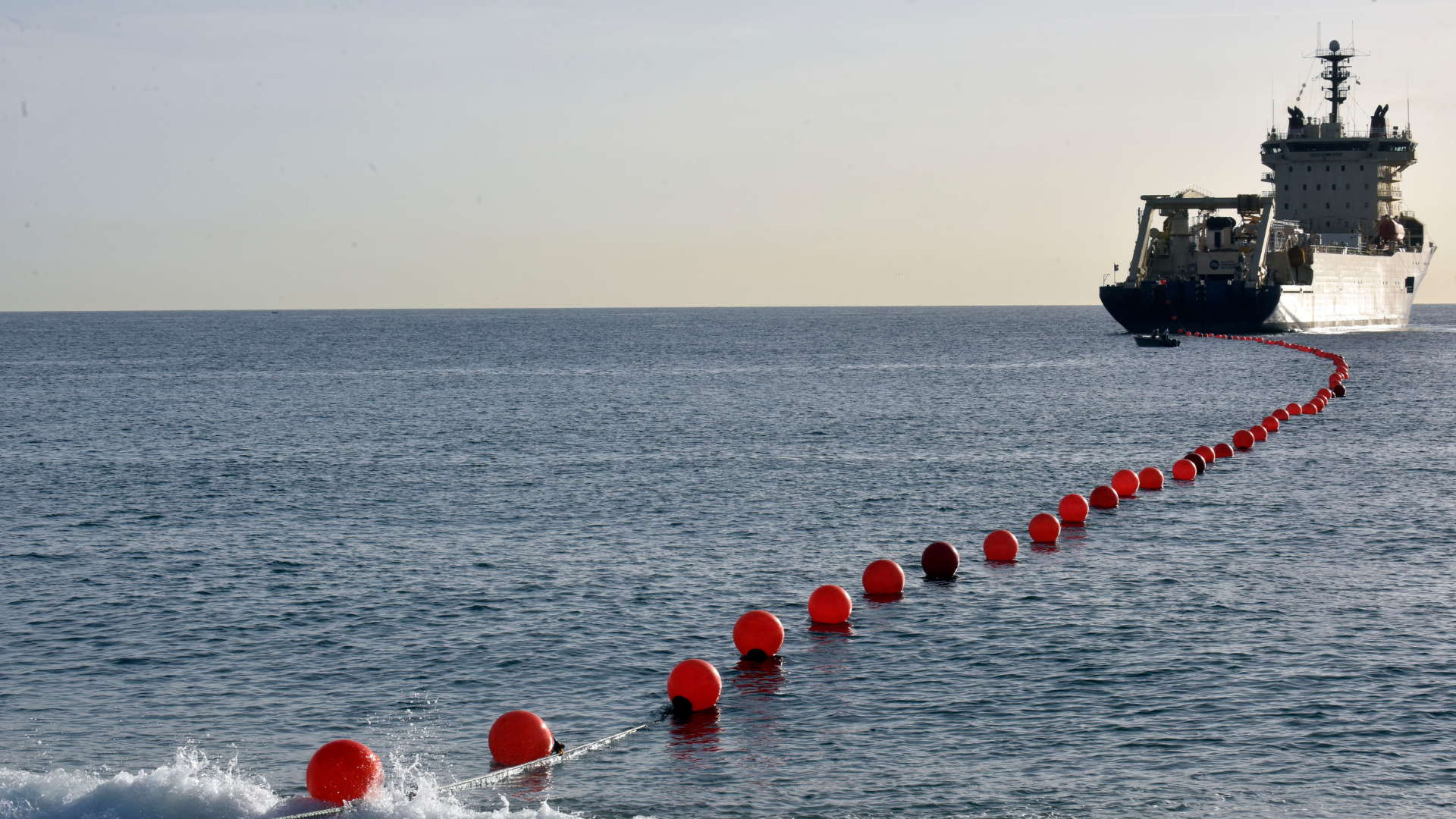
- What: Alcatel Submarine Networks (ASN) has declared force majeure on Meta’s "Pearls" cable extension.
- Why: Ongoing military conflict involving the U.S., Israel, and Iran has made the Persian Gulf unsafe for cable-laying operations.
- Impact: Delays high-speed connectivity for Iraq, Kuwait, Saudi Arabia, UAE, Pakistan, and India.
- Scope: The 2Africa project is a 45,000-kilometer (approx. 28,000-mile) system designed to link Africa, Europe, and Asia.
A critical expansion of Meta’s 2Africa undersea cable system has come to a grinding halt after French contractor Alcatel Submarine Networks (ASN) declared force majeure, citing an inability to safely operate in the Persian Gulf. The suspension, triggered by the escalating U.S.-Israel-Iran conflict, effectively freezes the "Pearls" section of the project, which was designed to provide vital digital infrastructure to the Middle East and South Asia.
Geopolitical Tensions Overwhelm Infrastructure Goals
The 2Africa project, one of the world's most ambitious subsea cable initiatives, was intended to revolutionize internet connectivity across African coastal states, Europe, and Asia. While Meta recently announced the completion of the project’s core sections, the "Pearls" extension remains the final, high-stakes hurdle. This specific branch was slated to connect a long list of regional players, including Iraq, Kuwait, Saudi Arabia, Bahrain, Qatar, the United Arab Emirates, Oman, Pakistan, and India.
According to reports from Bloomberg and Tom’s Hardware, the bulk of the undersea cable has already been successfully deposited on the seafloor. However, the project is currently "stranded" in a literal sense: the lines have not yet been connected to the essential onshore landing stations. Without these terrestrial connections, the multi-billion dollar fiber-optic investment remains dark.
ASN, a state-owned French company tasked with the technical execution of the project, informed the 2Africa consortium that the security environment in the Persian Gulf has deteriorated to a point where personnel and equipment are at extreme risk.
A Pattern of Disruption in the Region
This is not the first time Meta’s digital expansion has been thwarted by regional instability. Late last year, the project’s Red Sea segment faced significant setbacks due to missile strikes from Houthi rebels in Yemen, alongside complex permitting hurdles.
The current conflict has created a "risk premium" that few companies are willing to pay. As military action increases, the pool of operators capable of maintaining or laying subsea infrastructure shrinks. Those who remain are forced to charge exorbitant fees to cover skyrocketing insurance costs and the heightened danger to crew members.
The disruption is part of a broader trend of "hybrid warfare" targeting global tech infrastructure. Reports indicate that several Amazon Web Services (AWS) data centers have been deliberately targeted by drone attacks, and American medical tech firm Stryker recently suffered a major cyberattack that disrupted global operations. Furthermore, undersea cables in East Asia and Europe are under constant threat from "shadow fleets"—vessels with murky ownership that are often used to physically sever cables in strategic maneuvers.
Impact on Global Connectivity and AI
For developers, businesses, and governments in the Middle East and Africa, this delay is a significant blow to digital sovereignty and economic growth. The "Pearls" extension was considered a necessary alternative to the unstable Red Sea corridor; its suspension leaves the region dependent on older, more vulnerable routes.
For the AI industry, these delays are particularly stinging. Large-scale AI model training and deployment rely on the low-latency, high-bandwidth data transfers that only subsea fiber-optics can provide. As Meta continues to push its Llama ecosystem and AI-integrated services globally, the lack of robust physical infrastructure in the "Global South" creates a bottleneck for expansion.
"The digital silk road connecting Africa and Asia is now a geopolitical casualty, proving that even the most advanced AI software is ultimately at the mercy of physical security," said one industry analyst regarding the suspension.
What’s Next: Project Waterworth and Future Resilience
With the 2Africa project stalled, Meta is already looking toward a more autonomous future. The company has begun planning "Project Waterworth," a massive 50,000-kilometer (30,000-mile) undersea cable designed specifically to bypass current geopolitical hotspots.
While Project Waterworth was initially announced for a 2025 launch, experts warn that the complexities of such a build mean it will likely be several years before it becomes operational. In the short term, the 2Africa consortium—which includes Meta, Saudi Telecom, and several other global partners—must wait for a cooling of tensions before ASN can safely return to the Persian Gulf to complete the final connections.
Until then, the "Pearls" extension remains a dormant line on the ocean floor, a silent reminder of how quickly physical conflict can derail the digital future.