
- What: Nvidia’s annual GPU Technology Conference (GTC) 2026, nicknamed "AI Burning Man."
- When: March 16–19, 2026, in San Jose, California.
- Key Reveal: Integration of high-speed "token-spewing" tech from the $20 billion acquisition of Groq.
- Infrastructure: A strategic partnership with Thinking Machines Lab to deploy one gigawatt of "Vera Rubin" systems.
- Software: Rumored launch of "NemoClaw" (or OpenClaw), an open-source AI agent platform for enterprises.
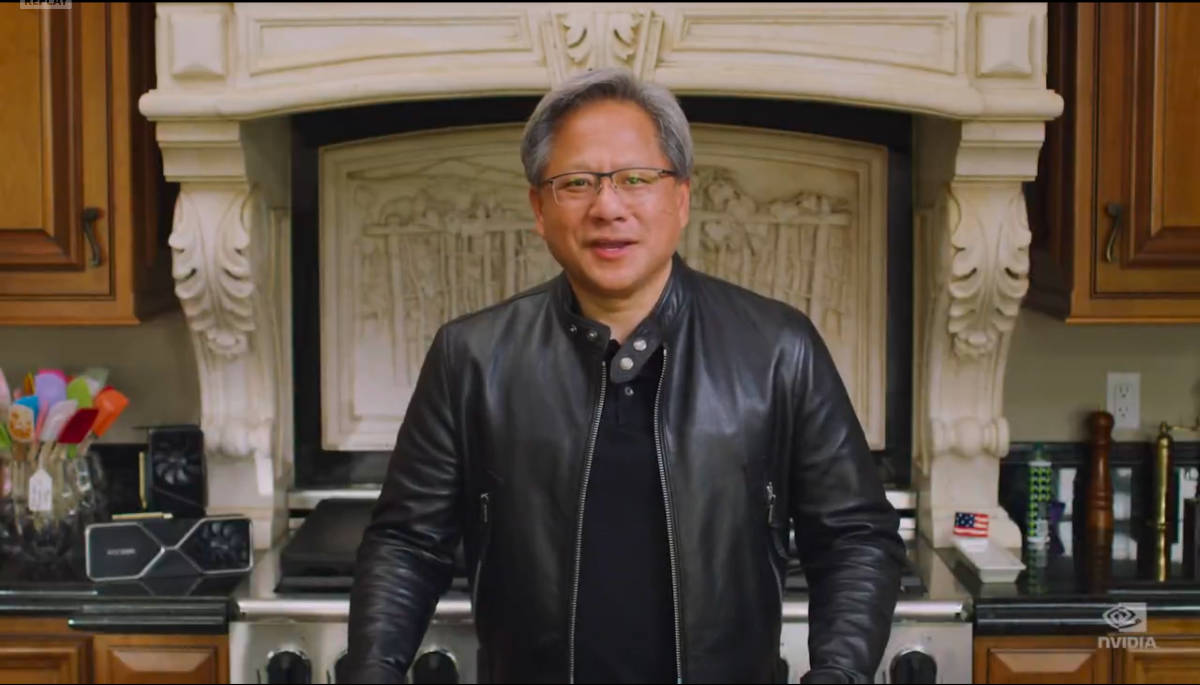
Nvidia CEO Jensen Huang is set to take the stage next week at GTC 2026 to address the "tokenomics" crisis, revealing how the silicon giant will integrate technology from its recent $20 billion acquisition of Groq to power the next generation of agentic AI. The event, often referred to as "AI Burning Man" for its scale and fervor, marks a pivotal shift for Nvidia as it moves from dominant training hardware to high-speed inference solutions capable of sustaining massive quantities of real-time tokens.
Solving the "Tokenomics" Bottleneck
While Nvidia has historically dominated the AI training market, the industry's shift toward code assistants and autonomous agentic systems has created a new challenge: the need to move massive quantities of tokens at extreme speeds. According to a report from The Register, Nvidia’s current GPU architectures have faced mounting pressure to deliver the low-latency throughput required for advanced generative workloads.
To bridge this gap, Huang is expected to detail the roadmap for "token-spewing accelerator tech" acquired through the startup Groq late last year. Groq, known for its Language Processing Units (LPUs), specialized in deterministic, high-speed inference. By integrating this technology directly into the Nvidia ecosystem, the company aims to reclaim its lead in the inference market, where competitors have recently challenged Nvidia’s dominance on cost-per-token and latency metrics.
The Era of the Gigawatt Data Center
Beyond the Groq integration, Nvidia is scaling its hardware footprint to unprecedented levels. In an official blog post, the company announced a multiyear strategic partnership with Thinking Machines Lab. This collaboration aims to deploy at least one gigawatt of next-generation "Vera Rubin" systems.
Named after the pioneering astronomer, the Vera Rubin architecture represents the successor to the Blackwell line. These systems are designed specifically to support "frontier model training," providing the raw computational horsepower required for the trillion-parameter models expected in the latter half of the decade. Investors and analysts expect Huang to provide a definitive roadmap for these chips, which are reportedly designed to scale more broadly across enterprise applications while maintaining energy efficiency in a climate increasingly defined by power constraints.
"NemoClaw" and the Open-Source Pivot
The hardware reveals are expected to be paired with a significant software offensive. As reported by Fortune, Nvidia is rumored to be preparing the launch of "NemoClaw" (alternatively referred to as OpenClaw in some circles), an open-source AI agent platform specifically designed for enterprise environments.
This move signals a strategic shift for Nvidia. By providing an open-source framework, the company looks to anchor developers to its hardware through a robust, agent-focused ecosystem. Business Insider reports that this software pivot is a direct response to the growing demand for "agentic" systems—AI that doesn't just generate text but executes complex, multi-step tasks across various business software environments.
Impact on Developers and the Industry
For developers, the integration of Groq’s high-speed inference technology could mean a drastic reduction in the cost and latency of running large language models (LLMs). This change is essential for the viability of real-time AI applications like voice-to-voice assistants and automated coding environments where sub-second response times are non-negotiable.
"This changes how developers will build agents; for the first time, the hardware will no longer be the bottleneck for real-time autonomy," a sentiment echoed by industry analysts ahead of the conference.
The competitive landscape is also shifting. By acquiring Groq and launching an open-source agent platform, Nvidia is moving vertically, attempting to own the silicon, the inference layer, and the agentic framework. This puts direct pressure on inference-as-a-service startups and open-source rival frameworks that have gained traction in the Blackwell era.
What’s Next
The GTC 2026 keynote will be streamed live from San Jose on March 16. While registration is required for the full suite of workshops and sessions, the keynote remains free to the public. Following the event, the industry will be watching for the first benchmarks of the integrated Groq-Nvidia chips and the initial developer feedback on the NemoClaw platform.
With geopolitical tensions and global power demands looming over the industry, Jensen Huang’s ability to prove that Nvidia can deliver "more intelligence per watt" will be the true test of the Vera Rubin architecture.