
The short version
Nvidia is using artificial intelligence to make gaming graphics look as realistic as movies, aiming for a performance jump 1 million times greater than what we had a decade ago. By moving away from traditional hardware limitations, the company is using AI to "fill in the blanks" of images in real-time, allowing for stunning detail without slowing down your game. This shift marks a move toward a future where games become virtually indistinguishable from real life.
What happened
If you’ve played video games for a long time, you know that computers have historically gotten faster simply by becoming more powerful—a concept known as Moore’s Law. However, Nvidia says those days are over. Even with the fastest chips imaginable, it would take too much power to generate the photorealistic lighting we see in the real world.
Instead of just building "stronger" hardware, Nvidia is using AI to do the heavy lifting. Think of it like this: instead of drawing every single blade of grass and shadow in a game from scratch (which is exhausting for a computer), the GPU uses AI to "guess" and fill in the complex details based on smart patterns it has learned.
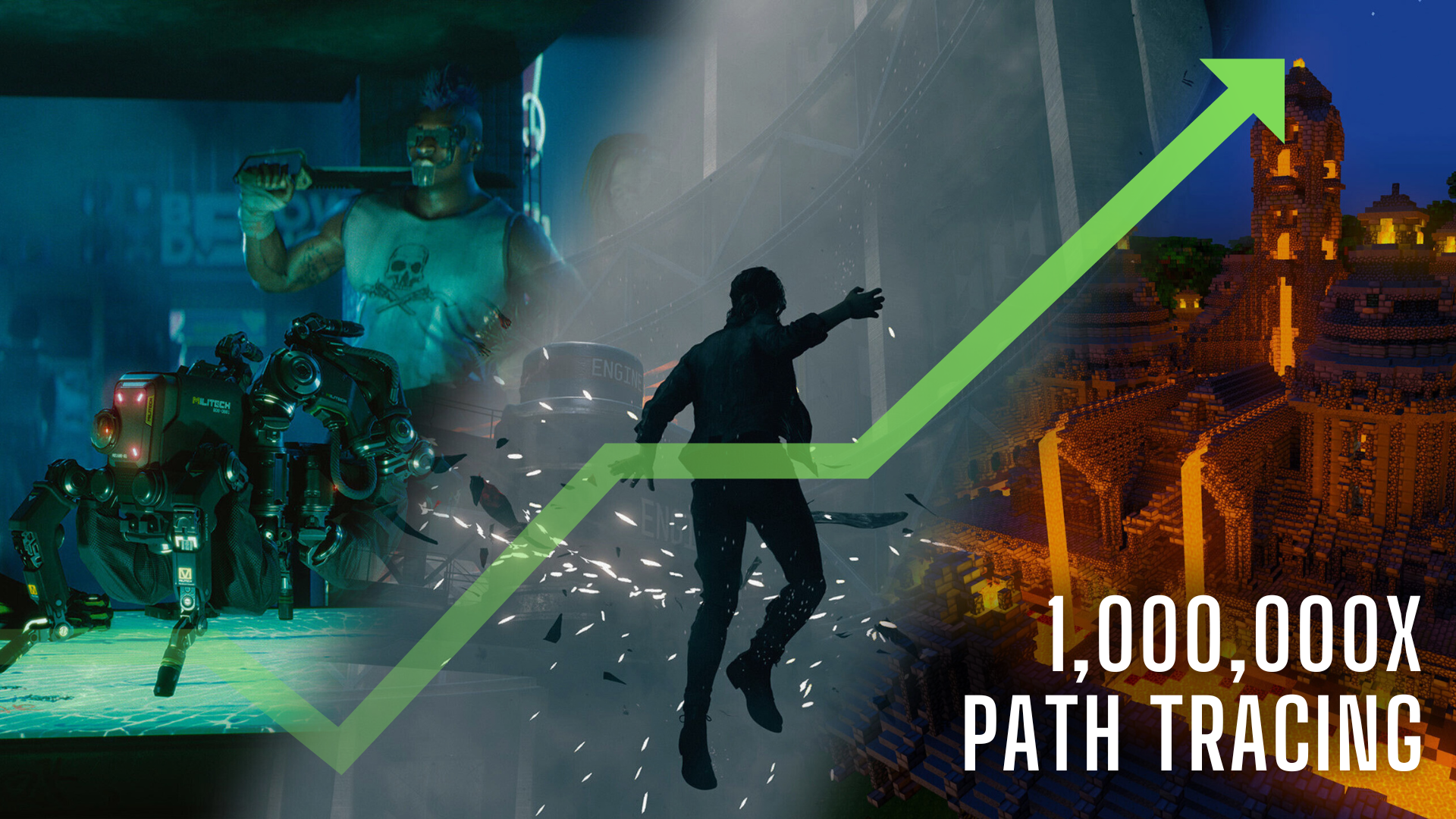
Nvidia recently announced that their current technology is already 10,000 times faster at this task than their hardware from ten years ago. They are now projecting that future advancements in AI will lead to a 1,000,000-fold improvement, turning games into cinematic experiences that play smoothly on your screen.
Why should you care?
For the average gamer, this isn't just a random technical upgrade—it’s the key to the "holy grail" of gaming: photorealism.
Current games often struggle to balance high-quality lighting (known as path tracing) with smooth performance. You’ve likely experienced this: you turn the graphics up, and the game begins to stutter. AI-driven graphics essentially solve this by doing the work behind the scenes to keep the action fluid while making the visuals look like a high-budget film. You’ll be able to play games that look significantly better than today’s best titles without needing to worry as much about your computer "choking" on the high settings.
What changes for you
- Cinematic Realism: Games will begin to look less like cartoons and more like real-life video.
- Smoother Gameplay: Because AI is handling the "filling in" of images, your games will stay responsive and smooth, even when the lighting effects are incredibly complex.
- New Standards: As these technologies roll out, "path tracing" (the tech that makes light, shadows, and reflections look real) will become the standard, not just a luxury setting for top-tier computers.
Frequently Asked Questions
When can I use this?
While some AI features like DLSS (which helps boost your frame rate) are available right now on newer Nvidia cards, the massive 1-million-times jump is expected to arrive with the next generation of Nvidia hardware, potentially launching between 2027 and 2028.
Does this mean my computer will get more expensive?
Nvidia is moving toward making these AI-driven features the default way games are built, which helps game developers create better-looking worlds more efficiently. While high-end hardware remains a premium purchase, this technology is designed to make high-fidelity gaming possible on a wider range of modern systems.
Is this the same as just "better graphics"?
Not exactly. Traditional "better graphics" just meant more raw power. This is different because it uses "neural rendering"—basically, the AI is learning how to construct the image to make it look real, rather than just brute-forcing the math.
The bottom line
We are moving toward a future where the hardware limitations that once held back game developers are being bypassed by AI. By moving from raw speed to AI-assisted "intelligence," Nvidia is aiming to make games look like movies while keeping them fun to play. While we aren't at the "1 million times" mark yet, the path to hyper-realistic, cinematic gaming is already being built into the machines we use today.