
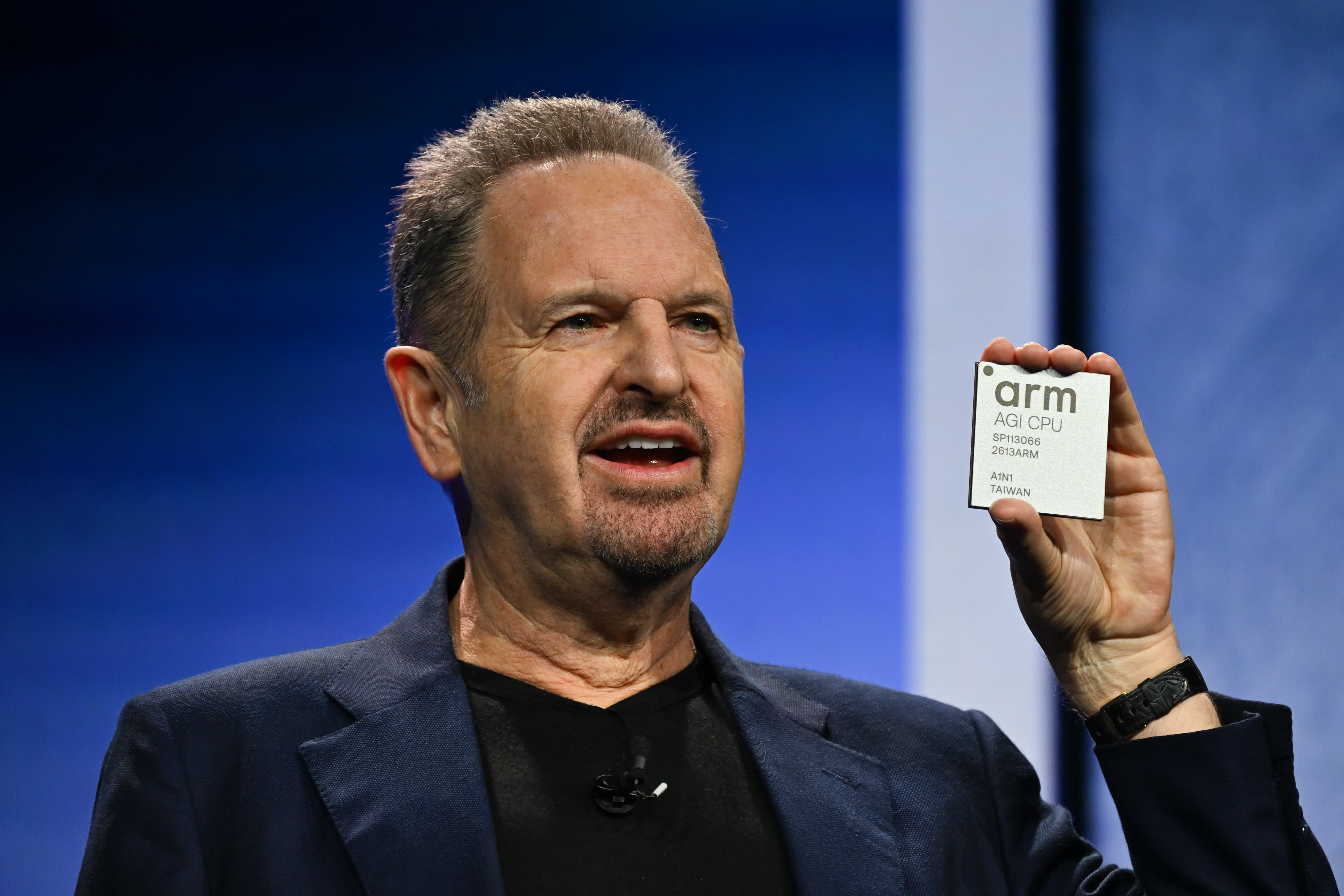
- What: Arm unveiled a new in-house artificial intelligence data center chip.
- Financial Impact: Company shares surged 15%; revenue from the chip is projected to reach $15B–$24B by 2031.
- Strategic Shift: Move from licensing intellectual property to selling direct-to-market AI hardware.
- Timeline: Expected to drive significant annual revenue increases over the next five to six years.
Arm Holdings shares surged 15% following the announcement of a new artificial intelligence data center chip that the company expects will generate up to $24 billion in annual revenue by 2031. The move represents what the company describes as a "significant shift" in its business model, moving beyond its traditional role as an architecture licensor to becoming a direct provider of AI hardware. According to CEO Rene Haas, this new silicon is expected to add billions of dollars to Arm’s top line, fundamentally altering the company's growth trajectory in the race for AGI (Artificial General Intelligence) infrastructure.
A Massive Revenue Windfall
The financial projections accompanying the announcement have caught the attention of Wall Street and the broader tech industry. Arm stated that it expects this new AI data center chip to generate six times more revenue in 2031 than the $4 billion it earned from comparable segments in 2025.
While the $24 billion figure represents the long-term target for 2031, other projections suggest an immediate and aggressive ramp-up. In an interview with Reuters, CEO Rene Haas stated that the data center chip is expected to generate roughly $15 billion in annual revenue within approximately five years. This discrepancy in figures—ranging from $15 billion by 2030 to $24 billion by 2031—underscores the massive scale of the "revenue windfall" Arm anticipates as the demand for AI-optimized CPUs and specialized silicon continues to skyrocket.
The market responded with immediate enthusiasm, sending Arm's stock up 15%. Investors are pivoting their valuation of the company from a steady IP-licensing firm to a high-growth hardware player capable of capturing a larger share of the lucrative AI data center market.
The Strategic Pivot: From Architect to Manufacturer
For decades, Arm’s business model has been built on licensing its instruction set architecture (ISA) and processor designs to third parties like Qualcomm, Apple, and Samsung. Those companies would then design and manufacture their own physical chips based on Arm’s blueprints.
This new announcement signals a departure from that "design-only" philosophy. By developing its own AI data center chip, Arm is positioning itself as a direct competitor in the hardware space. According to reports from Reuters and Yahoo Finance, this move represents a "significant shift" in the company’s strategy. Rather than just collecting royalties on others’ sales, Arm aims to capture the full value of the hardware stack in the data center.
This transition allows Arm to more tightly integrate its software ecosystem with its hardware, a necessity for the high-performance demands of modern AI workloads. As reported by the Financial Times, the SoftBank-owned company is projecting a fivefold revenue increase in just five years due to this in-house chip strategy, reflecting a bet that the future of computing lies in specialized, end-to-end AI silicon.
Impact on the Data Center and AI Industry
The introduction of a new Arm-branded AI chip has profound implications for the competitive landscape of the data center. Currently dominated by giants like NVIDIA, Intel, and AMD, the data center market is desperate for more efficient alternatives to handle the massive power requirements of large language models and AGI development.
For developers and hyperscalers (such as AWS, Google, and Microsoft), Arm's entry into the physical chip market provides a new alternative for high-density AI compute. The move likely aims to capitalize on the industry's shift toward "Arm-native" software, which has already seen significant adoption in the cloud. By providing a first-party chip, Arm can offer optimizations that were previously only available through the architectural licensing process, potentially reducing the time-to-market for new AI services.
Industry analysts suggest this is a bid for power in the "AGI era." As the CNBC report indicates, the chip is specifically targeted at the "AGI CPU" market—a niche focusing on the processing power required to reach human-level artificial intelligence. If Arm can deliver on its revenue promises, it will successfully transition from a background infrastructure provider to a front-line leader of the AI revolution.
What’s Next for Arm
The timeline for this transition is clear: Arm is looking at a five-to-six-year window to achieve market dominance with its new hardware. With the 2025 revenue baseline set at $4 billion, the company is now under pressure to prove that it can handle the complexities of chip manufacturing and supply chain management—tasks that its licensees have historically handled.
While technical specifications such as transistor count, memory bandwidth, and specific benchmarks have not yet been fully disclosed in the initial announcement, the financial scale of the project suggests a high-performance product aimed at the top tier of the enterprise market. The industry will be watching closely for the first performance data of these chips in real-world AI training and inference environments.
As the company moves toward its 2031 goals, the primary challenge will be balancing its new role as a hardware manufacturer with its existing relationships with licensees. Arm must prove that it can compete with the very companies that pay for its architecture without cannibalizing its foundational licensing business.