
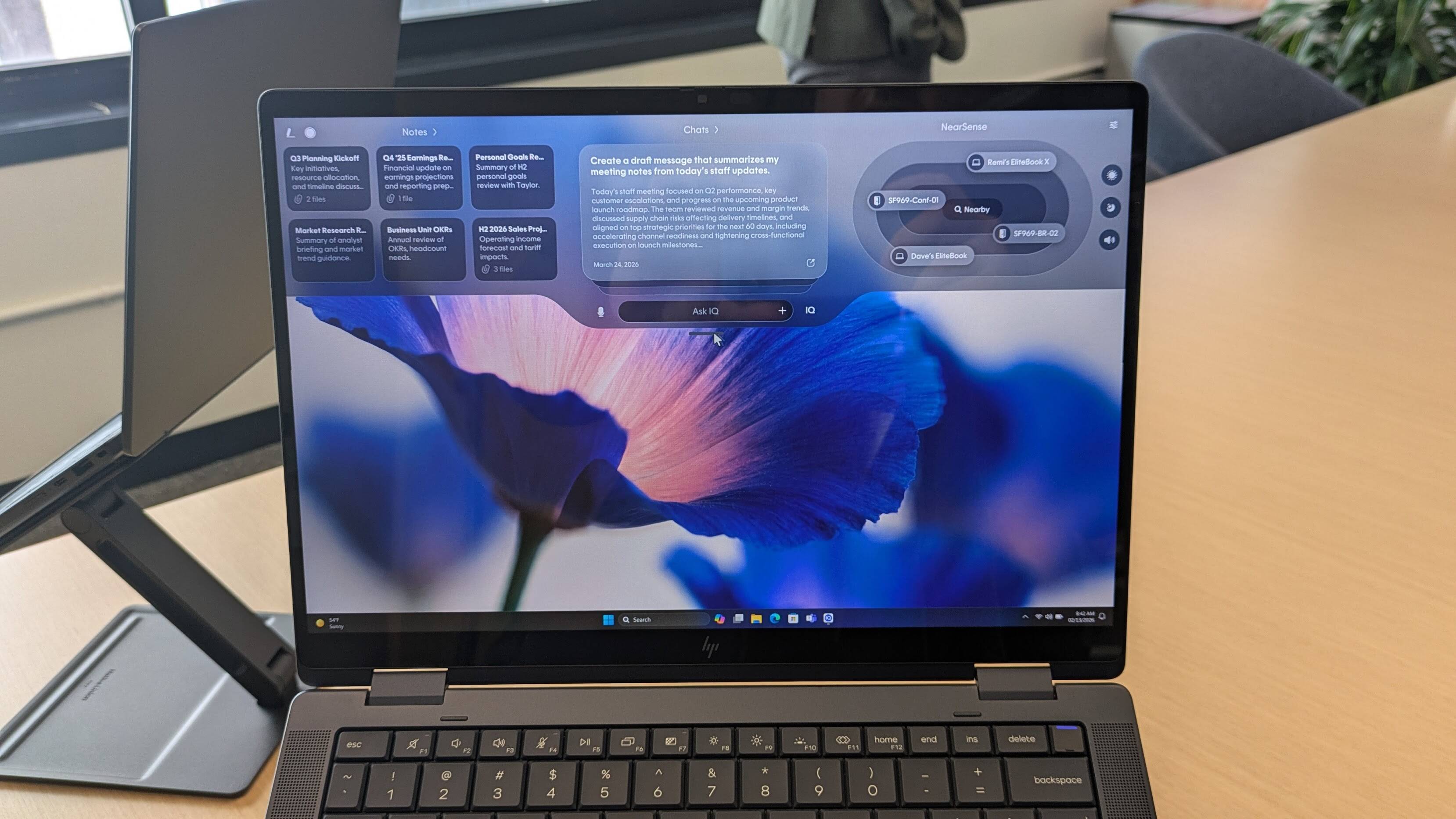
HP Challenges Tech Giants with 'HP IQ' Local AI for 2026 Laptops
- What: HP IQ, a local AI application suite featuring an OpenAI LLM.
- Hardware: Requires 2026 EliteBook or ProBook "AI PCs" with at least 24GB of RAM.
- Key Features: Local document analysis, meeting summarization, and NearSense proximity sharing.
- Model: Reportedly powered by OpenAI’s gpt-oss-20b model running locally.
- Availability: Early access begins later in "northern spring" 2026, with a wider rollout in H2 2026.
HP Inc. is reportedly moving to disrupt the burgeoning AI PC market with the launch of "HP IQ," a proprietary local intelligence layer designed to compete with established services like Microsoft Copilot and Apple Intelligence. According to reports from The Register, the software suite integrates an OpenAI large language model (LLM) directly into HP’s 2026 business laptop lineup, targeting small businesses with tools for local document processing and proximity-based collaboration.
The announcement, which reportedly took place on Tuesday, positions HP as more than just a hardware provider in the AI era. By embedding a local version of OpenAI’s gpt-oss-20b model, HP aims to offer a "layer of intelligence" that operates directly on the device rather than relying solely on cloud-based processing. Matt Brown, head of product for HP IQ, told The Register that the goal is to make AI PCs "more valuable than ever before" by providing a powerful model inside the machine.
Three Pillars of HP IQ: Chat, Summarization, and Proximity
The HP IQ ecosystem is built upon three primary functional elements. The core component is a local chat interface that allows users to upload sensitive documents for analysis or request help with professional tasks, such as drafting board meeting overviews. During a technical demonstration, an HP representative reportedly used the bot—based on OpenAI’s gpt-oss-20b—to analyze a document and generate a meeting plan, tasks the software allegedly performed with high detail and speed.
The second pillar is a "meeting agent" designed to utilize the laptop's built-in microphones to capture in-person conversations. This tool generates action items and summaries and allows users to query the AI about specific concerns raised during the meeting. However, this feature has already sparked discussions regarding workplace privacy, as the system does not currently provide a visual indicator to other participants that they are being recorded.
The third element, dubbed "HP NearSense," introduces proximity-based features that bring macOS-like functionality to the Windows ecosystem. NearSense allows users to see a list of coworkers in the same room and share files via drag-and-drop. Furthermore, the system uses a combination of Wi-Fi, Bluetooth, and microphone sensors to detect if a user is in a room equipped with HP Poly conferencing hardware, allowing for automatic meeting logins. HP claims the technology is precise enough to distinguish whether a user is inside a room or standing just outside a glass door.
Privacy Concerns and Technical Requirements
While HP IQ offers significant productivity potential, the meeting summarization feature has raised red flags regarding consent. When questioned about the potential for "creepy" surveillance of coworkers, Matt Brown suggested that users follow "best practice" by asking for permission before recording. Notably, HP IQ reportedly does not store raw audio or provide full transcripts, which Brown cited as a privacy safeguard, though some users might find the lack of a transcript a limitation for record-keeping.
The technical bar for running HP IQ is significantly higher than standard office requirements. To participate in the early access program, users will reportedly need a 2026 EliteBook or ProBook designated as an "AI PC" equipped with a minimum of 24GB of RAM. This high memory requirement underscores the intensity of running a 20-billion parameter model locally on a mobile chipset.
Impact on Small Businesses and the AI Landscape
For small business owners, HP IQ represents a shift toward "sovereign" AI—the ability to utilize advanced generative tools without sending proprietary data to third-party cloud servers. By keeping the gpt-oss-20b model local, HP is betting that security-conscious enterprises will choose its hardware over competitors that rely more heavily on cloud API calls.
For the broader industry, this move indicates that hardware manufacturers are no longer content to let software giants like Microsoft and Google dominate the AI user experience. "HP is betting that local intelligence will make the AI PC more than just a marketing term," an industry perspective suggests. By creating a bespoke application layer, HP is attempting to build a "walled garden" of productivity tools that could lock businesses into its hardware ecosystem through software utility.
What’s Next for HP IQ
HP has signaled an aggressive roadmap for the platform. Following the initial spring 2026 early access, the company plans to expand HP IQ compatibility to desktops and Poly Studio Video Bars by the summer. New hardware specifically optimized for the IQ suite is expected in the second half of 2026.
Future updates are slated to include Android compatibility, which would extend NearSense file sharing and conferencing features to mobile devices. HP also revealed a three-year roadmap that includes proximity-based printing for IQ-enabled printers and the ability to automatically cast a PC’s screen to nearby displays.
Sources
- The Register
- HP Official Newsroom (Contextual reference)
- NVIDIA Blogs (Contextual reference)
All technical specifications, pricing, and benchmark data in this article are sourced directly from official announcements. Competitor comparisons use publicly available data at time of publication. We update our coverage as new information becomes available.