
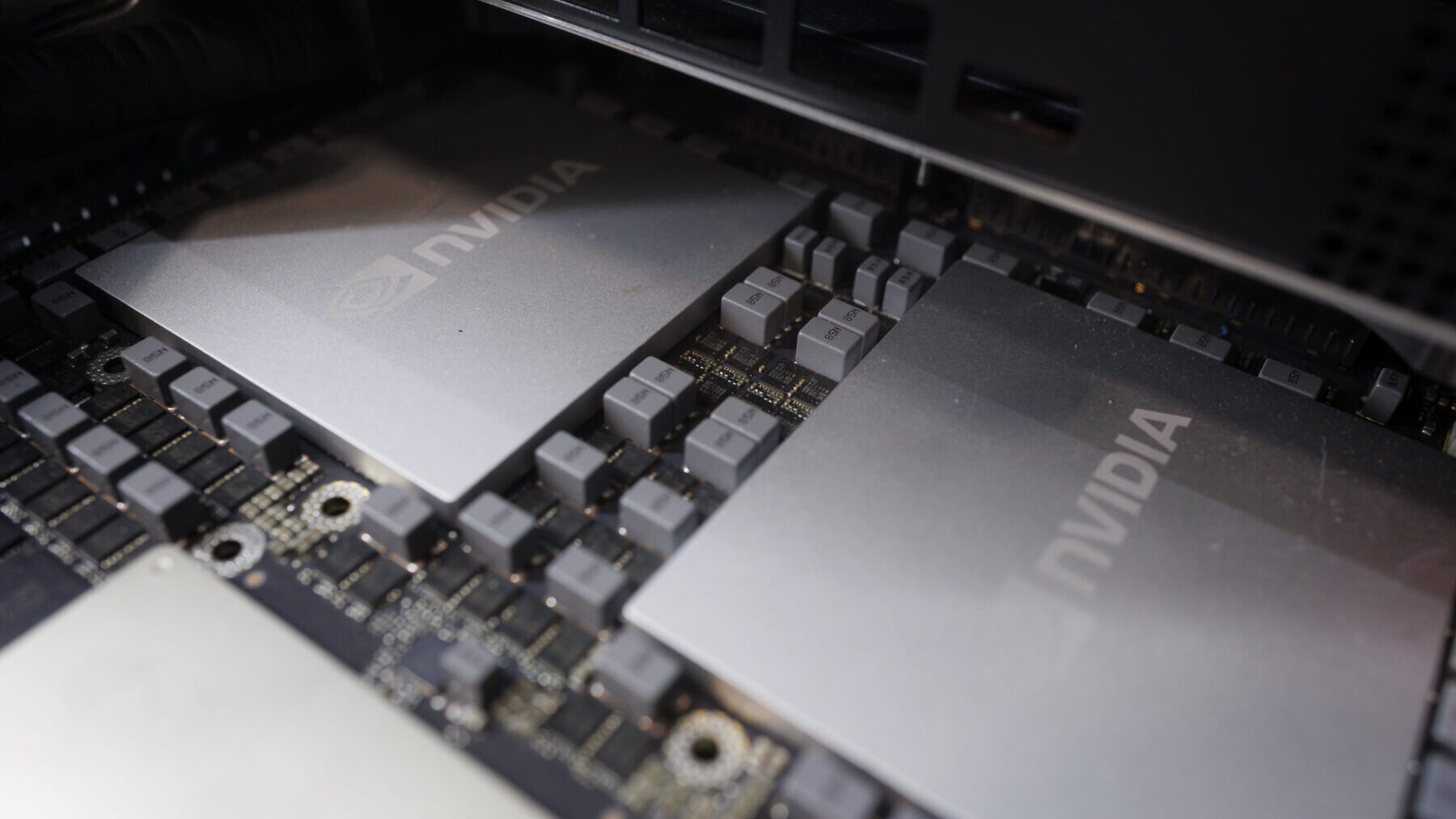
NVIDIA GPU Partitioning vs. Standard Allocation: Which Should You Choose?
NVIDIA Multi-Instance GPU (MIG) is best for production environments requiring strict reliability and hardware isolation, while Time-slicing is ideal for development or low-concurrency workloads where maximizing density is prioritized over fault tolerance.
In modern Kubernetes environments, a significant efficiency gap exists: lightweight models like Automatic Speech Recognition (ASR) or Text-to-Speech (TTS) often require as little as 10 GB of VRAM, yet standard deployments assign them a full physical GPU. This results in 0-10% compute utilization and unnecessary "cluster bloat." NVIDIA’s latest guidance focuses on consolidating these underutilized workloads through software-based (Time-slicing/MPS) and hardware-based (MIG) partitioning to maximize infrastructure ROI.
Feature Comparison Table
| Strategy | Isolation Level | Fault Tolerance | Resource Sharing | Best For |
|---|---|---|---|---|
| Standard K8s | Full Device | High (Dedicated) | None (1:1 Pod to GPU) | Large LLMs (Llama 3, Nemotron) |
| NVIDIA MIG | Hardware-level | High (Strict Isolation) | Fixed partitions (SMs/Cache) | Production Voice AI, Multi-tenant |
| Time-slicing | Software-level | Low (Shared Context) | Interleaved "Bursting" | Dev/Test, Low-concurrency |
| NVIDIA MPS | Software-level | Moderate | Concurrent execution | High-flexibility sharing |
Detailed Analysis
1. Hardware-Level Isolation: The MIG Advantage
NVIDIA Multi-Instance GPU (MIG) physically carves a single GPU into multiple independent instances. Each instance possesses its own dedicated memory, cache, and streaming multiprocessors (SMs). To the operating system, these appear as separate PCI devices. The primary benefit is Quality of Service (QoS); because resources are physically siloed, a "noisy neighbor" or a memory overflow (OOM) in one pod cannot crash or throttle the performance of another pod on the same physical card.
2. Software-Based Sharing: Time-slicing and MPS
Time-slicing acts similarly to a CPU scheduler, interleaving execution between different CUDA processes.
- The Strength: It allows for "bursting"—if one pod is idle, another can utilize 100% of the GPU's cores.
- The Weakness: It lacks hardware isolation. A fatal execution error in one process can propagate across the shared context, potentially triggering a GPU reset that affects every pod sharing the device.
NVIDIA Multi-Process Service (MPS) improves upon this by allowing concurrent process sharing through a server-client architecture. While it is more resilient to memory leaks than basic time-slicing, it still lacks the physical fault isolation of MIG.
3. Throughput and Reliability
In benchmarking a production-grade voice AI pipeline, MIG achieved the highest request throughput and maintained >99% reliability. While software partitioning increases density, the overhead of scheduling and the risk of inter-process interference make it less stable for latency-sensitive applications like real-time ASR.
Price and Performance Verdict
| Metric | MIG | Time-slicing / MPS |
|---|---|---|
| Infrastructure ROI | High (High utilization + Reliability) | Moderate (Higher density, lower stability) |
| Cloud Cost Impact | Up to 50% reduction vs. 1:1 allocation* | High reduction for non-critical pods |
| Performance Overhead | Negligible (Hardware-native) | Moderate (Scheduling overhead) |
*Based on Anyscale's reported cost reductions for similar consolidation strategies.
Verdict: For organizations running critical production inference, the MIG upgrade is a "Must" if using supported hardware (like A100 or H100). The cost of a single GPU reset caused by a software-partitioned neighbor far outweighs the slight density gains. For development teams or non-critical background tasks, Time-slicing is a "Wait and See"—it is cost-effective but requires robust error-handling at the application level.
Migration Effort: How hard is it to switch?
- From Standard to Time-slicing: Low effort. This is primarily a configuration change within the NVIDIA GPU Operator and Kubernetes scheduler. No code modifications are typically required for PyTorch-based workloads.
- From Standard to MIG: Moderate effort. Requires GPUs that support MIG (A100/H100) and specific configuration of the NVIDIA Device Plugin to recognize MIG geometries. It physically changes how the hardware is presented to the OS.
- Third-Party Alternatives: Solutions like Fujitsu ACB claim to offer "drop-in" deployment with no code modifications, aimed at enterprises hesitant to re-engineer mission-critical systems.
Use Case Recommendations
Best for Production Enterprise
NVIDIA MIG is the clear choice. For voice AI, guardrails, and embedding models that require strict latency guarantees and high availability, hardware-level isolation ensures that one failing model doesn't take down the entire inference pipeline.
Best for Startups & Development
Time-slicing or MPS is recommended. When compute budgets are tight and workloads are not yet customer-facing, these methods allow teams to run multiple experiments on a single GPU, maximizing every dollar spent on cloud compute.
Best for Large Language Models (LLMs)
Dedicated Standard Allocation. For models like Llama 3 or Qwen 7B/8B, the source recommends dedicated compute. Partitioning these models often leads to poor Time to First Token (TTFT) and degraded batch throughput, as they generally require the full memory bandwidth of the card.
Sources
- NVIDIA Technical Blog: Maximize AI Infrastructure Throughput by Consolidating Underutilized GPU Workloads
- Fujitsu Global: Maximizing GPU utilization
- Anyscale: GPU (In)efficiency in AI Workloads
- Wesco: Maximize GPU Utilization With MIG and Kubernetes
All technical specifications, pricing, and benchmark data in this article are sourced directly from official announcements. Competitor comparisons use publicly available data at time of publication. We update our coverage as new information becomes available.