
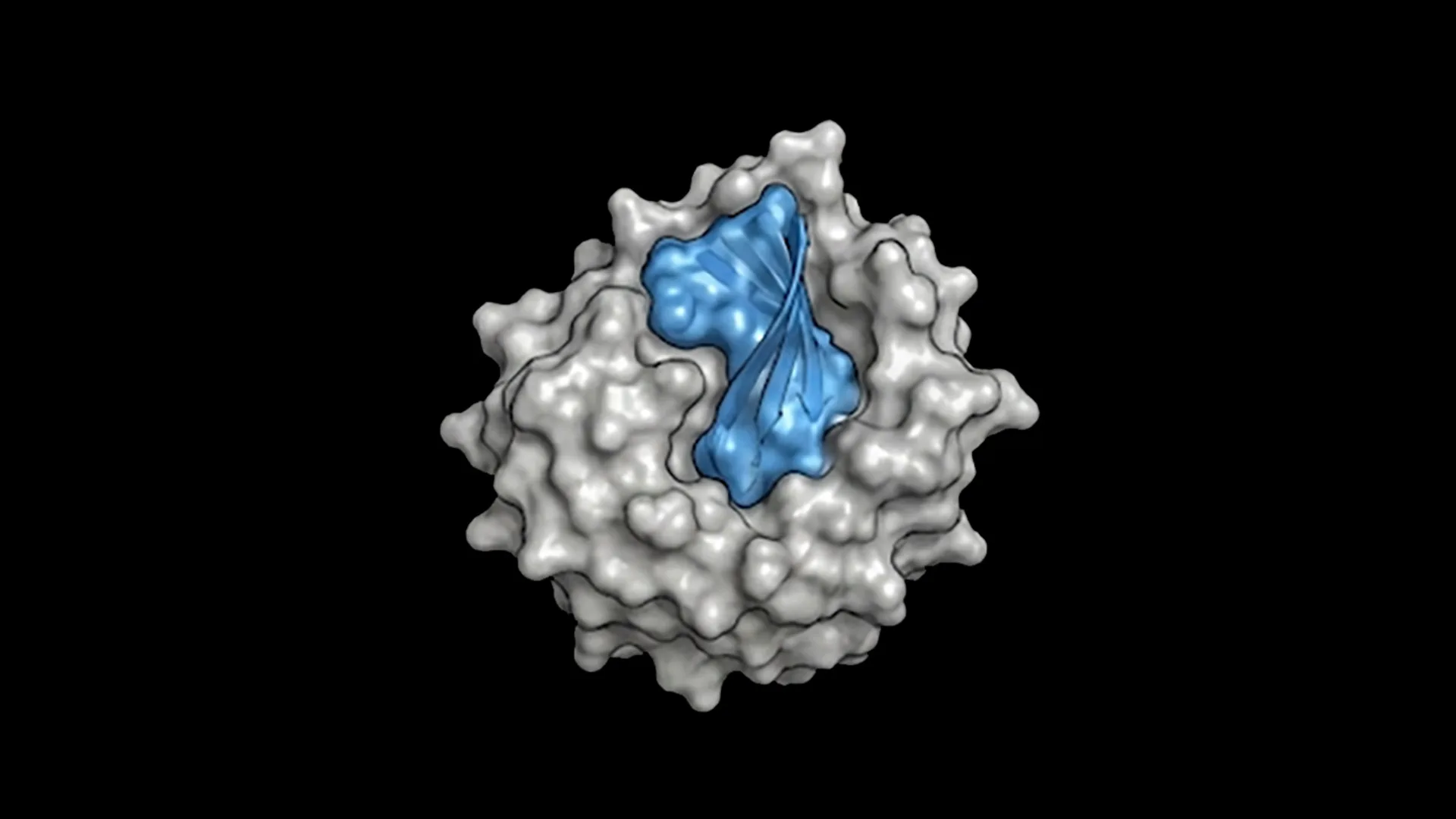
Proteina-Complexa vs. Modular Protein Design: Which Should You Choose?
Proteina-Complexa is best for high-fidelity de novo protein and enzyme design requiring simultaneous co-design of structure and sequence, while traditional modular AI methods remain better suited for legacy workflows where backbone and sequence generation must remain decoupled.
The challenge of protein binder design has traditionally been fragmented. Researchers typically use one model to generate a protein "backbone" (the 3D shape) and a second, separate model to "thread" a sequence of amino acids onto that shape. NVIDIA and Manifold Bio’s release of Proteina-Complexa represents a shift toward "co-design"—a unified generative process that reasons about the backbone, side-chains, and amino acid sequences simultaneously. This article compares this new generative framework against the prior generation of modular AI tools to help researchers determine if the migration to a unified model is necessary for their pipelines.
Feature Comparison Table
| Model | Framework | Co-Design Support? | Context/Data Scale | Best For |
|---|---|---|---|---|
| Proteina-Complexa | Partially latent flow-matching | Yes (Backbone, side-chains, and sequence) | 1M+ structures (PDB, AlphaFold, PLINDER, Teddymer) | Challenging polar surfaces, de novo enzymes, and small-molecule targets. |
| Modular AI Methods | Fragmented (Backbone-then-sequence) | No (Sequential) | Varies (Check latest official specs) | Simple binder targets or established backbone scaffolds. |
| La-Proteina (Predecessor) | Base generative model | Limited | Experimental structural data | General protein structure generation; lacks specialized binder optimization. |
Detailed Analysis
1. Co-Design vs. Fragmented Workflows
The most significant shift introduced by Proteina-Complexa is the move away from fragmented workflows. Historically, computational biologists have designed binders in stages: first generating a 3D geometry and then using sequence-design models to find amino acids that fit that geometry.
Proteina-Complexa utilizes a partially latent flow-matching framework. In this architecture, the alpha carbon atoms (the backbone) are modeled explicitly in 3D Cartesian space, while the side-chains and amino acid sequences are compressed into a learned latent space via an autoencoder. This allows the model to "reason" at an atomistic level during the generation process. By coupling chemical identity with 3D geometry from the start, the model produces interfaces that are inherently optimized for folding and synthesis, rather than trying to force a sequence onto a pre-existing shape.
2. Inference-Time Compute Scaling
Unlike many generative models that rely purely on a single-pass "shot" at a design, Proteina-Complexa introduces inference-time compute scaling. It utilizes search algorithms such as Beam Search and Best-of-N to evaluate and refine candidates at intermediate steps.
This means the model can invest more computational power into "difficult" targets. If a protein surface is particularly intractable or polar, the model uses these reasoning algorithms to steer the generation process using reward functions. This flexibility allows it to maintain computational efficiency on simple targets while scaling up for complex ones, a feature often lacking in prior-generation "modular" methods.
3. Training Data and Structural Fidelity
The model's performance is underpinned by a massive dataset of over 1 million curated structures. This includes experimental data from the Protein Data Bank (PDB) and predicted structures from the AlphaFold Protein Structure Database, as well as specialized datasets like PLINDER and the recently published Teddymer dataset.
This breadth of data allows Proteina-Complexa to surpass previous AI methods on polar surfaces—areas where binder design has historically struggled due to the complexity of hydrogen bonding and electrostatic interactions.
Pricing and Availability Comparison
NVIDIA and Manifold Bio have positioned Proteina-Complexa as an accessible tool for the research community, though computational costs will vary based on the hardware used.
| Metric | Proteina-Complexa | Modular AI Methods |
|---|---|---|
| Licensing | Code and models to be publicly released (GitHub) | Check latest official licenses (varies by provider) |
| Compute Cost | Variable (Scales with search complexity) | Fixed per generation |
| Implementation | CLI-based; integrated into NVIDIA Digital Bio ecosystem | Often requires multiple disparate software packages |
Use Case Recommendations
Best for Complex Drug Discovery
If your target involves polar surfaces or previously "intractable" protein interfaces, Proteina-Complexa is the superior choice. The model's ability to optimize hydrogen bonds and reason atomistically makes it more likely to succeed where backbone-only models fail to find compatible sequences.
Best for Enzyme Engineering
Proteina-Complexa is explicitly designed for de novo enzyme and carbohydrate-binding protein design. Because enzymes require precise positioning of side-chains for catalysis, the co-design framework (which handles side-chains and backbones together) is significantly more effective than modular methods that might misalign the sequence with the functional geometry.
Best for High-Throughput Screening
For teams utilizing multiplexed phage display or direct kinetic measurements, Proteina-Complexa is a "must upgrade." The model has been validated at a "million-scale" through a joint study with Manifold Bio, proving that its AI-generated candidates translate effectively to wet-lab environments.
Verdict: Worth the Upgrade?
Is it worth upgrading? Yes. For researchers currently using fragmented "backbone-then-sequence" workflows, Proteina-Complexa offers a meaningful improvement in binder quality and success rates on difficult targets. The shift from separate models to a unified flow-matching framework reduces the friction between structural design and sequence optimization.
Vs the Competition Proteina-Complexa stands out by integrating "reasoning" (inference-time scaling) into the generative process. While prior methods are often static, this model behaves more like an agentic AI, adjusting its computational effort based on the difficulty of the protein target.
Price/Performance Verdict Because the model and code are being publicly released, the primary cost is hardware-related. Given that it can generate high-affinity binders for targets that were previously considered "undruggable," the ROI in terms of saved wet-lab time is substantial.
Migration Effort The migration is relatively straightforward for teams comfortable with CLI-based tools. However, users of modular workflows will need to adapt their pipelines to handle the simultaneous output of sequence and structure, rather than managing them as separate files.
Sources
- NVIDIA Technical Blog
- NVIDIA Research - Proteina-Complexa
- GitHub - NVIDIA Digital Bio
- Manifold Bio Press Release
All technical specifications, pricing, and benchmark data in this article are sourced directly from official announcements. Competitor comparisons use publicly available data at time of publication. We update our coverage as new information becomes available.