
Rakuten AI: A Technical Deep Dive into Japan’s Agentic Ecosystem
Executive Summary
- Technical Summary: Rakuten AI is a multimodal agentic platform built on custom-tokenized Japanese language models, designed to transition from reactive chat interfaces to proactive task execution across a distributed service ecosystem.
- Architecture: Utilizes a "hybrid" model approach (build/partner) with deep integration into Rakuten’s proprietary dataset of "trillions of interactions" and a specialized "action" layer for cross-platform automation.
- Core Capabilities: Supports text, voice-to-text, and image-based queries with specific strengths in Japanese cultural context, "deep-think" search, and mechanical problem-solving.
- Deployment: Currently deployed via the Rakuten Link app and a standalone beta web app, with planned integration into the Rakuten Ichiba marketplace by early 2026.
Technical Architecture: From Chat to Action
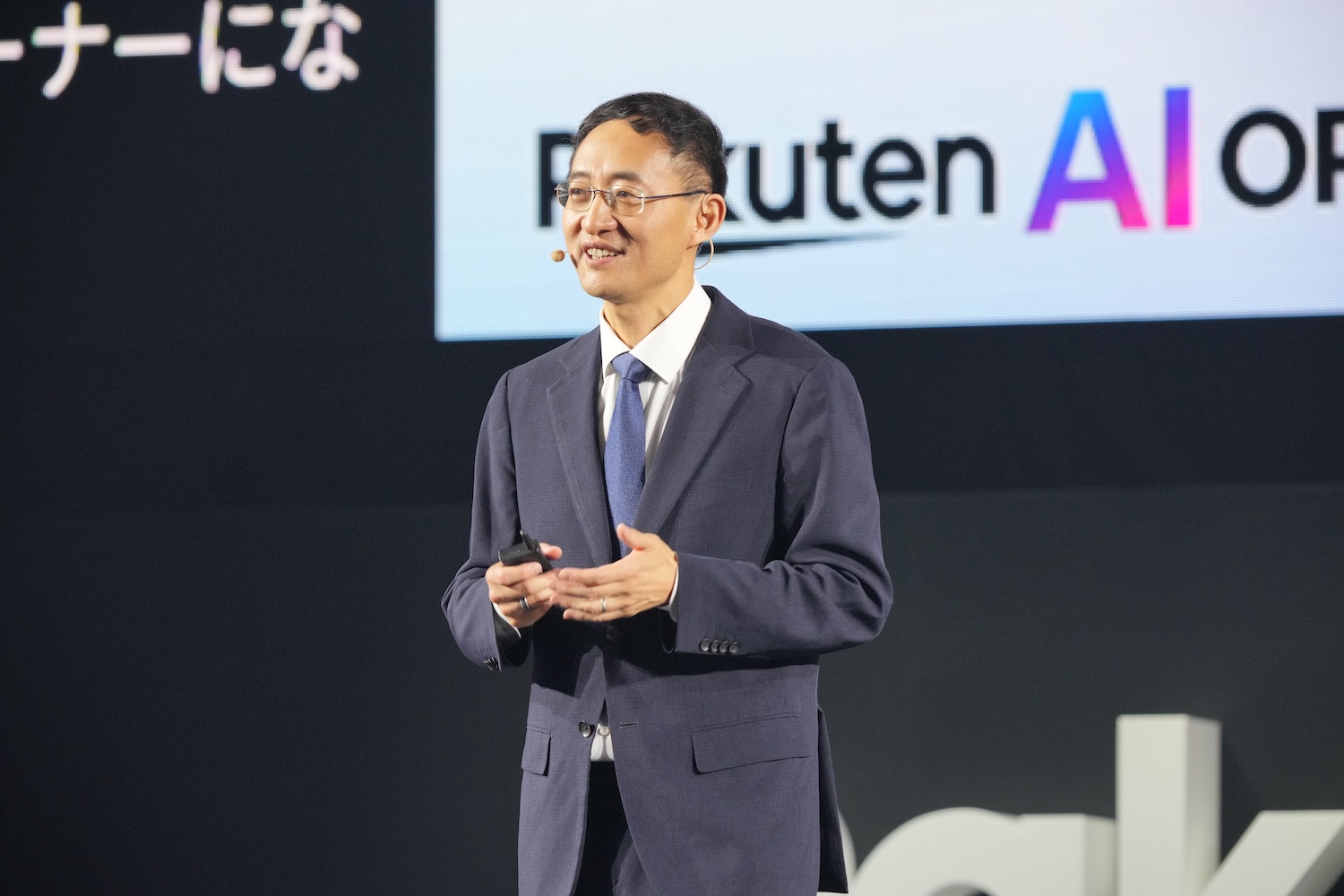
The fundamental shift in Rakuten AI's architecture is the transition from a probabilistic text generator (standard LLM) to an agentic orchestrator. During the 2025 Optimism conference, Rakuten Group Chief Data & AI Officer Ting Cai defined this as a move from "human browsing" to "agent browsing."
1. The Multi-Modal Input Layer
Rakuten AI does not rely solely on text transformers. Its architecture includes:
- Voice-to-Text (ASR): Integrated into the Rakuten Link mobile app for natural language input.
- Vision/Image-based Queries: A sophisticated OCR and visual reasoning module. A primary technical highlight is its "Problem Solver" feature, which demonstrates the ability to parse mechanical engineering math problems from images, perform step-by-step reasoning, and output structured solutions.
- Custom Japanese Tokenizer: Unlike many foundation models trained primarily on English-centric datasets, Rakuten has retooled its stack with a tokenizer specifically optimized for the Japanese language. This likely reduces sub-word fragmentation, leading to better semantic understanding and lower inference costs for Japanese text.
2. The Agentic Core: Intent Understanding
The architecture is designed to map natural language to specific "intents" that can trigger external API calls or UI automation.
- Deep-Think Search: A reasoning-heavy search modality that likely uses a Chain-of-Thought (CoT) approach or iterative retrieval-augmented generation (RAG) to synthesize information before presenting a final answer.
- Task-Action Mapping: Rather than just recommending a hotel, the agent is built to "take action" on behalf of the user. This implies an underlying interface layer (likely via internal APIs or a specialized agentic web wrapper) that allows the model to interact with the Rakuten Ecosystem’s various sectors (Travel, Fintech, Shopping).
3. Data Integration and RAG
The "trillions of interactions" within the Rakuten Ecosystem serve as the primary knowledge base. This proprietary data includes:
- Transactional history (Shopping/Ichiba)
- Lifestyle and travel preferences
- Financial interactions (Fintech)
- Customer support logs
By leveraging this data, Rakuten AI functions as a hyper-localized RAG system, providing recommendations that are not only linguistically accurate but culturally and commercially relevant to the Japanese market.
Performance Analysis
As of the current announcement, specific technical benchmarks (such as MMLU, GSM8K, or HumanEval scores) for the underlying foundation models have not yet been disclosed. However, Rakuten provided qualitative performance indicators through live demonstrations.
Performance Indicators and Capabilities
| Capability | Technical Application | Demonstrated Performance |
|---|---|---|
| Mechanical Reasoning | Image-to-Math execution | Solved complex mechanical engineering math with step-by-step logic. |
| Market Intelligence | Synthetic Research | Conducted market research for soy sauce products and generated a business launch plan. |
| Contextual Awareness | Localization | Demonstrated "deep Japanese language and cultural knowledge" beyond standard translation. |
| Cross-Platform Action | Ecosystem Integration | Ability to browse sites and perform tasks like booking or purchasing (Agentic browsing). |
Comparison: Traditional LLM vs. Rakuten Agentic AI
| Feature | Standard LLM (Chatbot) | Rakuten AI (Agent) |
|---|---|---|
| Primary Goal | Information Retrieval/Generation | Task Completion (Action) |
| Interface | Text-only or Multi-modal Chat | Text, Voice, Image, & Tool-use |
| Knowledge Source | Public Training Data | Public Data + Trillions of Ecosystem Interactions |
| Output | Narrative Responses | Narrative + Step-Execution (Booking/Coding/Solving) |
| Architecture | Reactive | Proactive (Intent-driven) |
Technical Implications
1. The Death of the "Human-Only" UI
Ting Cai’s statement that "For over 30 years, we designed sites to be operated by humans" signals a massive retooling of the Rakuten tech stack. Developers will likely need to move toward Agent-Optimized Interfaces (AOIs)—standardized API endpoints or structured data schemas that allow Rakuten AI to "browse" and "act" without the overhead of parsing complex HTML/CSS designed for human eyes.
2. Democratization of Technical Roles
The integration of "coding support" and "business planning" features suggests that Rakuten AI is intended to serve as a low-code/no-code interface for the Rakuten Ichiba marketplace. By automating the technical hurdles of opening a shop or conducting market research, Rakuten is effectively using AI to lower the barrier to entry for its own commercial ecosystem.
3. Localization as a Competitive Moat
By investing in fundamental technologies like custom tokenization and localized language modeling, Rakuten is positioning itself against global competitors (like OpenAI or Google). The technical implication is that a model with "deep cultural knowledge" and "local context" will outperform larger, generalized models in specific high-value Japanese market sectors like Fintech and Omotenashi (hospitality/service).
Limitations and Trade-offs
- Ecosystem Siloing: The agent’s highest utility is locked within the Rakuten Ecosystem. While it can browse the web, its "action" capabilities are most potent when interacting with Rakuten services, which may limit its use-case for users outside that ecosystem.
- Latency vs. "Deep-Think": The "deep-think search" and step-by-step problem solver features likely introduce significant latency compared to standard "fast" chat responses. Balancing real-time voice interaction with these high-compute reasoning tasks remains a challenge.
- Privacy vs. Integration: Drawing on "trillions of interactions" implies a high degree of data centralization. Ensuring user privacy while maintaining the "personalized and localized" support promised will require rigorous technical safeguards and transparent data-handling protocols.
- Hardware/Infrastructure Costs: Retooling a tech stack for agentic browsing and running multi-modal queries (image/voice) across billions of customers requires massive GPU/TPU resources, the details of which remain not yet disclosed.
Expert Perspective
Rakuten AI is not just another wrapper for an existing LLM; it is a strategic attempt to own the "Interface Layer" of the Japanese internet. From a technical standpoint, the most significant aspect of this launch is the transition from Retrieval to Agency.
While many companies are struggling to find a "killer app" for Generative AI, Rakuten is leveraging its existing infrastructure as the laboratory. If they successfully transition their trillions of data points into a proactive agent that can book a hotel, solve a math problem, and research a product in one seamless flow, they will have effectively turned their ecosystem into an operating system. The "Hybrid" approach mentioned by Cai (partnering with the best while building the best) is a pragmatic engineering strategy, allowing them to swap foundation models as the SOTA (State of the Art) evolves while keeping their proprietary "Action Layer" and "Japanese Context" as the core IP.
Technical FAQ
How does Rakuten AI compare to competitors on standard benchmarks like MMLU?
Specific benchmark scores for Rakuten AI have not yet been disclosed. The current focus of the launch is on "Agentic" capabilities and Japanese localization rather than raw LLM performance metrics.
Is it backwards-compatible with the v1 Rakuten AI API?
While a specific "v1 API" was not detailed in the source, the announcement emphasizes that Rakuten has "retooled its tech stack from the ground up." The new platform is integrated into the Rakuten Link app and is slated for Rakuten Ichiba, suggesting a shift toward internal service integration and a beta web app for external access.
Does the agent perform "on-device" processing for voice and image?
The source does not explicitly state whether processing is on-device or cloud-based. However, given the complexity of the "Mechanical Engineering Problem Solver" and "Deep-Think Search," it is highly likely that these features rely on cloud-side inference with high-compute clusters.
What model architecture is being used?
The specific architecture (e.g., Transformer, MoE) and parameter counts are not yet disclosed. Rakuten defines their approach as "built with deep learning, tokenization, and large language models," using a "hybrid" strategy of internal development and external partnerships.
References
- [Rakuten AI Optimism 2025 Keynote - Ting Cai]
- [Rakuten Technology Conference 2025 - Agentic Future Presentation]
- [Rakuten Ichiba Integration Roadmap 2025/2026]
Sources
- Rakuten Today: Rakuten AI: Our agentic future starts here
- Rakuten Group: Rakuten Announces Full-Scale Launch of Rakuten AI
- Rakuten Group: Rakuten Integrates Cutting-Edge Agentic AI Tool into Rakuten Ichiba
- Rakuten Today: Ting Cai, AI leaders unveil Rakuten’s agentic future
All technical specifications, pricing, and benchmark data in this article are sourced directly from official announcements. Competitor comparisons use publicly available data at time of publication. We update our coverage as new information becomes available.