
The short version
ABB Robotics' new partnership with NVIDIA integrates super-realistic simulation tech called Omniverse into ABB's RobotStudio software, creating a tool named RobotStudio HyperReality that trains robots virtually with 99% real-world accuracy. This "closes the sim-to-real gap," letting factories test and perfect robot setups on computers instead of building expensive physical prototypes. Coming in late 2026, it could slash robot deployment costs by up to 40% and speed up production by 50%, potentially leading to faster, cheaper manufacturing of everyday items like phones and appliances.
What happened
Imagine trying to teach a robot arm to assemble your smartphone by practicing only in a video game—the lighting's off, the parts feel wrong, and when you put it in a real factory, it fumbles everything. That's the "sim-to-real gap" factories have battled for years: virtual training doesn't perfectly match messy real life, like varying lights, shadows, or material textures.
ABB Robotics, a Swiss company that makes industrial robots for factories, just partnered with NVIDIA, the AI chip giant. They're embedding NVIDIA's Omniverse libraries—think ultra-realistic 3D simulation tools—directly into ABB's RobotStudio software, which over 60,000 engineers use worldwide to program robots. The result is RobotStudio HyperReality, launching in the second half of 2026.
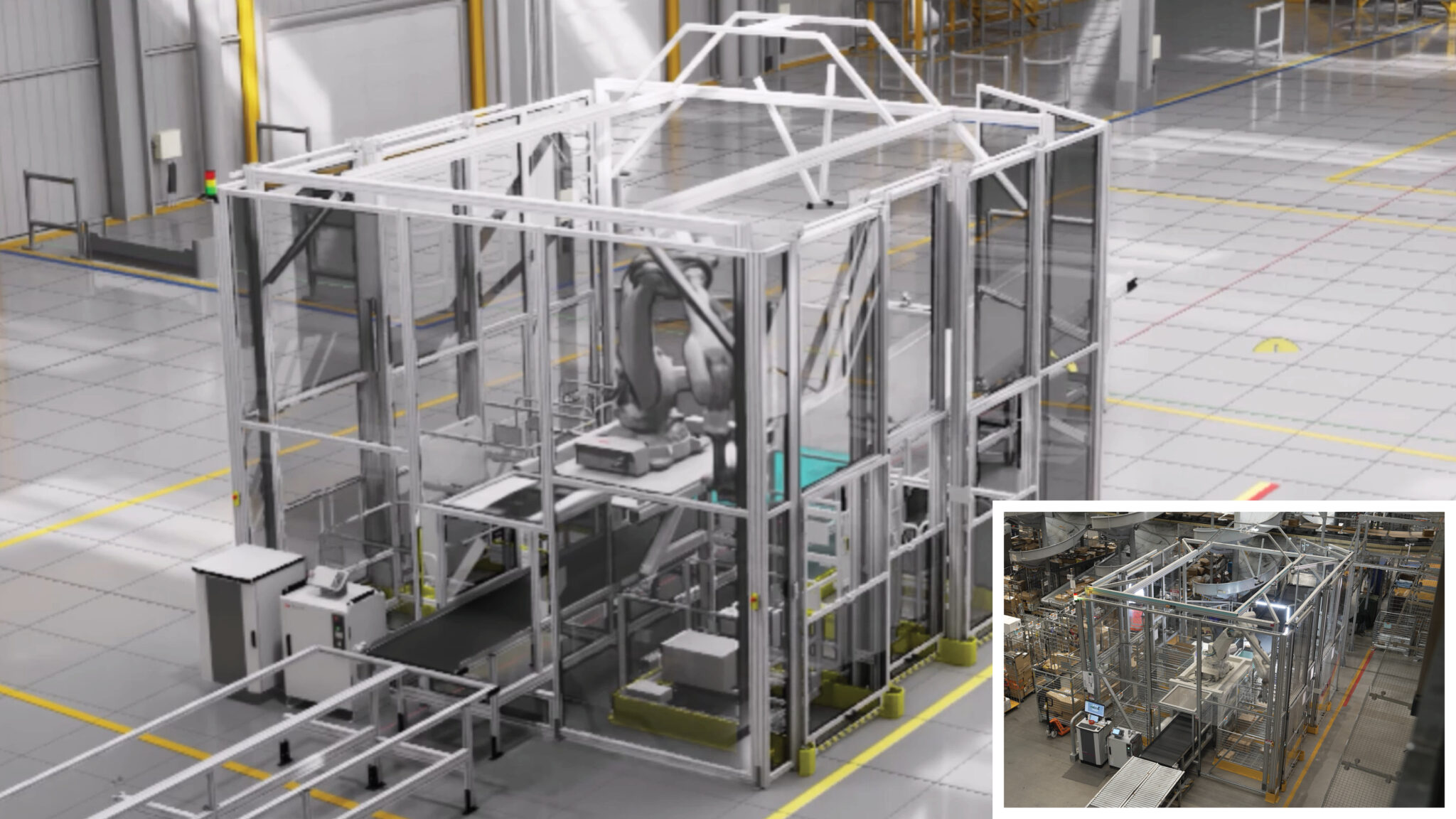
With this, engineers design entire factory setups—robots, sensors, lights, moving parts—on a computer. It exports as a file into Omniverse, where the virtual robot runs the exact same software as a real one. Simulations generate fake-but-super-accurate photos and data to train AI vision systems entirely virtually. Pilots with giants like Foxconn (they make iPhones and gadgets) and Workr (helping small factories automate) are already testing it, showing robots that handle delicate electronics or new parts in minutes without constant tweaks.
Early quotes hype it big: ABB's president Marc Segura called it closing "technology’s long-standing ‘sim-to-real’ gap" for "industrial-grade precision." NVIDIA's Deepu Talla said it brings "high-fidelity simulation" to speed up how manufacturers launch products.
Why should you care?
You might not program robots, but robots build your stuff—phones, cars, fridges, even food packaging. Right now, factories waste time and money on trial-and-error with physical setups, driving up costs that get passed to you in higher prices or delays.
This tech promises to cut engineering time, reduce deployment costs by 40%, speed market launches by 50%, and slash setup times by up to 80% by ditching physical prototypes. For you, that means potentially cheaper gadgets (Foxconn pilots target electronics assembly), faster new product releases, and more reliable manufacturing. Small factories via Workr could automate too, creating jobs in smarter ways or lowering prices for custom goods.
It's physical AI at scale—like giving robots human-like smarts for real-world precision—without the usual headaches. ABB's "Absolute Accuracy" tech already trims robot errors from centimeters to half a millimeter; paired with Omniverse, it's game-changing for industries needing pinpoint work.
What changes for you
Practically, your shopping cart could feel it soon after 2026:
- Cheaper electronics and appliances: Foxconn's pilot means quicker, error-free assembly of phones, laptops, and components—less waste, lower prices.
- Faster product launches: 50% quicker to market? New gadgets or car models hit shelves sooner.
- More automation for small businesses: Workr's demos at NVIDIA's GTC 2026 show robots onboarding new parts in minutes, no experts needed. Small makers compete better, possibly offering affordable custom or local products.
- No direct app changes: This is factory backend stuff—you won't notice in daily apps, but your Amazon deliveries or Walmart shelves get more efficient.
- Job shifts?: Factories need fewer physical tests, but demand grows for engineers using tools like RobotStudio—more skilled work, less grunt labor.
They're even eyeing NVIDIA's Jetson AI chips for real-time robot brains in ABB controllers, making everything smarter on the factory floor.
Frequently Asked Questions
### When can I expect to see cheaper products from this?
RobotStudio HyperReality launches in the second half of 2026, with pilots like Foxconn already running. Real-world savings (up to 40% cost cuts) should trickle to consumers in 2027+, as factories ramp up efficient production of gadgets and goods.
### How does this make robots better than before?
Old simulations were like practicing basketball in the dark—robots failed in real factories due to mismatched lighting or physics. Omniverse adds photorealistic details for 99% sim-to-real match, so virtually trained robots perform precisely without endless real-world fixes.
### Is this just for big companies like Foxconn?
No—early pilots include Workr, which brings it to small and medium factories. Over 60,000 engineers use RobotStudio, so it scales globally, helping more businesses automate affordably.
### Will this create or kill jobs?
It cuts physical prototype needs and setup times by 80%, reducing some manual labor. But it speeds innovation, creates demand for robot programmers, and lets small factories compete—likely shifting jobs to higher-skill roles.
### What's the "sim-to-real gap" in simple terms?
It's when virtual robot training doesn't translate to the factory floor, like a flight simulator ignoring wind or turbulence. This partnership uses NVIDIA's tech for spot-on virtual copies, including lights and materials, so robots "graduate" ready for real work.
The bottom line
This ABB-NVIDIA partnership isn't flashy consumer AI—it's the behind-the-scenes upgrade making factory robots reliably smart, closing a decades-old gap with virtual simulations that match reality 99%. For you, it means factories waste less, produce faster and cheaper, so everyday stuff like your next phone or TV could cost less and arrive quicker post-2026. Watch for demos at NVIDIA's GTC 2026; it's a win for efficient manufacturing that touches us all without us lifting a finger.
Sources
- NVIDIA Blog: ABB Robotics Taps NVIDIA Omniverse to Deliver Industrial-Grade Physical AI at Scale
- The AI Insider: ABB Robotics Partners with Nvidia to Deliver Industrial-Grade Physical AI at Scale
- MLQ.ai: ABB Robotics and NVIDIA Partner to Bridge Virtual-to-Real AI Deployment Gap
- Reuters: ABB teams up with Nvidia to improve factory robot training
- Parameter: ABB (ABBN) Stock: NVIDIA Partnership Aims to Revolutionize Robot Simulation Training
- tEDmag: ABB Teams With Nvidia On Industrial Robotic Training