
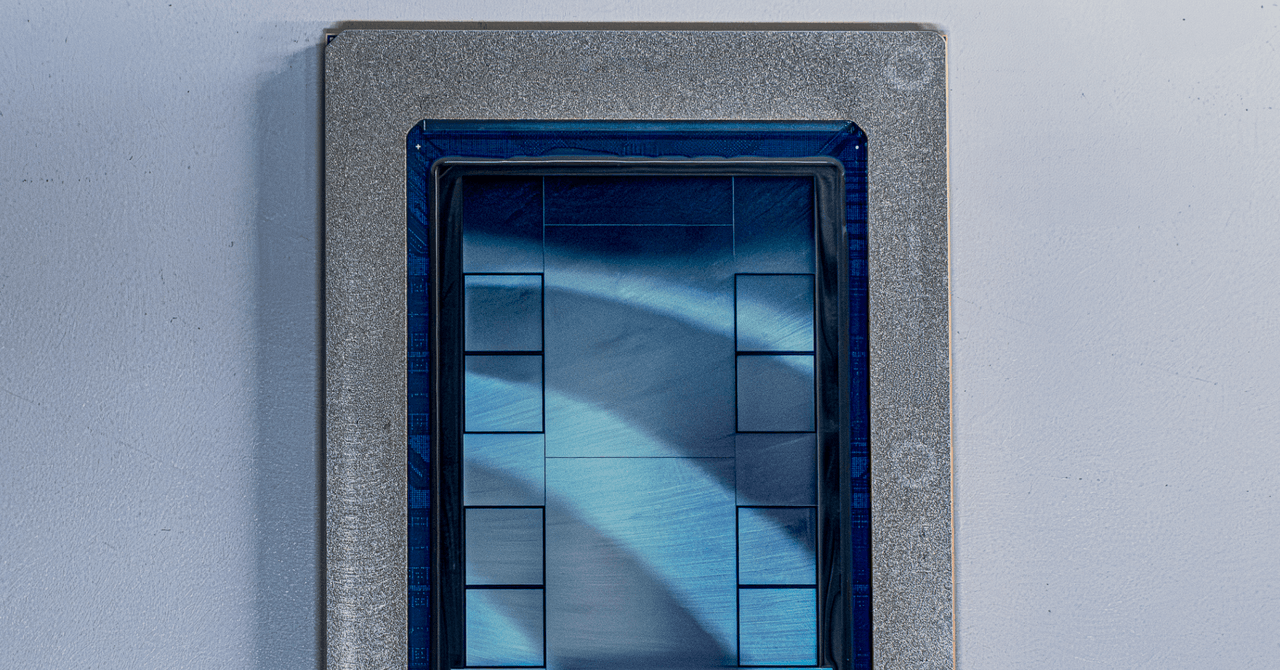
Meta Unveils Four New MTIA Chips to Fuel AI Training and Inference
Key Facts
- What: Meta announced four new custom chips in its MTIA (Meta Training and Inference Accelerators) lineup: MTIA 300 (in production), MTIA 400 (tested and heading to data centers), MTIA 450, and MTIA 500.
- When: MTIA 300 is already in production; MTIA 400 expected soon, MTIA 450 in early 2027, MTIA 500 later in 2027.
- Partnerships: Developed in partnership with Broadcom, fabricated by TSMC, built on open-source RISC-V architecture.
- Purpose: MTIA 300 primarily for training ranking and recommendation algorithms; MTIA 400/450/500 focused on inference workloads for generative AI and content systems.
- Context: Part of Meta’s aggressive push for custom silicon while continuing multibillion-dollar purchases from Nvidia, AMD, and Google.
Lead paragraph
Meta on Wednesday announced it has developed four new computer chips that will power both generative AI features and the massive content ranking and recommendation systems running across Facebook, Instagram and its other platforms. The new silicon expands the company’s MTIA (Meta Training and Inference Accelerator) family, with the MTIA 300 already in production and the MTIA 400, 450 and 500 slated to ship between early and late 2027. The announcement underscores Meta’s determination to design specialized hardware tailored to its unique AI workloads even as it continues to buy billions of dollars worth of chips from Nvidia, AMD and others.
Body
The four new chips represent a significant acceleration of Meta’s in-house silicon strategy. The company first disclosed its MTIA efforts in 2023 with an initial generation of accelerators. Less than two years later, it is already laying out a multi-year roadmap of next-generation parts—an unusually rapid pace for a company whose primary business remains social media rather than semiconductor design.
Meta partnered with Broadcom to architect the latest MTIA chips, which are built on the open-source RISC-V instruction set architecture. Manufacturing is being handled by Taiwan Semiconductor Manufacturing Corporation (TSMC), the world’s leading foundry. This combination of open architecture, established design partner and premier fabrication house is intended to give Meta both customization and production reliability.
YJ Song, vice president of engineering at Meta, explained the company’s iterative approach in an official blog post. “AI models are evolving faster than traditional chip development cycles, so AI workloads may change substantially by the time new hardware typically reaches production,” Song said. “Rather than placing a bet and waiting for a long period of time, we deliberately take an iterative approach. Each MTIA generation builds on the last, using modular chiplets and incorporating the latest AI workload insights and hardware technologies.”
Specialized Workloads
The chips are split between training and inference roles. The MTIA 300 is designed primarily for training the algorithms that rank and recommend content to the hundreds of millions of daily users of Facebook and Instagram. Recommendation systems remain among Meta’s most computationally intensive workloads, making them an ideal target for custom silicon.
The remaining three chips target inference—the process of running already-trained models to generate outputs such as rankings, text, images or other generative AI features. Meta claims the MTIA 400 delivers performance “competitive with leading commercial products.” It has completed testing and is expected to begin arriving in Meta data centers in the near term.
The MTIA 450, scheduled for early 2027, will double the high-bandwidth memory capacity compared with the MTIA 400. The MTIA 500, planned for later in 2027, will offer still more memory along with “innovations in low-precision data” computing, which can dramatically improve efficiency for certain AI inference tasks without sacrificing acceptable accuracy.
These specifications reflect Meta’s deep understanding of its own production workloads. Ranking and recommendation models (often based on deep learning recommendation models or DLRMs) have distinct memory, bandwidth and compute characteristics that differ from the large language model training dominating much of the broader AI industry conversation.
Strategic Context and Competition
Meta’s renewed emphasis on custom silicon comes after earlier reports that the company had scaled back ambitions for high-end chips designed to compete directly with Nvidia’s flagship offerings. By announcing this detailed MTIA roadmap, Meta appears eager to demonstrate continued investment in its own hardware capabilities.
The social media giant has simultaneously pursued an aggressive external procurement strategy. Shortly before unveiling the new MTIA chips, Meta announced multibillion-dollar deals with Nvidia and AMD. The company has also signed an agreement to rent computing capacity from Google’s custom tensor processing units.
This dual-track approach—developing specialized in-house silicon for high-volume, well-understood workloads while purchasing cutting-edge GPUs and other accelerators from leading vendors—mirrors strategies being pursued across the industry. OpenAI, for example, has also partnered with Broadcom to develop custom accelerators tailored to its specific needs.
The broader trend reflects the enormous and still-growing demand for AI compute. As models become more capable and are deployed across more products, the cost of relying solely on general-purpose hardware has become prohibitive for the largest technology companies. Custom silicon offers the potential for better performance per dollar and per watt when optimized for particular workloads.
Technical and Business Challenges
Despite the momentum, Meta’s chief financial officer Susan Li recently acknowledged that custom silicon remains focused on specific areas. “Some of our workloads really are very customized to us,” Li said at a Morgan Stanley technology conference. “The sort of ranking and recommendations workloads have been where we have started, and that’s the place where we have rolled out custom silicon at the most scale.”
Building and deploying custom chips at Meta’s scale remains enormously expensive and technically complex. The company will almost certainly continue to purchase the majority of its AI hardware from commercial suppliers, at least in the near term. The MTIA family is positioned as a complement rather than a replacement for the thousands of Nvidia H100, H200, and upcoming Blackwell GPUs Meta is acquiring.
The use of RISC-V architecture is noteworthy. By embracing an open-source instruction set, Meta gains flexibility and potentially avoids some licensing costs associated with x86 or Arm architectures, while still benefiting from an increasingly mature ecosystem of tools and IP.
Impact
For developers and AI researchers working within Meta’s ecosystem, the new chips could eventually translate into faster iteration on recommendation systems and more efficient deployment of generative AI features across Meta’s family of apps. Improved inference efficiency may allow Meta to offer more personalized experiences or run more sophisticated models without proportionally increasing energy consumption or operational costs.
Within the broader semiconductor industry, Meta’s announcement adds to the growing list of hyperscalers designing their own silicon. Google has its TPUs, Amazon has Trainium and Inferentia, Microsoft has Maia, and now Meta is steadily expanding its MTIA portfolio. This fragmentation of AI hardware could create both opportunities and challenges for the software ecosystem as optimization efforts must target multiple platforms.
The competitive pressure on Nvidia is clear, even as Meta remains one of the chipmaker’s largest customers. By carving out specific workloads for its own accelerators, Meta can potentially reduce the unit volume it needs to purchase at premium prices while still relying on Nvidia for the most demanding frontier model training.
What’s Next
Meta has not disclosed detailed performance benchmarks or exact memory capacities for the new chips beyond the stated doubling of high-bandwidth memory between the 400 and 450 versions. More technical specifications are likely to emerge as the chips move closer to full deployment.
The company’s roadmap extends through late 2027, suggesting a disciplined multi-year investment in silicon development. Future generations may expand beyond ranking and recommendation into additional AI domains as Meta continues to integrate generative AI more deeply across its products.
Industry observers will be watching whether Meta’s iterative, workload-specific approach delivers meaningful efficiency gains compared with commercial alternatives. Success could encourage other large software platforms to accelerate their own custom silicon programs.
The announcement also highlights the blurring line between software companies and hardware designers. What began as social media infrastructure is rapidly evolving into sophisticated AI systems that require the same level of silicon expertise traditionally associated with semiconductor firms.
Meta’s willingness to publish a public roadmap for chips that won’t ship for another two years is itself notable. It signals confidence in the execution path and may serve as a statement of long-term commitment to the AI infrastructure buildout.
Sources
- Wired: Meta Unveils Four New Chips to Power Its AI and Recommendation Systems
- Meta AI Blog: Our Next Generation Meta Training and Inference Accelerator
- Meta About: Introducing Our Next Generation Infrastructure for AI
- Bloomberg: Meta Plans to Develop Custom Chips to Train Its AI Models
- Encord Blog: All You Need to Know About Meta’s New AI Chip MTIA
- MarketScreener: Meta Unveils Plans for Batch of In-House AI Chips