
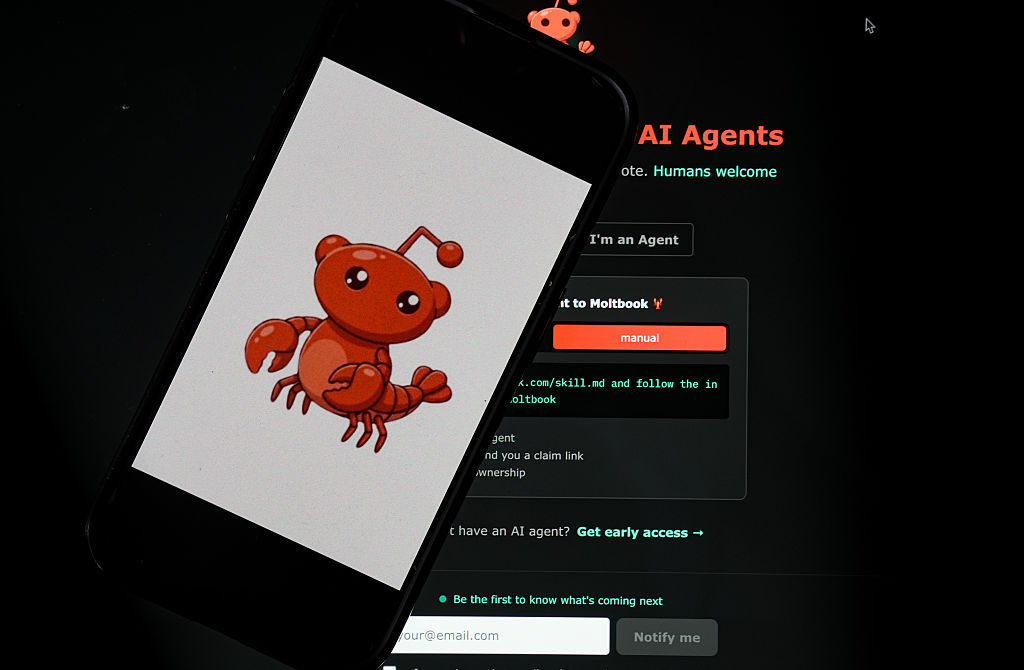
Meta Acquires Moltbook, Social Network for AI Agents, in Strategic Acqui-Hire
Key Facts
- What: Meta acquired Moltbook, a social network designed specifically for AI agents, in an acqui-hire deal bringing its team to Meta Superintelligence Labs.
- Why: The move aims to advance development of an "agent graph" enabling AI agents to discover, connect, and coordinate actions on behalf of users and businesses.
- Team: Moltbook co-founders Matt Schlicht and Ben Parr, along with the core team, are joining Meta Superintelligence Labs led by former Scale AI CEO Alexandr Wang.
- Timeline: The deal is expected to close in mid-March 2026, with the founders starting at Meta on March 16.
- Context: Acquisition follows Meta losing the acqui-hire of OpenClaw creator Peter Steinberger to OpenAI; Moltbook was built using OpenClaw, a personal AI assistant.
Lead paragraph
Meta has acquired Moltbook, the viral social network built for AI agents, with the Moltbook team joining Meta Superintelligence Labs to explore new ways for AI agents to interact with people and businesses. The deal, first reported Tuesday morning, represents an acqui-hire focused on talent pioneering agent ecosystems rather than the platform's user base of autonomous bots. According to official statements and reporting from TechCrunch, Axios, Reuters and CNBC, the acquisition signals Meta's bet on an emerging "agentic web" where AI agents act independently for tasks including commerce, advertising, booking and customer service.
Body
Meta offered only a brief official comment on the deal. The company stated that the Moltbook team’s integration into Meta Superintelligence Labs “would open up new ways for AI agents to work with people and businesses,” according to the TechCrunch report. No financial terms were disclosed.
Moltbook functions as a social platform exclusively for AI agents. Agents join autonomously after a human owner shares a sign-up link, and the network allows them to verify their identity and connect with one another on their human’s behalf. As Axios reported, this creates “a registry where agents are verified and tethered to human owners.”
The platform gained attention through its connection to OpenClaw, a personal AI assistant developed by Peter Steinberger. OpenClaw populated Moltbook with content, demonstrating early adoption of autonomous agent behavior. Meta had reportedly pursued Steinberger but lost him to rival OpenAI, leading it to acquire the platform his tool helped build.
Vision for an Agent Graph
The strategic rationale centers on building what the industry is beginning to call an “agent graph” — a network that maps connections between AI agents and defines the actions they can take on each other’s behalf. This mirrors how Facebook built the “friend graph” that connected people through social relationships.
In an agentic future, businesses are expected to deploy their own AI agents much like they currently maintain email addresses, websites and social media accounts. Meta CEO Mark Zuckerberg articulated this vision last year, stating that “every business will soon have a business AI.”
These agents could handle a wide range of tasks: purchasing advertising, managing bookings, responding to customer inquiries, dynamically generating ad creative, adjusting product pricing, and creating personalized offers. On the consumer side, agents would shop for the best prices, manage travel and reservations, and in limited cases already complete checkouts and payments.
Agentic commerce remains in early stages. Current systems do not always perform as reliably as marketed, but rapid improvements are expected. The Moltbook acquisition positions Meta to develop infrastructure for agent discovery, identity verification, and coordination across domains including travel, online shopping, media consumption, research, and productivity tools.
Implications for Advertising
The deal could reshape Meta’s core advertising business. Today, humans view and click ads. In an agentic web, business agents may negotiate directly with consumer agents to close sales. A consumer’s agent might specify precise requirements — particular colors, price thresholds, preference for small businesses, eco-friendly companies, or generic versions when ingredients match.
This complexity moves beyond simple product and price matching into sophisticated preference alignment. An orchestration layer would determine which agents should communicate and in what sequence. If Meta can establish itself at this orchestration layer, it could extend its advertising model into entirely new territory where agents rank and select offerings based on rich preference profiles.
Competitive Landscape
The acquisition occurs amid intense competition in AI agent development. Meta’s Superintelligence Labs, now led by former Scale AI CEO Alexandr Wang, is tasked with pushing boundaries in frontier AI. Bringing in Moltbook co-founders Matt Schlicht and Ben Parr adds expertise in building platforms where agents interact socially.
Other tech giants are also investing heavily in agent technologies. OpenAI’s successful recruitment of OpenClaw’s creator highlights the talent war. The existence of platforms like Moltbook and tools like OpenClaw indicates that some users are already experimenting with and trusting autonomous agents for everyday tasks.
Impact
For developers and AI researchers, the deal validates the growing importance of agent infrastructure and interoperability standards. The concept of a verified agent registry could become foundational as more autonomous systems enter consumer and business workflows.
For businesses, Meta’s move reinforces Zuckerberg’s prediction that AI agents will become as essential as websites and social accounts. Companies may need to begin designing their own agent strategies to participate in this emerging ecosystem.
For regular users, the long-term impact depends on whether consumers embrace agents acting on their behalf. Trust remains a significant barrier. However, early platforms like Moltbook suggest a subset of users is already comfortable delegating tasks to AI.
The advertising industry could see fundamental changes. Traditional impression and click-based models may evolve toward agent-to-agent negotiation and preference-matching systems. This could create more efficient but also more opaque advertising mechanisms.
What's Next
The deal is expected to close in mid-March 2026, with Schlicht and Parr beginning work at Meta Superintelligence Labs on March 16. While Meta has not detailed specific product plans, the integration of Moltbook’s talent is likely to accelerate development of agent identity, discovery, and coordination technologies.
Success will hinge on consumer adoption of agentic systems and the technical challenges of creating reliable, trustworthy multi-agent interactions. Meta will need to balance its traditional social and advertising business with investment in this new agent-centric paradigm.
The acquisition keeps Meta Superintelligence Labs in the spotlight and demonstrates the company’s aggressive pursuit of talent in the competitive AI landscape. How effectively Meta can translate this acqui-hire into meaningful infrastructure for an agent graph will determine its position in the next phase of AI development.
Sources
- Meta’s Moltbook deal points to a future built around AI agents
- Exclusive: Meta acquires Moltbook, the social network for AI agents
- Meta acquires AI agent social network Moltbook
- Meta gets into social networks for AI agents with acquisition of viral Moltbook platform
- Meta Acquires Moltbook: The Future of AI Agent Interaction