
- What: Nvidia is pivoting its strategy to prioritize high-performance CPUs, including the new "Vera" data center processor and "N1X" consumer chip.
- Why: Current GPU-centric architectures are hitting a "bottleneck" in agentic AI workflows that require complex orchestration and logic.
- When: Detailed specifications and hardware will be showcased at Nvidia’s GTC conference, starting Monday.
- Market Impact: The move signals a direct challenge to the traditional PC industry and positions Nvidia as a dominant force in robotics and autonomous manufacturing.
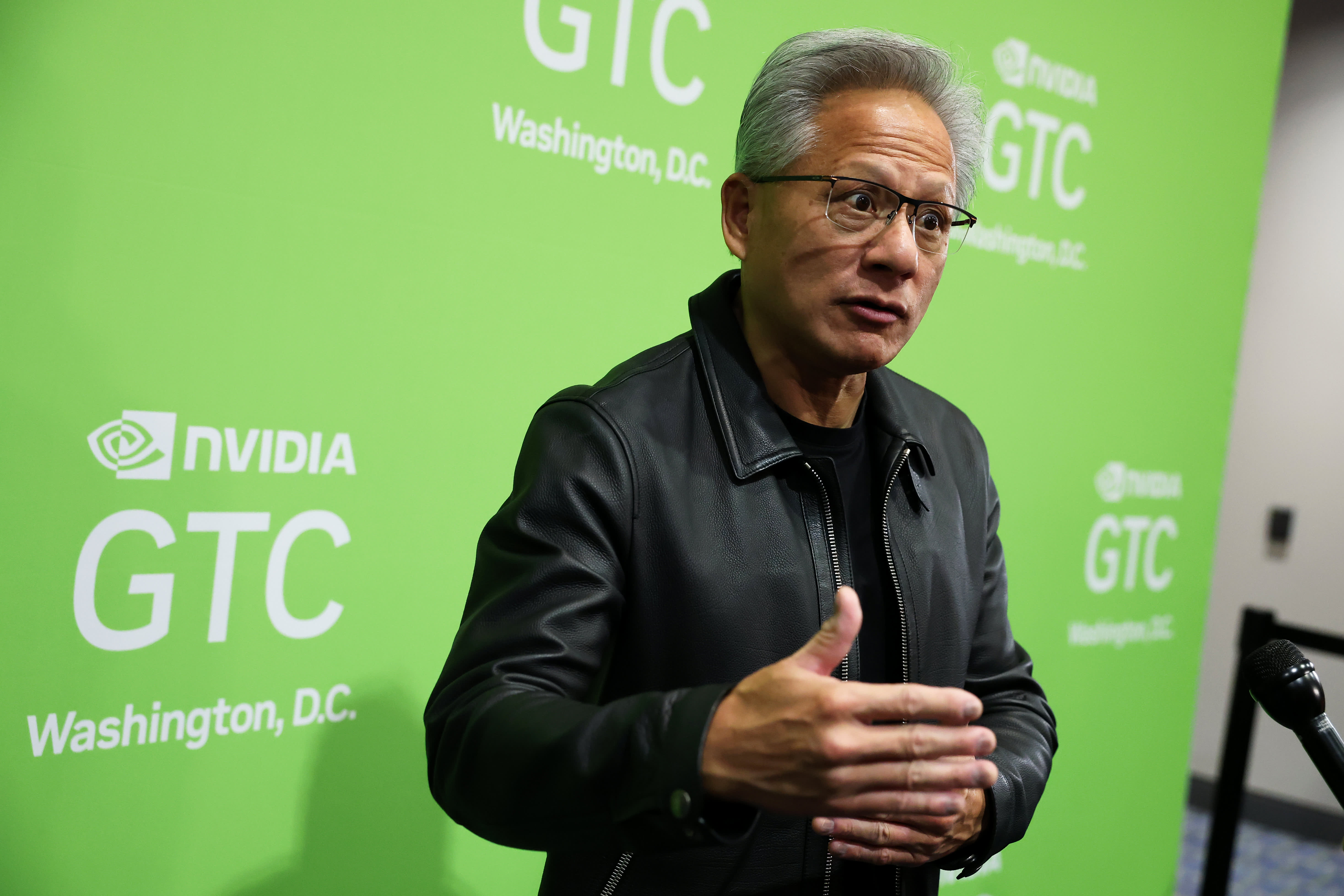
Nvidia is set to fundamentally reorganize the AI hardware landscape at its upcoming GTC conference by shifting the spotlight from its dominant GPUs to a new generation of specialized CPUs. CEO Jensen Huang is poised to unveil the "Vera" processor, the successor to the company’s Grace CPU, alongside a highly anticipated consumer-grade chip dubbed the "N1X." This strategic pivot addresses a critical shift in the industry as "agentic AI"—systems capable of autonomous reasoning and multi-step workflows—reveals performance limitations in existing hardware configurations.
The announcement comes as Nvidia and rival AMD report a massive surge in demand for CPUs capable of handling the orchestration tasks required for advanced AI agents. While GPUs remain the workhorse for massive parallel processing and model training, Nvidia executives now admit that the central processor has become the primary hurdle for the next era of automation.
The Agentic Bottleneck: Why CPUs are Taking Center Stage
For years, the AI industry has been defined by a race for more GPU compute. However, the rise of "agentic AI"—software agents that can plan, use tools, and execute complex sequences of tasks—has changed the requirements of the data center. Unlike standard large language model (LLM) inference, agentic workflows require heavy serial processing and sophisticated logic gates.
"CPUs are becoming the bottleneck in terms of growing out this AI and agentic workflow," Dion Harris, Nvidia's head of AI infrastructure, told CNBC. Harris described the shift as an "exciting opportunity" for the company to expand its footprint beyond the accelerator market.
To demonstrate this shift, Nvidia is expected to feature a CPU-only rack on the GTC showroom floor, a move that would have been unthinkable during the height of the generative AI boom. This configuration is designed to show how specialized processors can handle the "thinking" and "orchestration" phases of AI agents more efficiently than a GPU-heavy stack alone.
Vera and Rubin: The New Power Couple of Industrial AI
The centerpiece of Nvidia’s data center strategy is the Vera CPU. Now in production, Vera is the successor to the 2021 Grace CPU. While Grace was designed to sit alongside Hopper and Blackwell GPUs, Vera is being positioned as a standalone powerhouse specifically optimized for the "Rubin" GPU architecture.
According to reports from FinancialContent, the integration of the Vera CPU with the Rubin GPU is intended to transform Nvidia’s hardware into an "operating system" for the physical world. The combination is specifically targeted at:
- Robotics: Providing the low-latency logic required for autonomous movement.
- Autonomous Manufacturing: Managing complex supply chain agents on the factory floor.
- Real-time Industrial Simulation: Powering "digital twins" that require constant logic updates.
By tightly coupling the CPU and GPU, Nvidia aims to eliminate the data transfer lag that currently slows down autonomous systems, allowing for near-instantaneous decision-making in high-stakes industrial environments.
The N1X: Nvidia’s "World-Surprising" Entry into PCs
While the data center news secures Nvidia's enterprise dominance, the most disruptive move may be the "N1X" chip. This marks Nvidia’s formal expansion into the consumer CPU market, a territory historically dominated by Intel and AMD.
The N1X is being touted as a "world-surprising" chip that could trigger a massive reorganization of the PC industry. If the N1X delivers on its performance promises at GTC, it could shift the definition of an "AI PC" from a machine with a small NPU (Neural Processing Unit) to a machine with an Nvidia-designed architecture built from the ground up for agentic workflows.
Industry analysts suggest that the N1X could leverage Nvidia’s proprietary interconnects to provide consumer devices with a level of AI integration previously reserved for enterprise-grade servers. This move puts Nvidia in direct competition with AMD, which is also seeing record demand for its own AI-optimized CPU lines.
Impact on Developers and the AI Industry
For developers, the pivot to CPU-heavy architectures means a shift in how AI applications are optimized. Rather than focusing solely on "quantizing" models to fit into GPU memory, software engineers will now need to account for the orchestration capabilities of the CPU.
"This changes how developers will build the next generation of software," noted one industry report. "We are moving from models that simply 'answer' to agents that 'act,' and acting requires a different kind of silicon brain."
Pull Quote: "CPUs are becoming the bottleneck in terms of growing out this AI and agentic workflow." — Dion Harris, Nvidia Head of AI Infrastructure.
The industry impact is expected to be three-fold:
- Server Architecture: Data centers may begin to rebalance their budgets, spending more on high-margin CPUs like Vera to support agent-heavy applications.
- Consumer Choice: The PC market faces its biggest shake-up in decades, as Nvidia's N1X could offer a compelling alternative for creators and professionals who require local AI power.
- Industrial Automation: The Vera-Rubin combination could accelerate the deployment of humanoid robots and autonomous factories by providing a unified compute platform.
What’s Next
The GTC conference, kicking off this Monday, will serve as the proving ground for these claims. Attendees expect Jensen Huang to provide specific benchmarks comparing the Vera-Rubin stack against current-generation Blackwell systems, specifically in tasks involving agentic reasoning and robotics latency.
While the Vera CPU is already in production, the timeline for the N1X consumer rollout remains the biggest question for the industry. Analysts will be looking for launch dates, OEM partnerships (such as Dell, HP, or Lenovo), and pricing tiers that will determine if Nvidia can truly dethrone the incumbents in the personal computing space.
As the "agentic AI era" begins, the focus is no longer just on how fast a model can generate text, but on how effectively a system can execute a task. Nvidia is betting billions that the answer lies in the CPU.