
The short version
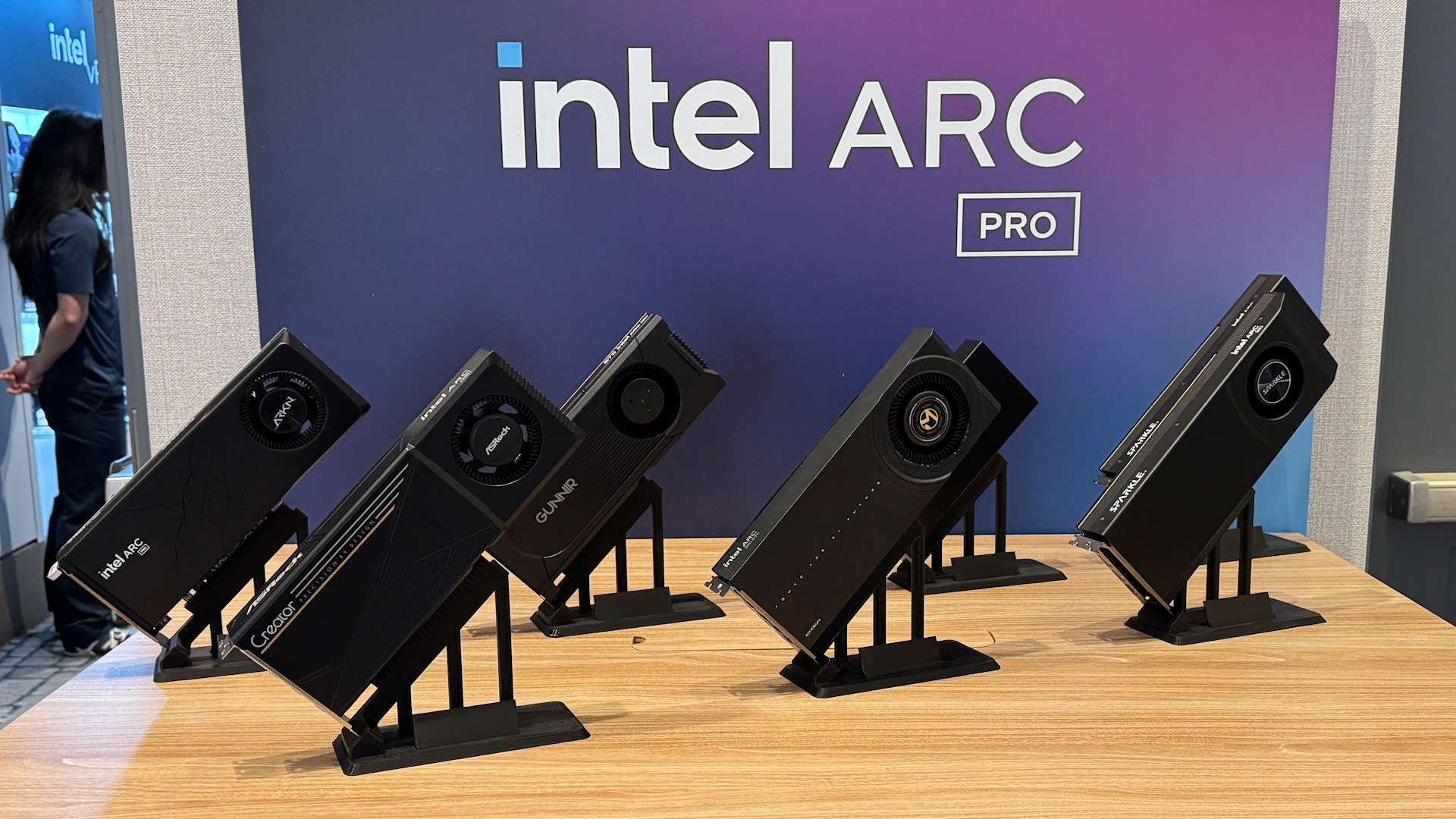
Intel has launched the Arc Pro B70 and B65, two powerful new graphics cards designed specifically for professional work and Artificial Intelligence, not for playing video games. These cards offer a massive 32GB of memory, which allows them to run large, complex AI programs locally on your own computer rather than relying on expensive cloud services. By making this technology more affordable and accessible, Intel is aiming to help researchers, creators, and small businesses build their own AI tools without breaking the bank.
What happened
Intel has introduced its latest "Battlemage" technology, but if you were hoping for a new card to upgrade your gaming PC, this isn't it. The new Arc Pro B70 and B65 are "workstation" cards.
Think of a computer like a kitchen. For standard tasks like browsing the web or watching videos, a basic stove is enough. For gaming, you need a high-end oven that can handle intense, fast-paced action. But for modern AI, you need something entirely different—a massive industrial pantry.
The most important feature of these new cards is their "32GB of memory." In the world of AI, memory is king. It acts as a giant workspace where the AI keeps all the information it’s currently thinking about. The more memory you have, the larger the AI "model" (the brain of the AI) you can run, and the more context you can feed it at once. Intel has designed these cards to provide that large, high-speed workspace at a lower price point than many competitors.
Why should you care?
Even if you aren't an AI scientist, this news matters because it represents a shift in how AI is being built. Currently, most powerful AI models live in the "cloud"—big, expensive data centers owned by tech giants.
If you are a developer, a designer, or a small business owner who wants to use or build AI tools, these cards make it significantly cheaper to do that work on your own machines. Instead of paying monthly fees to rent space on someone else’s supercomputer, you can buy one of these cards (starting at $949 for the B70) and keep your data private and local. It’s a move toward "democratizing" AI, making the tools to create it available to more people than just the biggest tech companies.
What changes for you
For the average person, there won't be an immediate change to your daily apps. However, you will likely start seeing more "local AI" features in the software you use.
- Faster and Private AI: Because these cards can process data on your own computer, you might eventually use AI tools that work entirely offline. This means your personal data doesn't have to be sent to a server to be analyzed, which is a big win for privacy.
- Lower Costs for AI Apps: If the companies that make your favorite creative software (like photo or video editors) start using these affordable chips, it could potentially keep the costs of those advanced features from skyrocketing.
- More Competition: Intel’s aggressive pricing puts pressure on other companies like Nvidia and AMD to offer better value. In the tech world, when companies compete, users usually end up with better, cheaper options.
Frequently Asked Questions
Is this card good for gaming?
No, these cards are specifically engineered for "workstation" tasks like professional AI modeling and complex data processing. They are not designed or optimized for gaming, and you would likely get better results with a dedicated gaming card.
Can I buy these in a store today?
The Arc Pro B70 is launching with a reference price of $949, and partner cards will be available from various manufacturers. The B65 is expected to arrive in mid-April; pricing for the B65 has not been officially confirmed.
How is this different from a regular graphics card?
A regular graphics card is balanced for smooth frame rates in games and visual entertainment. These Arc Pro cards are "memory-heavy," meaning they sacrifice gaming performance to prioritize holding massive amounts of data, which is essential for AI to "think" properly.
The bottom line
Intel’s new Arc Pro B70 and B65 aren't meant for your living room gaming setup, but they are a big deal for the future of AI. By providing a cheaper, high-memory option for running AI locally, Intel is helping to shift the power away from giant cloud servers and toward personal workstations. For anyone interested in building or running private, high-powered AI, this makes the barrier to entry much lower.