
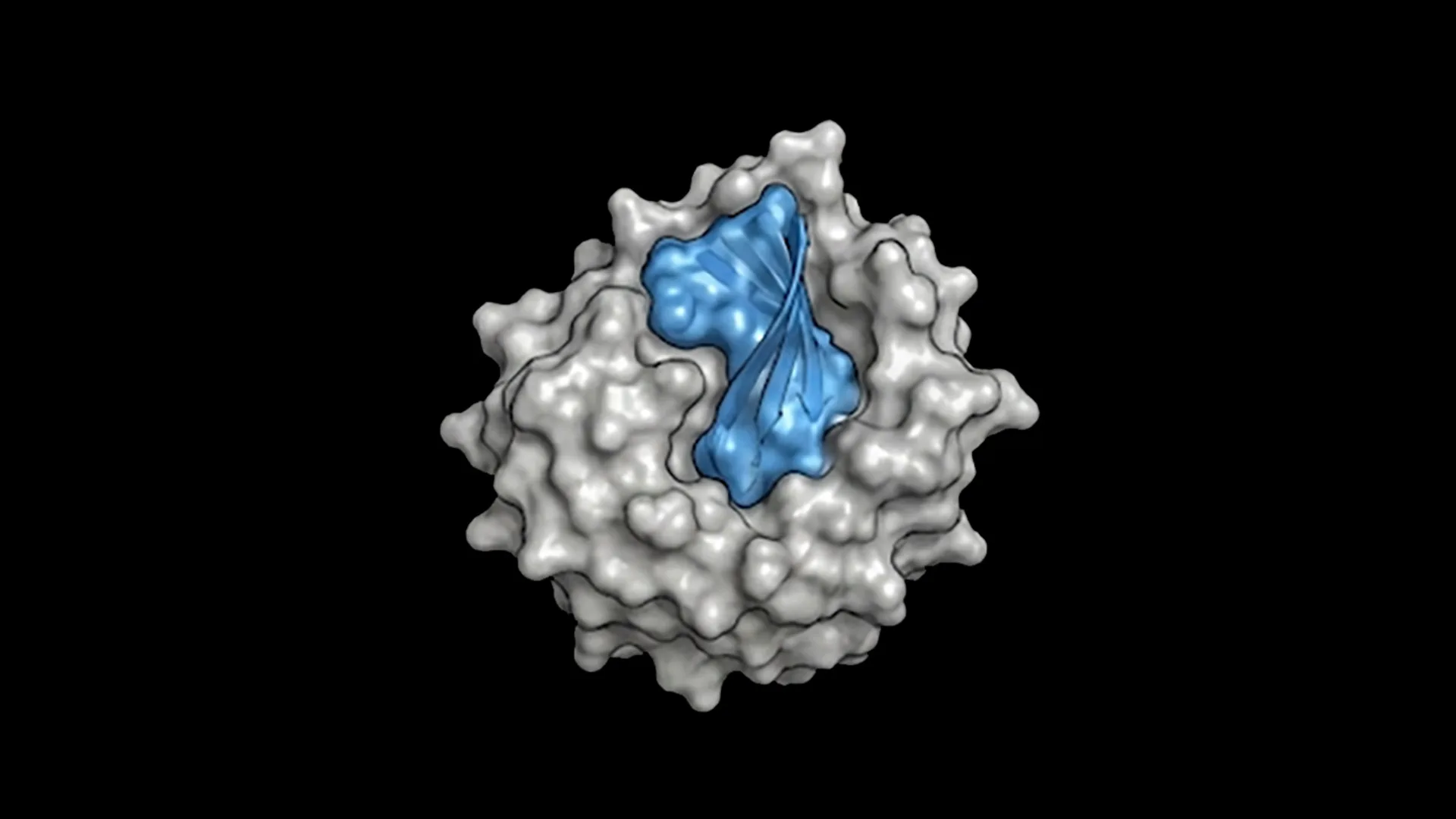
- What: NVIDIA and Manifold Bio announced Proteina-Complexa, a generative AI model for designing protein binders.
- Who: Developed by NVIDIA’s Digital Biology team and validated experimentally by Manifold Bio.
- Technology: A fully atomistic generative framework utilizing flow matching and inference-time optimization.
- Scale: Manifold Bio performed million-scale experimental validation of the model's designs.
- Availability: NVIDIA plans to publicly release the code, models, and new datasets via GitHub.
NVIDIA and Manifold Bio have announced a joint study to validate Proteina-Complexa, a novel generative AI model designed to automate and accelerate the creation of protein binders for drug discovery. By combining NVIDIA’s conditional generative modeling with Manifold Bio’s high-throughput experimental platform, the partnership has successfully validated AI-generated protein designs at a million-scale level.
The announcement, made on March 16, 2026, marks a significant shift in how researchers approach the "vast search space" of amino acid sequences. Proteina-Complexa aims to solve the traditionally slow and labor-intensive process of optimizing protein-to-protein interactions, which is critical for developing new therapies and industrial catalysts.
A New Framework for Atomistic Design
Proteina-Complexa is built upon a fully atomistic framework, meaning it considers the precise positioning of every atom within a protein structure rather than relying on simplified models. According to technical documentation released by NVIDIA, the model is built on "La-Proteina," a pretrained flow-based generative model.
The system utilizes flow matching, a modern alternative to traditional diffusion models, to navigate the complex 3D structures required for effective binding. This is combined with inference-time optimization, allowing the model to refine its designs to ensure strong and specific binding to target molecules.
Designing these binders is a monumental task because the number of possible amino acid permutations is effectively infinite. Achieving a high-affinity bond requires precise optimization of the interface between the binder and the target. NVIDIA’s model addresses this by offering fold class-guided binder generation and interface hydrogen bond optimization, which ensures the physical stability and chemical effectiveness of the design.
Million-Scale Experimental Validation
While AI-driven protein design has seen rapid progress, the "bottleneck" has often been the transition from digital prediction to laboratory reality. To bridge this gap, NVIDIA partnered with Manifold Bio, a Boston-based therapeutics company specializing in "direct-to-vivo" drug discovery.
Manifold Bio utilized its proprietary platform to conduct million-scale experimental validation of the binders generated by Proteina-Complexa. This scale of testing allows researchers to see how thousands or millions of different AI designs perform in a physical environment simultaneously, providing a feedback loop that was previously impossible.
"Proteina-Complexa was built to generate protein binders at the speed and scale that drug discovery demands, powered by a novel architecture that redefines generative design," said Anthony Costa, Director of Digital Biology at NVIDIA.
Beyond Basic Binding: Small Molecules and Enzymes
While the primary focus is on protein-to-protein interactions, NVIDIA has indicated that Proteina-Complexa’s capabilities extend further. The model framework has been tested on enzyme design tasks and extensions to small molecule targets. This versatility suggests the model could be used not just for monoclonal antibodies or therapeutic proteins, but also for designing better catalysts for industrial chemistry or environmental remediation.
The model also includes a "Model Card++," providing transparency into its training data and intended use cases. This emphasis on documentation is part of NVIDIA’s broader push into "Digital Biology," a sector where the company is positioning its high-performance computing (HPC) and AI expertise as essential infrastructure for the next generation of biotechnology.
Impact on the Biotech Industry
The partnership between a major computing power like NVIDIA and a specialized biotech like Manifold Bio highlights the increasing reliance of the pharmaceutical industry on generative AI. For developers and researchers, Proteina-Complexa offers a way to bypass months of trial-and-error in the wet lab.
The ability to generate and then experimentally validate designs at a million-scale could drastically reduce the time it takes to identify a "lead candidate" for a new drug. In the competitive landscape of AI-driven drug discovery—which includes players like Google DeepMind and various startups—NVIDIA’s decision to release the code and models publicly could set a new standard for open-source collaboration in the field.
What’s Next
NVIDIA has confirmed that the code, models, and new data generated during this study will be publicly released on the NVIDIA-Digital-Bio GitHub repository. This move is expected to trigger a wave of derivative research as academic and commercial labs begin to integrate flow-matching techniques into their own protein engineering workflows.
The success of the "million-scale" validation also sets a new benchmark for other AI models in the space. As the industry moves forward, the focus is likely to shift from merely predicting protein structures to the more difficult task of designing functional, high-affinity binders that behave predictably within the human body.