
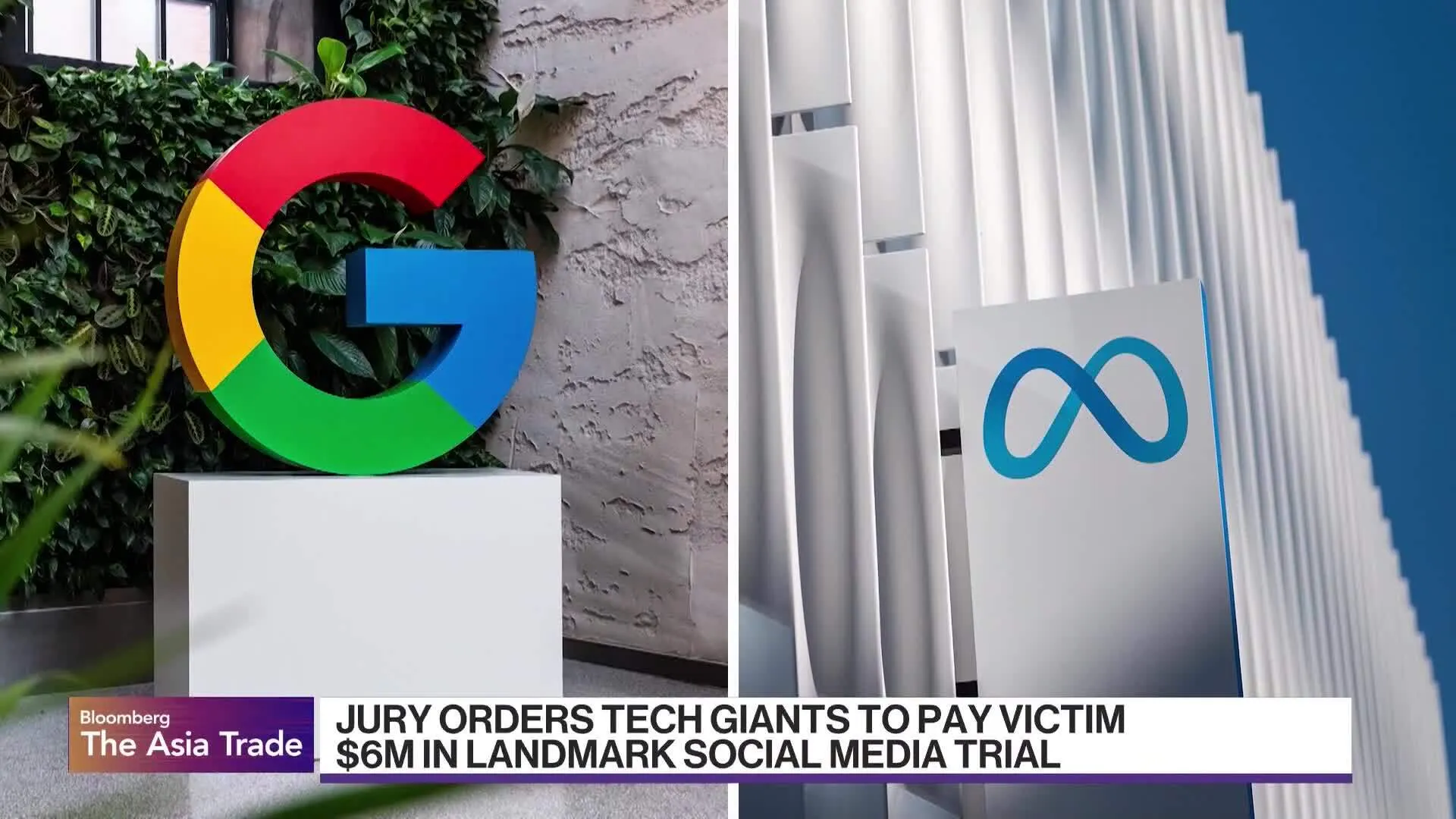
- What: A Los Angeles jury found Meta and Alphabet’s Google liable for mental health harms caused by addictive platform design.
- Verdict: The jury determined the companies were negligent and failed to warn users of the dangers associated with their products.
- Plaintiff: The case centered on K.G.M., a 20-year-old whose mental health was allegedly damaged by intentional design choices.
- Defense: Google argued YouTube is a "streaming platform" rather than a social media site to distance itself from the charges.
In a decision that could reshape the legal landscape for the technology industry, a Los Angeles Superior Court jury has found Meta and Alphabet’s Google liable for harming a young user through products designed to be addictive. The verdict, delivered on March 25, 2026, marks a significant shift in corporate accountability, as jurors determined that the tech giants were negligent in their design processes and failed to provide adequate warnings about the psychological risks of their platforms.
The case, which focused on the experiences of a 20-year-old user identified as K.G.M., concluded with all but two jurors finding both companies liable. According to the jury's findings, Meta (the parent company of Instagram, Facebook, and WhatsApp) and Google (owner of YouTube) intentionally built features that fostered addiction, leading to direct harm to the plaintiff's mental health.
Negligence and the "Addictive" Design Framework
The trial centered on the premise that social media features are not merely neutral tools but are engineered to maximize engagement at the cost of user well-being. According to reports from the New York Times and BBC, the jury was convinced by arguments that Meta and YouTube were negligent in designing their platforms, prioritizing retention algorithms over the safety of young users.
The jury’s determination rested on two primary pillars:
- Negligent Design: The platforms were built with engagement loops that the jury deemed harmful and addictive.
- Failure to Warn: The companies did not provide sufficient disclosure regarding the potential for their products to cause psychological distress or dependency.
As Bloomberg’s Annabelle Droulers reported following the verdict, this decision is expected to serve as a catalyst for increased government regulations. The ruling directly challenges the long-standing defense that platform owners are not responsible for the psychological outcomes of user interaction with their algorithms.
Defense Strategies and Industry Pushback
Throughout the proceedings, both Meta and Alphabet contested the claims, denying that their platforms could be categorized as addictive. Google, in particular, attempted to distance its video-sharing platform from the broader social media controversy.
In a statement provided to CNN Business, Google spokesperson José Castañeda argued that the lawsuit "misunderstands YouTube," characterizing it as a "responsibly built streaming platform" rather than a social media site. This distinction appears to be a strategic effort to avoid the regulatory and legal scrutiny currently targeting social networking engagement models.
Meta similarly denied the lawsuit’s claims, maintaining that its products are designed with user safety in mind. However, the Los Angeles jury ultimately rejected these defenses, focusing instead on the evidence of intentional design choices that the plaintiff argued were detrimental.
Impact on the Tech Industry and Developers
This verdict represents a "watershed moment" for the AI and social media industries. For years, tech companies have operated under the assumption that the design of recommendation engines and engagement features fell under protected proprietary or speech-related categories. This ruling suggests that design choices are a matter of product liability.
For developers and AI engineers, the implications are immediate:
- Safety-First Architecture: Engineering teams may now be required to implement "harm-reduction" features as a standard part of the development lifecycle to avoid negligence claims.
- Mandatory Disclosures: Much like the pharmaceutical or tobacco industries, social media platforms may be forced to include prominent warnings about the risks of prolonged use or addictive behavior.
- Legal Precedent: The verdict provides a roadmap for thousands of other pending cases involving social media addiction and its impact on youth mental health.
"This verdict shatters the legal shield tech giants have used to deflect responsibility for user well-being, effectively treating addictive algorithms as defective products," noted industry analysts tracking the trial.
What’s Next for Meta and Google
The immediate aftermath of the ruling is expected to include a series of appeals from both Meta and Alphabet. Given the high stakes and the potential for billions of dollars in future liabilities across the industry, the companies are likely to fight the verdict in higher courts.
However, the political momentum may already be shifting. As noted by Bloomberg, the decision is likely to accelerate legislative efforts to regulate how algorithms target young users. Future government regulations could include mandatory audits of engagement algorithms and strict limits on "persuasive design" techniques such as infinite scroll and manipulative push notifications.
In the mid-term, the industry may see a surge in similar litigation across the United States. With a jury having now confirmed that these platforms can be held liable for negligence, the "addictive design" legal theory has moved from a theoretical argument to a proven courtroom strategy.