
The short version
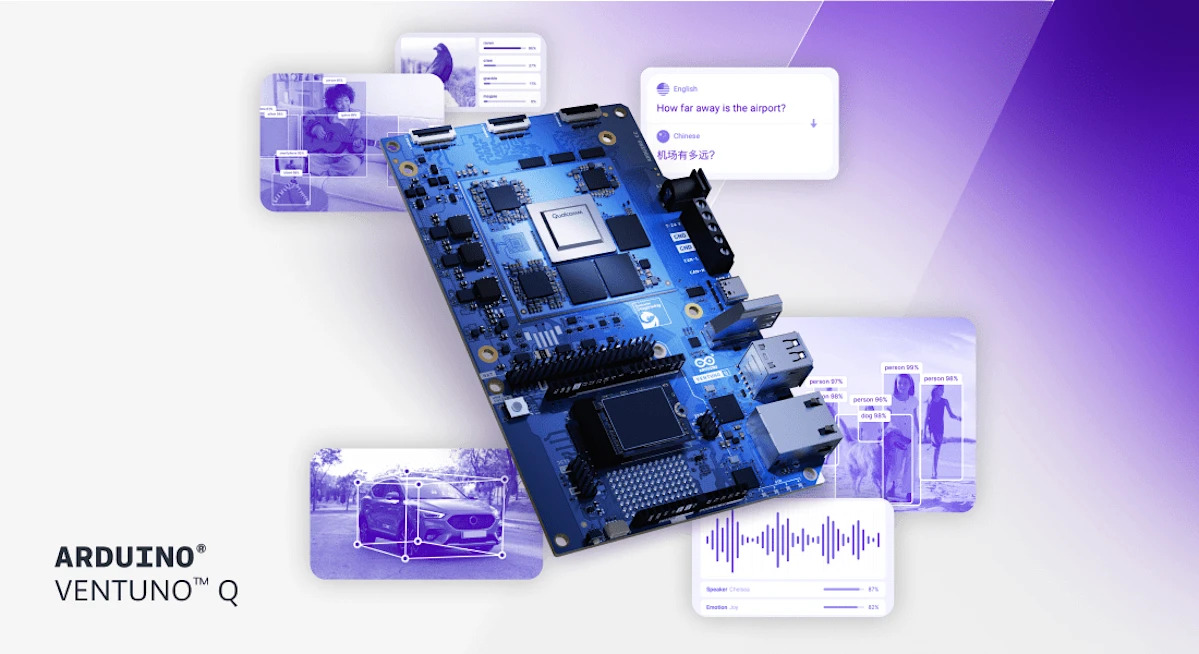
Qualcomm, which now owns Arduino, just unveiled the Ventuno Q – a small, powerful computer board under $300 designed to make AI-powered robots smarter and more independent. It runs AI tasks like seeing, recognizing gestures, and controlling movements all offline, without needing the internet or cloud servers. Coming in 2026, this could mean cheaper, more reliable smart home devices, helper robots in hospitals, and fun DIY projects for hobbyists – making "physical AI" accessible to everyday makers and innovators.
What happened
Imagine you're building a robot arm that needs to pick up a toy without dropping it, or a security camera that spots unusual movements and alerts you instantly – all without phoning home to a distant server. That's what the Arduino Ventuno Q is built for. Arduino, the company famous for those tiny, beginner-friendly boards that let kids and hobbyists tinker with electronics, got bought by Qualcomm (a big player in phone chips) last year. Now, they've teamed up to launch this new "single-board computer" called Ventuno Q.
Think of it like a mini supercomputer on a credit-card-sized board. At its heart is Qualcomm's Dragonwing IQ8 processor – picture a brain with three smart parts: a fast thinker (CPU) for decisions, a visual wizard (GPU) for processing images, and an AI specialist (NPU) that crunches complex patterns at up to 40 trillion operations per second. It packs 16GB of memory (like having a laptop's worth of RAM in your pocket) and 64GB of storage, plus room to add more. Connectivity? It's got speedy Wi-Fi, Bluetooth, ethernet, and plugs for cameras – everything a robot needs to "see" the world.
The real magic is in the "Arduino App Lab," a toolkit with ready-to-use AI models. These handle things like speech recognition (hearing your voice commands), gesture spotting (waving to control it), pose estimation (tracking body positions), object tracking (following a ball), and even large language models or vision-language models – all running completely offline on the board itself. No internet required. It's tailored for robots that move precisely, like arms grabbing objects or wheels navigating rooms, combining camera vision with super-accurate motor control.
Unlike Arduino's cheap, simple boards for blinking lights, this one's pricier and beefier, aimed at real-world AI that interacts with the physical world. Qualcomm says it's like moving AI "from the cloud into the physical world," letting machines perceive (see/hear), decide (think), and act (move) on one board. It'll hit stores in the second quarter of 2026 (April-June) for under $300 – a steal compared to pro robotics gear that costs thousands.
Why should you care?
For most folks, AI today feels like magic happening on your phone or computer, chatting via apps like ChatGPT or spotting faces in photos. But the Ventuno Q flips that: it puts that same smarts into physical things that touch your life. No more relying on spotty internet – everything runs locally, so it's faster, more private, and works in remote spots like farms or disaster zones.
Picture this hitting your daily routine: A home robot vacuum that not only maps your floor but recognizes when your kid's toy is in the way and gently nudges it aside, all without phoning Google. Or a healthcare helper in a nursing home that watches a patient's movements, detects falls, and calls for help instantly – no Wi-Fi needed. Traffic cams that analyze flow in real-time to ease jams, or smart kiosks in stores that guide you without servers crashing during peak hours. For hobbyists, it's a game-changer: build your own AI pet that follows you around or a garden bot that waters plants based on weather and soil.
This matters because it democratizes robotics. Right now, building AI robots is for big companies with deep pockets. Under $300 makes it doable for schools, inventors, and you – sparking cooler gadgets that could make life easier, safer, and more fun without Big Tech controlling everything.
What changes for you
Practically speaking, don't expect this on store shelves tomorrow – it's launching mid-2026, so early adopters like educators, researchers, and DIY enthusiasts will grab it first from the Arduino Store or partners. But the ripple effects could touch regular people soon:
-
Smarter home and gadgets: Expect more affordable "edge AI" devices (AI that works on the device itself, not the cloud). Your next smart doorbell might use tech like this to recognize familiar faces offline, saving battery and boosting privacy – no data sent to servers.
-
Healthcare and safety: Offline AI for assistants in homes or clinics means reliable help for elderly care, like robots monitoring vitals or guiding physical therapy with pose detection. If you're caring for family, this could mean peace of mind without internet dependency.
-
Education and hobbies: Kids in STEM classes could build AI projects – think a robot that plays soccer by tracking the ball or a drone that gestures to follow you. For tinkerers, Arduino's ecosystem (millions of users) means tutorials galore, lowering the barrier from "cool idea" to "I built it."
-
Costs and speed: Under $300 beats pricey alternatives like NVIDIA's Jetson boards. Everything's offline, so no cloud fees, quicker responses (no lag), and better security – your robot won't leak data if hacked remotely.
No immediate app changes or price hikes for you – this empowers creators to make stuff for consumers, potentially leading to innovative products in 2-3 years.
The bottom line
The Arduino Ventuno Q is a big step toward everyday AI that lives in the real world, not just screens – think reliable, private robots for homes, health, and fun, all powered by a cheap board anyone can use. By running smarts offline with pro-level precision, it opens doors for inventors to build practical machines that "see, think, and act" without cloud crutches. If you're into DIY, teaching, or just excited about helpful tech, keep an eye out for 2026 – this could make robotics as approachable as Lego, leading to gadgets that truly understand and interact with your life. Qualcomm and Arduino are betting on a future where AI moves, and at this price, it's one worth rooting for.
(Word count: 842)