
The short version
"Vibe coding" is a new way to build software by simply describing what you want in plain English, and now, it’s coming to the workplace. Replit and Databricks have partnered to let employees build secure, data-driven apps using this AI-powered approach without needing to be professional coders. This means business teams can create custom tools in minutes instead of waiting weeks for IT departments to build them.
What happened
"Vibe coding" is a term used to describe using AI agents to write software. Instead of writing lines of complex code, you talk to an AI—like you’re giving instructions to a coworker—and the AI builds the application for you.
Until now, vibe coding was mostly for hobbyists or simple websites because of security concerns. Businesses keep their data locked behind strict "governance" rules to make sure information stays safe. If you wanted to build an app that actually used your company’s real sales or customer data, you usually had to wait for an engineering team to do it for you, which could take weeks or months.
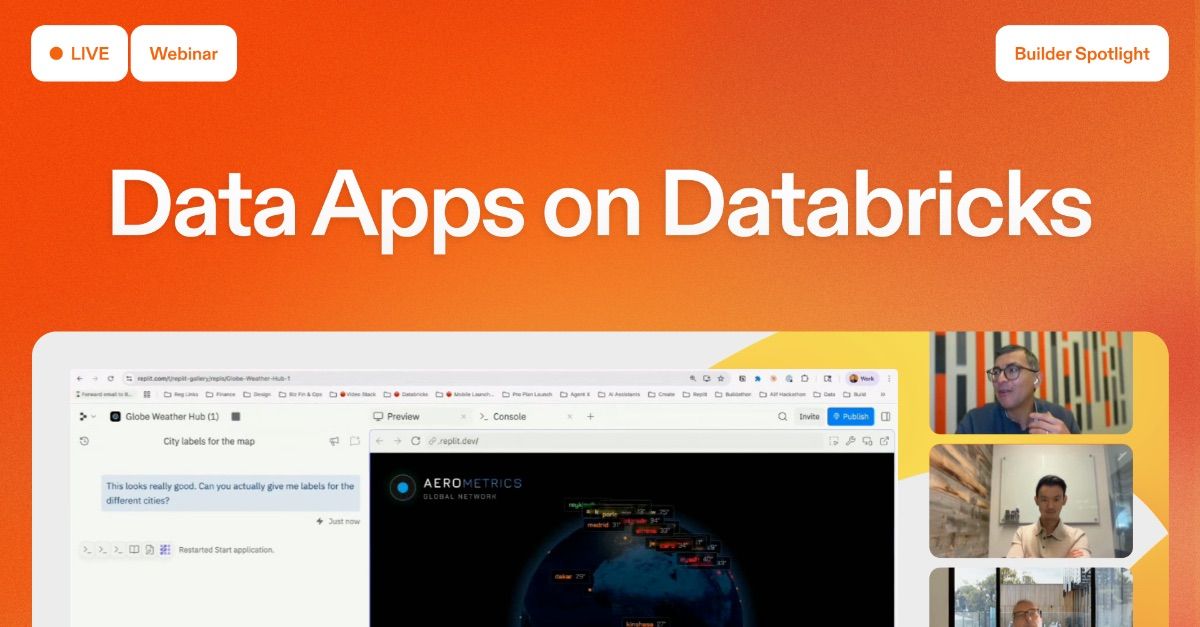
Replit and Databricks have created a "connector" that bridges this gap. Think of Replit as the "builder’s studio" where the AI lives, and Databricks as the "company vault" where all the sensitive, organized data is kept. By connecting them, you can now use the AI in Replit to build apps that reach directly into the Databricks vault to grab real, secure data, without moving that data or putting it at risk.
Why should you care?
If you work in a role like marketing, sales, or operations, you likely have "data pain." You know the answers to your questions are hidden somewhere in your company’s spreadsheets or databases, but you have to wait for an analyst or developer to pull that report for you.
This new integration means that the people who know the business questions can finally be the ones to build the solutions to those questions. You aren't just looking at a static chart anymore; you can "vibe code" an interactive app that updates in real-time, displays exactly what you need, and runs safely within your company’s rules.
What changes for you
- Faster problem solving: You don’t have to wait in an "engineering queue." If you need a custom dashboard or a tool to track a project, you can start building it yourself using natural language prompts.
- Higher trust: Because the app pulls data directly from your company’s official sources (Databricks), you don’t have to worry about whether your data is accurate or outdated.
- Professional, secure tools: You can build tools that look and feel professional, but keep your company’s security standards intact. It’s like having a superpower that lets you turn a spreadsheet-based request into a working, secure app.
Frequently Asked Questions
Is "vibe coding" the same as traditional programming?
No. While traditional programming requires learning complex languages, vibe coding uses AI agents to translate your plain-English instructions into functional software. It is meant to be accessible to anyone who can explain what they want to see on their screen.
Can I build any app I want with this?
You can build data-driven apps that interact with the information stored in your company's Databricks platform. The tools are designed specifically for building internal business apps, such as dashboards, trackers, or data-visualizers, rather than public-facing consumer games.
Does this mean my company’s data is at risk?
Quite the opposite. This integration is designed so that you don't have to copy or move sensitive data into "random" personal projects. The app stays connected to the secure, governed vault, meaning your company's security rules still apply to every piece of data you use.
When can I use this?
This is a professional-grade integration for enterprises already using Databricks and Replit. If your company uses these platforms, your internal IT or data team would be the ones to set up the connection so that you and your colleagues can start building.
The bottom line
The era of waiting for tech teams to build simple tools is ending. By connecting the ease of "vibe coding" with the security of enterprise data platforms like Databricks, companies are moving toward a future where anyone—not just engineers—can build the software they need to do their jobs better. It’s a shift toward speed, self-service, and, most importantly, putting the power of data into the hands of the people who use it every day.