
NVIDIA Launches TensorRT Edge-LLM to Power Next-Gen Physical AI at the Edge
Key Facts
- What: NVIDIA released TensorRT Edge-LLM, a high-performance C++ inference runtime optimized for running large language models directly on edge devices.
- Target Applications: Autonomous vehicles, humanoid robots, and other physical AI systems requiring real-time multimodal interaction and trajectory planning.
- Core Challenge Addressed: Enabling high-fidelity reasoning within strict power and latency constraints, moving beyond simply running LLMs to delivering production-grade physical AI.
- Platform Integration: Built to run on the NVIDIA Jetson platform, which supports real-time AI and computer vision on power-efficient edge hardware.
- Early Adopters: Bosch, ThunderSoft, and MediaTek have adopted TensorRT Edge-LLM for in-car AI assistants, on-device conversational AI, and advanced cabin monitoring.
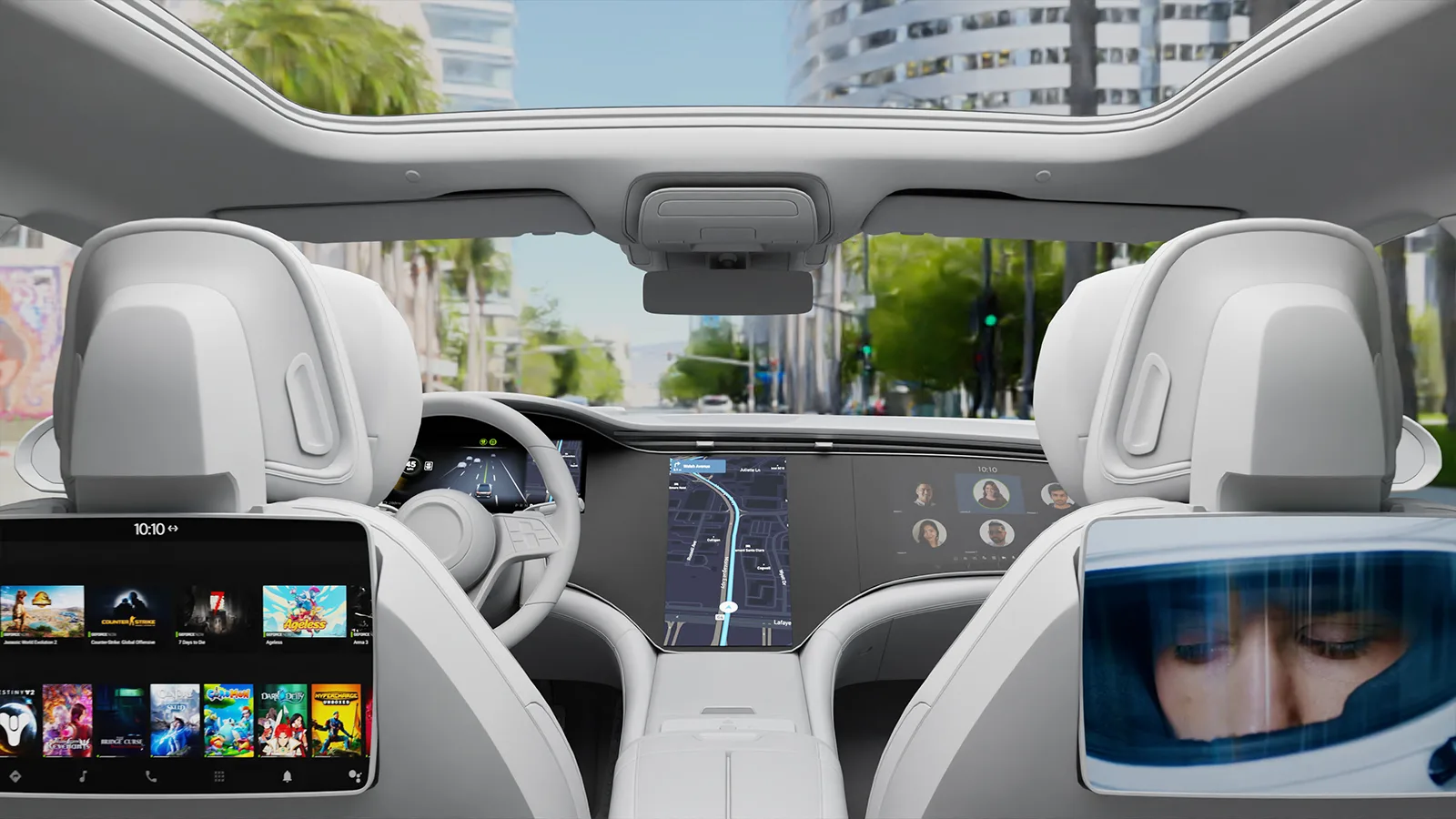
NVIDIA has introduced TensorRT Edge-LLM, a specialized inference engine designed to bring powerful large language models directly into autonomous vehicles and robotics, solving the critical challenge of running sophisticated AI reasoning under tight power and real-time constraints.
The announcement marks a significant step in the evolution of physical AI — systems that must perceive, reason, and act in the physical world with minimal latency. According to NVIDIA's developer blog, the challenge is "no longer how to run a large language model (LLM), but how to enable high-fidelity reasoning, real-time multimodal interaction, and trajectory planning within strict power and latency envelopes."
The Rise of Edge-First Physical AI
Physical AI is rapidly evolving from next-generation software-defined autonomous vehicles to advanced humanoid robots. These systems demand more than cloud-dependent intelligence. They require low-latency, on-device processing to make split-second decisions in unpredictable environments.
NVIDIA's new TensorRT Edge-LLM serves as a high-performance C++ inference runtime specifically engineered for these edge-first workloads. It optimizes LLM and vision-language model (VLM) inference for the strict requirements of automotive and robotics applications, where power consumption, thermal limits, and deterministic latency are non-negotiable.
The solution builds on NVIDIA's established Jetson platform, which has become a standard for deploying real-time AI and computer vision on small, power-efficient edge devices. Jetson enables a wide range of robotics, smart cameras, and autonomous systems to operate effectively without relying on cloud connectivity.
Technical Capabilities and Optimizations
TensorRT Edge-LLM delivers an optimized pipeline from Hugging Face models through to high-performance edge deployment. This end-to-end acceleration allows developers to take popular open-source models and run them efficiently on Jetson hardware, including the Jetson Orin Nano Super (8GB) recommended for early-stage robotics and edge prototypes.
Industry partners have already begun integrating the technology. Bosch, ThunderSoft, and MediaTek have adopted TensorRT Edge-LLM to develop in-car AI assistants, on-device conversational AI, and advanced cabin monitoring systems. These implementations demonstrate the runtime's ability to support practical, safety-critical applications in real-world products.
The technology addresses key technical hurdles in physical AI deployment. Traditional LLM inference often requires significant compute resources and can suffer from unpredictable latency. By focusing on edge-first optimization, NVIDIA aims to provide deterministic performance suitable for autonomous driving and robotic control systems that must guarantee response times measured in milliseconds.
Competitive Landscape in Physical and Edge AI
NVIDIA is not alone in targeting the convergence of AI and physical systems. Competitor Qualcomm recently advanced its robotics portfolio with the Dragonwing IQ10 processor, targeting industrial robots, autonomous mobile robots, and humanoid systems using an Arm-based platform. Arm itself has positioned physical and edge AI as "the next platform shift," highlighting the growing importance of energy-efficient on-device intelligence.
However, NVIDIA's deep integration between its software stack (TensorRT) and hardware (Jetson) provides a differentiated offering. The Jetson platform's established presence in robotics and autonomous systems gives developers access to a mature ecosystem of tools, libraries, and reference designs.
NVIDIA's approach emphasizes running foundation models — including LLMs, VLMs, and other emerging architectures — directly on edge hardware. This enables new capabilities such as natural language interaction with vehicles and robots, on-device reasoning about complex scenes, and more adaptive behavior in dynamic environments.
"The challenge is no longer how to run a large language model, but how to enable high-fidelity reasoning, real-time multimodal interaction, and trajectory planning within strict power and latency envelopes."
This shift from cloud-centric to edge-first AI has major implications for system architecture. Vehicles and robots can now maintain functionality without constant cloud connectivity, improving reliability, privacy, and responsiveness.
Impact on Developers and the Industry
For developers building autonomous systems, TensorRT Edge-LLM significantly lowers the barrier to incorporating sophisticated language and multimodal models into edge devices. Rather than developing custom inference solutions, teams can leverage NVIDIA's optimized runtime to accelerate their development cycles.
The technology is particularly relevant for companies working on software-defined vehicles, where the ability to update AI capabilities over-the-air while maintaining strict safety and performance standards is crucial. Similarly, robotics companies developing humanoid and industrial systems can use these tools to create more intuitive, conversational interfaces and more capable autonomous behaviors.
The broader industry impact extends to safety-critical applications. By enabling high-performance AI at the edge, NVIDIA is helping address regulatory and technical requirements for systems that must operate reliably in the physical world. This includes advanced driver assistance systems, autonomous mobile robots in warehouses, and next-generation humanoid robots designed for human collaboration.
This changes how developers will approach physical AI, moving from basic perception and control to systems capable of high-level reasoning and natural interaction — all running locally with strict performance guarantees.
What's Next for Edge Physical AI
NVIDIA's release of TensorRT Edge-LLM signals accelerating momentum in the physical AI sector. The company continues to invest heavily in both hardware and software for edge deployment, with the Jetson platform serving as the foundation for many upcoming innovations.
As models continue to grow in capability, the pressure to run increasingly sophisticated AI at the edge will only increase. Future iterations of TensorRT Edge-LLM and related tools are expected to support even larger models while maintaining the power and latency profiles required by production autonomous systems.
Developers interested in exploring these capabilities can begin with the Jetson Orin Nano Super for prototyping smaller LLMs and VLMs, then scale to more powerful Jetson variants for production deployments. NVIDIA's developer resources provide getting-started guides specifically focused on LLMs, VLMs, and foundation models for robotics.
The competitive race between NVIDIA, Qualcomm, Arm, and other players suggests rapid innovation ahead. The winner will likely be the platform that best balances model performance, power efficiency, and developer experience for real-world physical AI applications.
For now, NVIDIA's TensorRT Edge-LLM provides a concrete tool for teams ready to move beyond basic edge AI into the next generation of intelligent, reasoning physical systems.
Sources
- NVIDIA Developer Blog: Build Next-Gen Physical AI with Edge‑First LLMs for Autonomous Vehicles and Robotics
- NVIDIA Technical Blog: Getting Started with Edge AI on NVIDIA Jetson
- Arm Newsroom: The next platform shift: Physical and edge AI, powered by Arm
- Edge AI and Vision Alliance: Getting Started with Edge AI on NVIDIA Jetson